- Iran attacks US facilities in Bahrain, Kuwait, early Friday morning.
- US targets Iran military site near Bandar Abbas, Qeshm Island.
- Qatar's Interior Ministry says shrapnel injured a child in Doha.
Iran said it launched new attacks on US facilities in the Gulf on Friday after a sixth straight night of US attacks on Iranian military facilities, as last month's truce turned into daily attacks and counterattacks.
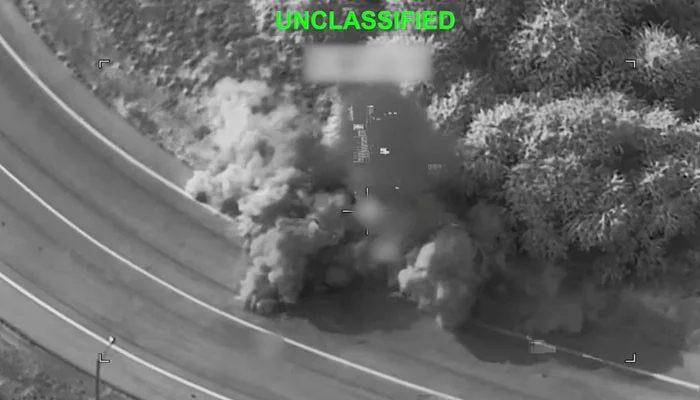
The U.S. military said it completed another night of strikes against Iran “to further degrade Iranian military capabilities,” including on Qeshm Island and near Bandar Abbas, home to Iran's largest port and major naval and Revolutionary Guard facilities.
“US forces, including fighter jets, aerial drones and warships, launched precision munitions that hit dozens of Iranian military targets, such as coastal surveillance and air defense sites, military logistics infrastructure and maritime capabilities,” US Central Command said in a statement.
Iran has fired missiles and drones at US military bases in neighboring states, including an air base in Jordan.
In the early hours of Friday, the Iranian military said it had attacked US facilities in Bahrain and Kuwait. According to a witness, several sounds resembling explosions were heard in Doha, the capital of Qatar, and the Interior Ministry said a child was injured by shrapnel.
Iranian media reported that five bridges were hit in the latest round of US strikes, as well as the coastal train station at Bandar Khamir and the Iranshahr airport in southeastern Iran.
Seven people were killed in US attacks on bridges in Bandar Khamir, a port city in southern Iran, state news agency. IRNA reported.
Reuters could not immediately verify the reports.
Shipping stopped again in the Strait of Hormuz
The escalation has once again largely halted traffic through the Strait of Hormuz, the world's most important oil and gas shipping route, driving up global energy prices.
Tehran resumed its blockade of the strait and Washington again blocked Iranian ports since Wednesday.
Iran has signaled it could pressure its Houthi allies in Yemen to close another key strait: the Bab al-Mandeb at the mouth of the Red Sea, sources said. Reutersif Washington attacks Iran's infrastructure.
Iran maintains control over the Strait
Iran wants all ships using the Strait of Hormuz to travel through a canal close to its shores and intends to collect passage fees at the end of a 60-day negotiation period set out in last month's memo.
Washington had encouraged ships to use an alternative route south, along the coast of Oman.
U.S. forces said their airstrikes hit military targets along the coast to cripple Iran's ability to control the strait. Iranian army spokesman Brigadier General Mohammad Akraminia said Thursday that this would not work because Iran could attack the strait from anywhere in its territory.
Trump has not ruled out the possibility of using ground forces, including to seize Kharg Island, the site of Iran's main oil export terminal. He has repeated threats to attack Iranian power plants and bridges next week unless Tehran resumes negotiations.