Carl's Jr. workers at a North Hollywood location walked off the job Tuesday to protest allegedly unsafe working conditions.
About 30 members of the California Fast Food Workers Union, along with the two striking Carl's Jr. workers, gathered outside the restaurant on Vineland Avenue. Workers said the company has failed to provide protection from violent customers and does not provide adequate access to paid sick leave.
Workers detailed violent interactions with customers, including robberies and physical assaults, and said the company refused to provide safety training. Workers are also not given time to recover from injuries they suffer on the job, they said.
Yolanda Cruz, a striking employee who has worked at Carl's Jr. for 20 years, is afraid every time she comes to work, she said. Customers regularly harass employees, the 66-year-old says.
“What else can we do? Just pray to God that we get to work the same way we get home at the end of the day,” Cruz told The Times in Spanish. “This is the fear we have all the time.”
One morning, when Cruz arrived at the store for an opening shift, a man jumped on her as she tried to enter the restaurant. Angry customers also regularly throw drinks at employees, according to a complaint filed by workers with Cal/OSHA and the California Labor Commissioner's Office.
Last summer, according to the complaint, a man ran into the restaurant's kitchen, threw items at employees and threatened them with a frying pan. The man then punched a worker in the face, according to the complaint.
A doctor ordered the worker to take a week off, but the employee said that on the fifth day, she was called back to work because no one could cover her shift, according to the complaint. Fearing retaliation from her employer, the worker came to work with a black eye and her face still swollen from the attack, according to the complaint.
“Management tells us that when a customer is aggressive we should just give them what they want, but they have not trained us on what to do if we are being attacked or if someone is having a mental health crisis and is behaving erratically,” the worker said in the complaint.
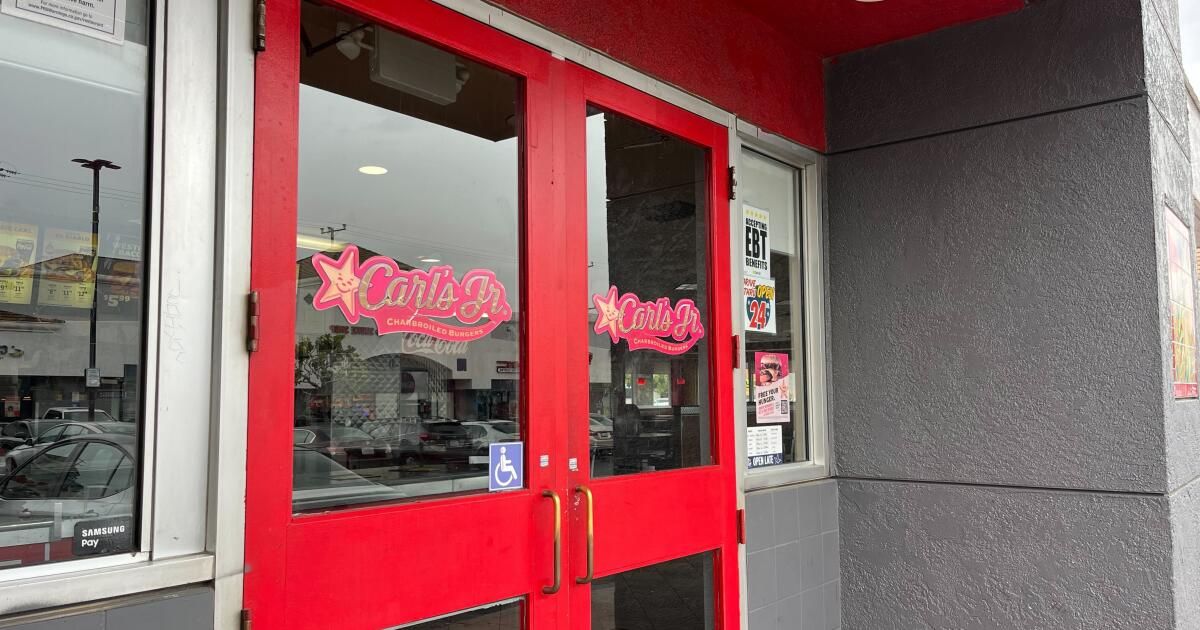
The entrance to a Carl's Jr. store in West Hollywood on Tuesday. According to the journalist, this store was open when they visited it.
(Itzel Luna/Los Angeles Times)
Workers have urged city lawmakers to pass the Fast Food Fair Labor Ordinance, which would establish full-time paid training on workers' rights and expand paid leave for fast food workers.
The union addressed City Hall Tuesday afternoon to make public comments in support of the ordinance during the City Council's Employment and Economic Development Committee meeting.
Workers also requested unarmed security guards and a safer store design, including barriers and locked doors, according to the Cal/OSHA complaint.
These changes are crucial to protecting the city's nearly 50,000 fast food workers from violence, wage theft and denial of basic labor protections, advocates said in a news release announcing the strike.
Protect Los Angeles Residents, a coalition backed by fast-food restaurants, says the ordinance would be too costly and endanger the city's restaurant owners. Fast food companies, including McDonald's, Chick-fil-A and Starbucks, have spent tens of millions of dollars to stifle legislative efforts.
Carl's Jr. began as a hot dog cart in Los Angeles in 1941. Founders Carl and Margaret Karcher opened the first full-service restaurant in Anaheim a few years later.
The sprawling burger chain exploded in Southern California in the 1960s before expanding to more than 1,000 locations internationally.
Today, it struggles to maintain its control on the west coast. A major Carl's Jr. operator that operates 65 locations across the Golden State, including the Vineland location, filed for bankruptcy in early April.
The operator, Friendly Franchisees Corp., cited raising the state's fast-food minimum wage to $20, along with the brand's own struggles with marketing and innovation, as reasons for the bankruptcy in a recent court filing.
A company spokesperson did not immediately respond to a request for comment from The Times.