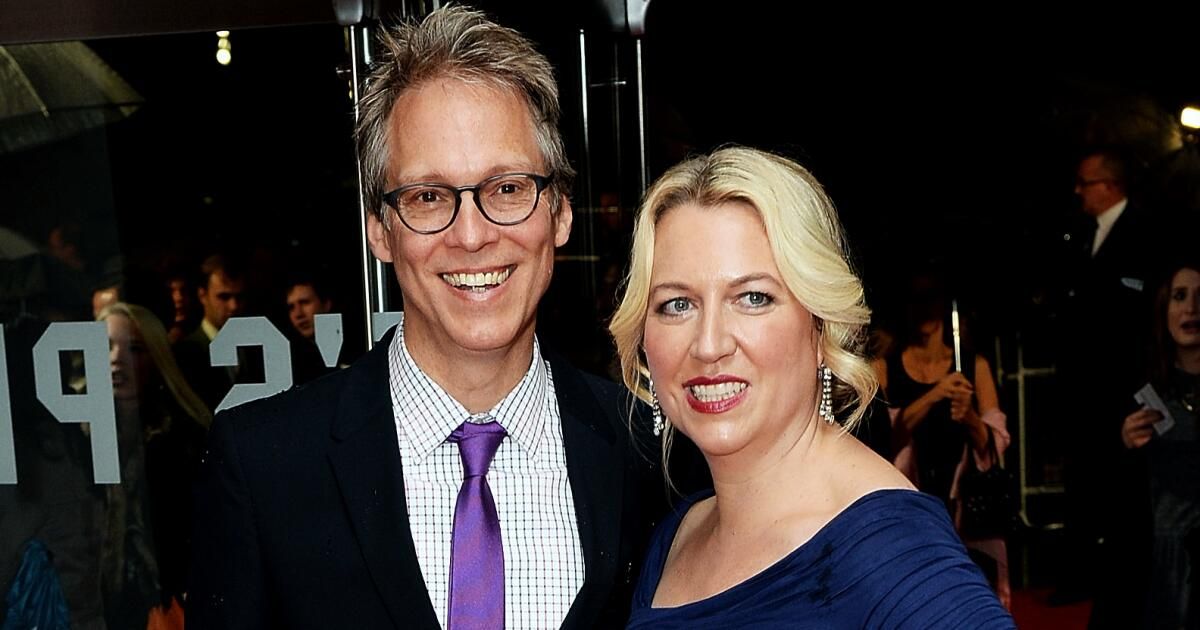
Brian Lindstrom, a filmmaker whose documentaries shed light on society's underdogs and inspired social change, has died. He was 65 years old.
Lindstrom's wife, author Cheryl Strayed, confirmed the news on Instagram on Friday.
“Brian Lindstrom died this morning just as he lived: with gentleness and courage, grace and gratitude for his beautiful life,” she wrote. “Our children, Carver and Bobbi, and I held him as he took his last breath and will forever hold him in our hearts. The only thing greater than our grief that progressive supranuclear palsy took our beloved Brian from us is the infinite love we have for him.”
According to the National Institute of Neurological Disorders and Stroke, PSP is caused by damage to nerve cells in areas of the brain that control thinking and body movements. This rare neurological disease progresses rapidly.
Strayed, who wrote the best-selling memoir “Wild,” which was later adapted for the big screen and starring Reese Witherspoon, announced just a few weeks ago that Lindstrom had been diagnosed with “a serious and fatal illness.”
Lindstrom was born on February 12, 1961. The son of a bartender and a liquor salesman, he grew up in Portland, Oregon, a city he and his family still called home.
He was the first member of his family to attend college, which he paid for by taking out student loans, taking work-study jobs, and working summers at a salmon cannery in Cordova, Alaska. During a 2013 TEDx talk, Lindstrom said that after exhausting all of his video production classes at Lewis & Clark College in Portland, his professor Stuart Kaplan gave him a gift certificate to a class at the Northwest Film Center. There, Lindstrom made a short film about his grandfather that earned him a spot in Columbia University's MFA program.
It was a train ride with his grandfather that inspired Lindstrom to approach challenging subjects with a lens that restored dignity to his subjects. His grandfather was a compulsive drinker and, on the third day of the trip, he woke up hungover and missing his dentures. Lindstrom, who was only five years old at the time, noticed the way other passengers treated him and his grandfather differently.
“I think what my films are about is that search for my grandfather's false teeth, the humanizing narrative that closes the gap between us and them and reaches us,” he said.
Lindstrom said he returned to Portland after film school and “did several projects with the Northwest Film Center that had me put a camera in the hands of kids on probation, homeless teens, newly recovering addicts, deeply affected people who had powerful stories to share.”
“Those projects taught me a lot about the transformative power of art and gave me the permission I felt in my personal films to ask people if I could follow them, so that audiences could better understand what they were going through and, by extension, better understand themselves,” he said.
Lindstrom's award-winning 2007 cinéma-vérité film, “Finding Normal,” followed long-incarcerated drug addicts as they emerged from prison or detoxified and tried to rebuild their lives with the help of a recovery mentor.
“What I'm most proud of is that 'Finding Normal' is the only film that has been shown to inmates in solitary confinement at the Oregon State Penitentiary, and not, I might add, as a punishment,” Lindstrom said.
In 2013, he released “Alien Boy: The Life and Death of James Chasse,” a documentary that illuminated the life of a man battling schizophrenia and examined his death, which occurred in police custody. When discussing the film with LA Progressive in 2018, Lindstrom said he doesn't make movies for the public.
“I make them for the people in the movie. It's my little way of honoring them,” he told the outlet. “That doesn't mean I don't delve into dark areas or ignore that person's struggles. I'm much more concerned about trying to achieve an honest depiction of that person's life than I am about any potential audience reaction.”
Lindstrom's work was intended to inspire empathy and humanize those suffering on the margins of society, but it also catalyzed policy change. Her acclaimed 2015 documentary, “Mothering Inside,” followed participants in the Family Preservation Project (FPP), an initiative that helps embodied mothers establish and maintain bonds with their children.
Halfway through filming the documentary, the Oregon Department of Corrections announced that it planned to decline funding for the FPP. Lindstrom organized the first screenings of the film, which inspired a grassroots advocacy that reached then-Gov. Kate Brown, who later signed legislation that restored the funding. The film's release also helped Oregon become the first U.S. state to pass a bill of rights for children of incarcerated parents.
Partnering with Strayed, Lindstrom made the short documentary “I'm Not Untouchable. I'm Just On My Period” for the New York Times in 2019. The film highlighted the experience of teenage girls in Surkhet, Nepal, and the menstrual stigma they faced. Most recently, the filmmaker released “Lost Angel: The Genius of Judee Sill,” which examined the folk-rock singer's life from her traumatic childhood and drug-addled adolescence to her rise in the Laurel Canyon music scene and her untimely death.
Speaking about “Judee Sill” and his style as a filmmaker, Lindstrom told Oregon ArtsWatch: “It's a chance to focus on the question: What does it mean to be human? The person the film is about, what can they teach us, what can we learn from them? What can they learn about themselves?”
In 2017, Lindstrom received the Civil Liberties Award from the American Civil Liberties Union of Oregon for her work promoting civil rights and liberties. That same year, he received the Distinguished Alumni Award from Lewis & Clark College.
In Strayed's post announcing Lindstrom's death, he described their more than 30-year partnership as a stroke of “tremendous luck.”
“We loved each other and our children with deep devotion and true delight. He was a stellar husband. He was the most magnificent father. He was a man whose words and actions were driven by kindness, compassion and generosity,” she wrote. “He saw the goodness in everyone and believed that we are all sacred and redeemable.
“His work as a documentary filmmaker was dedicated to telling stories of people who, as he said, 'society puts an X on them'. He erased that X with his camera and his amazing heart.”
Strayed's memoir, which followed her as she hiked 1,100 miles along the Pacific Crest Trail following the death of her mother, a battle with drug addiction and divorce from her first husband, concludes with a happy ending. He finished the months-long walk and sat on a white bench near the Bridge of the Gods, a stone's throw from the place where, he writes, he would marry Lindstrom four years later.
“His greatest legacy is Carver and Bobbi, who embody everything good and true about their father. Their extraordinary grace, courage and strength during this harrowing time were unwavering and based on the undying love Brian poured into them every day of their lives,” he wrote. “We don't know how we will live without him. We are completely bereft. We can only walk this dark path and look for the beauty that Brian knew was there. It will be his eternal light that guides us.”