In 2015, musician Roberto Carlos launched Boleros de Noche, an annual concert series held in Los Angeles that aimed to preserve and showcase the Latin American bolero musical genre.
This year, the event celebrates its 10th anniversary with performances at the Ford on August 1 by Puerto Rican singer and former member of Calle 13 iLe and the Los Angeles-based bolero trio Voz Bohemia.
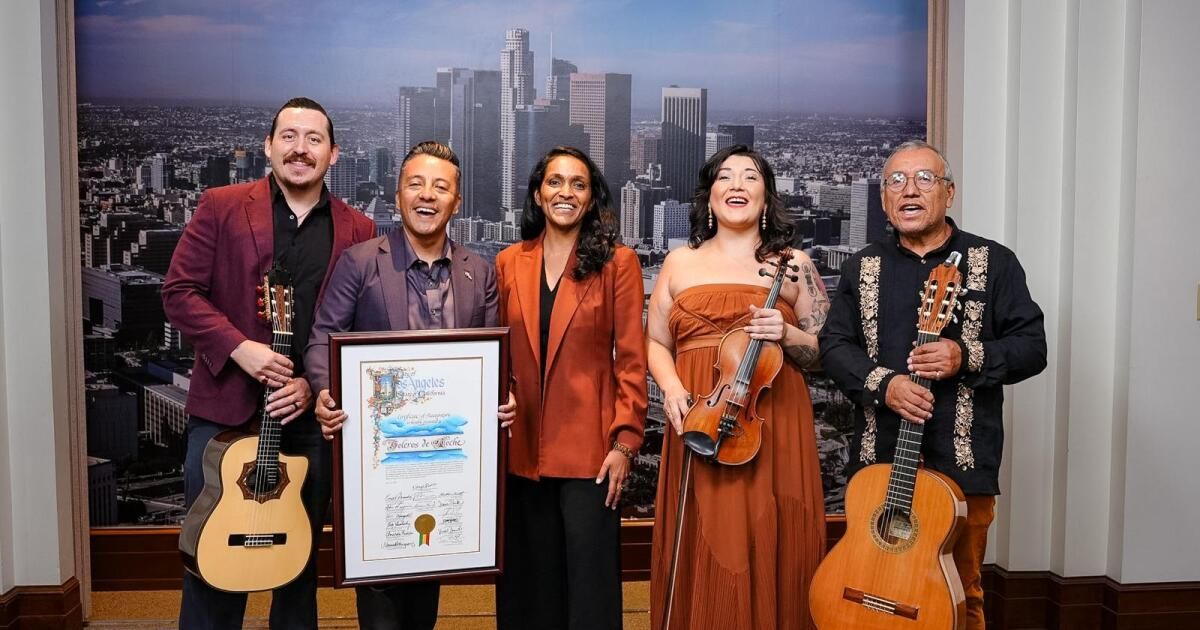
On Friday, the city of Los Angeles honored the series' decade-long run and the legacy of inspiring bolero music by declaring August 1 “Bolero Day.”
Boleros are ballads that stand out for their slow rhythm and romantic lyrics accompanied by a crooning vocal style. Although the genre originated in Cuba, it quickly gained popularity throughout Latin America, with each culture putting their own spin on it. In the early 20th century, the evolution of the bolero sound was shaped by the Cuban group Trío Matamoros, Mexican composer Agustín Lara, Puerto Rican artist Rafael Hernández, and Ecuadorian singer Julio Jaramillo.
The genre experienced a resurgence in popularity in the 1980s and 1990s, when famous Mexican artists Juan Gabriel and Luis Miguel adopted the bolero sound. In recent years, the bolero movement has been modernized and electrified by artists such as Mon Laferte, Romeo Santos, Adrián Quesada and Kali Uchis. In the last five years Quesada has released two bolero albums,”Psychedelic Boleros” and “Psychedelic Boleros II”, which mixes the classic sounds of the genre with elements of psychedelic rock.
“Over the last decade, Boleros de Noche has presented numerous concerts with local and international artists, bringing together thousands of people throughout the city to enjoy the lush orchestration of this music,” said Councilwoman Nithya Raman, who presented Carlos with the honor. “For many in the Latino community and beyond, this is not just music, it is memory, it is home and, perhaps most importantly, it is a heritage carried forward.”
Raised in Los Angeles County by parents who emigrated from the Mexican state of Oaxaca, Carlos says he first fell in love with live performances and bolero music as a teenager, when he frequented the now-defunct Teatro los Pinos in South Gate.
I longed for that same level of comfort and wonder in music and wanted to share it with a broader audience. The first version of Boleros de Noche took place in 2015 at an art gallery in Echo Park.
“Over the years, I have heard countless stories from audience members telling me how this music reminds them of their parents, grandparents, first loves and family traditions,” Carlos said Friday at City Hall. “Ten years ago, bolero was rarely part of our city's cultural conversation, and today bolero programming can be found throughout Los Angeles, and I am honored that Boleros de Noche has been a driving force behind its growth.”
Boleros de Noche has been a sold-out show at the Ford for the past few years and has featured artists such as Gaby Moreno, Marisoul and the legendary trio Los Panchos. In 2025, the event made its debut at Chicago's historic Symphony Center.
The popularity and cultural importance of the bolero genre has also been highlighted outside of Los Angeles in recent years.
On December 5, 2023, UNESCO, a United Nations agency designed to safeguard social and cultural foundations, recognized the musical genre as Intangible Cultural Heritage of Humanity.
As part of Friday's ceremony, Carlos and his bolero group Los Rebeldes Románticos performed several songs, including the classic Mexican bolero “Sabor a Mí.”
Last year, Carlos spoke to The Times about his ambitions for Boleros de Noche and the mindset driving the event series.
“In Boleros at Night, [I want] “So that we can speak in Spanish, feel recognized, make this music as a celebration for all these artists who unfortunately became background music for many weddings and quinceañeras,” he said. “How about we celebrate them and give them recognition? How about, through my events, I can take people back to the 1940s to my experience at Teatro los Pinos?”
Given the recent attacks against Latinos locally and nationally, Carlos said he hoped his events would create a safe and welcoming gathering place.
“It's about bolero music. It's about the community. It's about the people. It's about the musicians,” he said. “A lot of the musicians were undocumented. They brought this music to Los Angeles through their hometowns.”