This is the story of a politician whose house saw three funeral processions of martyrs and who survived several assassination attempts.
After the martyrdom of his own son, his younger brother and his nephew, this brave politician folded, but today he remains a symbol of courage and steadfastness in Pakistani politics.
I recently read his autobiography, in which he reveals many historical secrets. Haji Ghulam Ahmed Bilour’s autobiography is titled “Main Kyun Nahi Toota?” (“Why haven't I broken?”), but this is not just the story of one individual; It is the story of democracy and the constitution in Pakistan, which has been attacked time and again.
People like Haji Bilour defended democracy and the constitution and made enormous sacrifices. They were attacked not only by military dictators and the Taliban, but also by democracy advocates who became civilian dictators after coming to power. Today, this democracy also has its back bent, but it tries to move forward slowly, relying on crutches.
Haji Bilour has been an eyewitness to the important events of the last half century. He spent time in prison alongside important figures in Pakistani politics, including Khan Abdul Ghaffar Khan (known as Bacha Khan in Pakistan and Border Gandhi in India), Wali Khan, Mir Ghaus Bakhsh Bizenjo and Khair Bakhsh Marri.
Dr. Muhammad Sohail Khan recorded his memories for two years and after 36 hours of recording, compiled the manuscript of this book. Reading it, one repeatedly realizes that our politicians and state institutions have not learned any lessons from their past mistakes; In fact, they seem determined to repeat those mistakes in the name of the national interest. They do not understand that political revenge and the use of force only generates more revenge, making things worse than before.
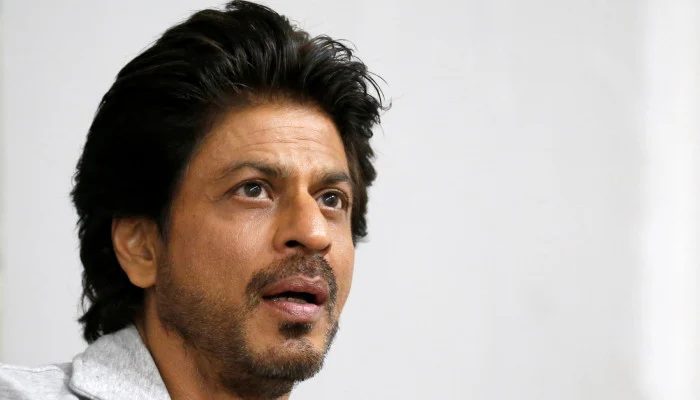
Haji Ghulam Ahmed Bilour's father, Bilour Din, was a well-known businessman in Peshawar. Famous Indian film actor Shah Rukh Khan's father, Taj Muhammad Khan, and his brother Ghulam Muhammad Gama were close friends of Bilour Din.
This family was also very close to Haji Ghulam Samdani, a well-known Kashmiri businessman from Peshawar. The sons of Samdani and Taj Muhammad Khan were active workers of the Indian National Congress and Khan Abdul Ghaffar Khan's Khudai Khidmatgar movement. Muhammad Younas, son of Haji Samdani, was very close to Jawaharlal Nehru and Indira Gandhi. Muhammad Younas moved to India on Nehru's advice after partition.
After the creation of Pakistan, a Kashmiri migrant, Khan Abdul Qayyum Khan, became Chief Minister of the then NWFP (now Khyber Pakhtunkhwa). Before joining the Muslim League, Khan Qayyum had been in the Congress and had even written a book titled “Gold and Guns” against the Muslim League and Quaid-e-Azam Muhammad Ali Jinnah.
Seeing which way the wind was blowing in 1946, he left the Congress and joined the Muslim League. He was elected to the Peshawar provincial assembly in 1946. After becoming Chief Minister in 1947, he banned his own book written against the Muslim League and began taking revenge on the associates of Khan Abdul Ghaffar Khan.
Khan Qayyum imposed Section 144 in Peshawar in 1948; When some followers of Khan Abdul Ghaffar Khan violated this order, the police opened fire on Babra and killed many people. Arrests of Khudai Khidmatgars began. Repeated raids were carried out to arrest Taj Muhammad Khan, forcing him to leave Peshawar with his family for Delhi. His friend Muhammad Younas was already in Delhi and taking care of Taj Muhammad Khan's family. After arriving in India, Taj Muhammad Khan stayed in touch with Haji Bilour and once visited Haji Bilour's house in Peshawar with his family.
Haji Bilour begins his book with the political victimization of Shah Rukh Khan's father, which he witnessed as a child. Haji Bilour claims that Shah Rukh Khan's father Taj Muhammad Khan actually left Pakistan because he was fed up with Khan Qayyum's tyranny, after being repeatedly and unjustly arrested. At first, Haji Bilour and his family stayed away from politics.
In 1964, military dictator General Ayub Khan announced presidential elections and the opposition named Fatima Jinnah its joint presidential candidate. Young Haji Bilour used to serve water to people at Fatima Jinnah's rallies in Peshawar. At one such rally in Peshawar's Jinnah Park, he was moved by a speech in support of Fatima Jinnah given by Wali Khan (called a “traitor to the nation” by the dictator), and that was the moment when Haji Bilour decided to enter politics. It was not only Wali Khan who supported Muhammad Ali Jinnah's sister. Sheikh Mujib ur Rehman in Dhaka also supported her. Dictator Ayub Khan declared Fatima Jinnah an Indian agent and defeated her through manipulation and use of brutal force.
In 1969, Haji Bilour formally joined the National Awami Party (NAP). In the 1970 elections, the NAP won 15 seats in the province, while Khan Qayyum's Muslim League won 12. JUI had four seats and the Pakistan People's Party three.
Khan Qayyum tried to form a government with the help of JUI. JUI wanted the provincial Finance Ministry, but Khan Qayyum wanted to keep that portfolio. To block Qayyum, NAP offered JUI the prime minister's post.
JUI agreed and Maulana Mufti Mahmood (father of Maulana Fazlur Rehman) became Chief Minister. In Balochistan too, the NAP, with the support of the JUI, appointed Ataullah Mengal as Chief Minister and Ghaus Bakhsh Bizenjo as Governor.
To counter the NAP, the then Prime Minister Zulfikar Ali Bhutto appointed Khan Abdul Qayyum Khan as federal Home Minister and his brother Abdul Hameed Khan as Prime Minister of Azad Kashmir; Both brothers belonged to the Swati tribe of Baramulla.
Haji Bilour relates that for all their differences with Bhutto, they worked with the PPP to draft and pass the 1973 Constitution, but men like Khan Qayyum remained consumed by the desire for revenge.
Haji Bilour said that Khan Abdul Ghaffar Khan spent most of his time in prisons after the creation of Pakistan. He now lived in Afghanistan to avoid prison, since he was ill.
In 1972, Haji Bilour was tasked with visiting Khan Abdul Ghaffar Khan in Afghanistan to bring him back to Pakistan as the NAP was now in power at home.
When Haji Bilour met this great leader in Jalalabad, he learned that Indian Prime Minister Indira Gandhi had made an offer to Khan Abdul Ghaffar Khan to move to India. Haji Bilour further states that Indira Gandhi wanted Khan Abdul Ghaffar Khan to become President of India.
Khan Abdul Ghaffar Khan humbly thanked him and said that he was a follower of Mahatma Gandhi and was never interested in high offices. Khan Abdul Ghaffar Khan quietly returned to Pakistan with Haji Bilour and never told anyone about the offer made by Indira Gandhi.
The two provincial governments of NAP and JUI made decisions in favor of making Urdu the official language, but their government in Balochistan was branded as anti-state and dismissed by Bhutto's federal government under pressure from army generals.
In 1973, a joint opposition rally in Liaquat Bagh, Rawalpindi, came under fire. Many people died. According to Haji Bilour, they took the dead bodies of their workers to Peshawar but still they did not speak against Pakistan.
After this incident, PPP Minister Hayat Muhammad Khan Sherpao was killed in a bomb blast at Peshawar University. The Bhutto government arrested Haji Bilour, his two brothers, and other NAP leaders on charges related to this murder, and the Supreme Court banned the NAP.
A former NAP leader, Jumma Khan Sufi, who was with Ajmal Khattak in Kabul at the time, wrote in his Urdu book Fareb-e-Natamaam that two young men, Anwar and Amjad, were responsible for Sherpao's murder and fled to Kabul after the bombing. The ANP calls this book a pack of lies, but the truth is that the NAP suffered the most damage from Sherpao's murder, as it led to the banning of the party.
In 1975, Haji Bilour became a senator for the first time. He needed five votes and some of his own party's MPAs were not willing to vote for him, so he turned to Maulana Mufti Mahmood for help. The saintly Maulana received two votes from his own party for Haji Bilour, ensuring his election.
Haji Bilour says that the two JUI AMPs did not even ask him for a cup of tea in return, something unimaginable today.
After General Zia's martial law, the imprisoned NAP leaders were released. General Zia later offered Wali Khan the prime ministership through General Fazle Haq, hoping to use him against Zulfiqar Ali Bhutto. But Wali Khan set one condition: if General Zia took off his uniform and promised elections within six months, he would become prime minister.
Zia refused and, with the backing of certain forces and the United States, remained in power for eleven years. Bhutto was hanged and the NAP leaders continued their politics under a new party name, becoming part of the Movement for the Restoration of Democracy (MRD) with the Pakistan People's Party.
Haji Bilour says if Bhutto had not dismissed the NAP provincial government in Balochistan, he would not have been hanged and the constitution would not have been violated again and again; Bhutto could have tolerated them in two provinces and continued ruling Punjab, Sindh and the center for twenty years.
Haji Bilour's life story tells us why Shah Rukh Khan's family moved from Pakistan to India and why Bhutto was hanged. The final lesson is the most important: political victimization always weakens democracy. It is a sign of weakness, not strength.
The writer is a senior journalist, anchor and columnist associated with Geo News, who covered the wars in Afghanistan, Kashmir, Sri Lanka, Iraq, Syria, Lebanon, Palestine, Ethiopia and Chechnya. Post to X@HamidMirPAK