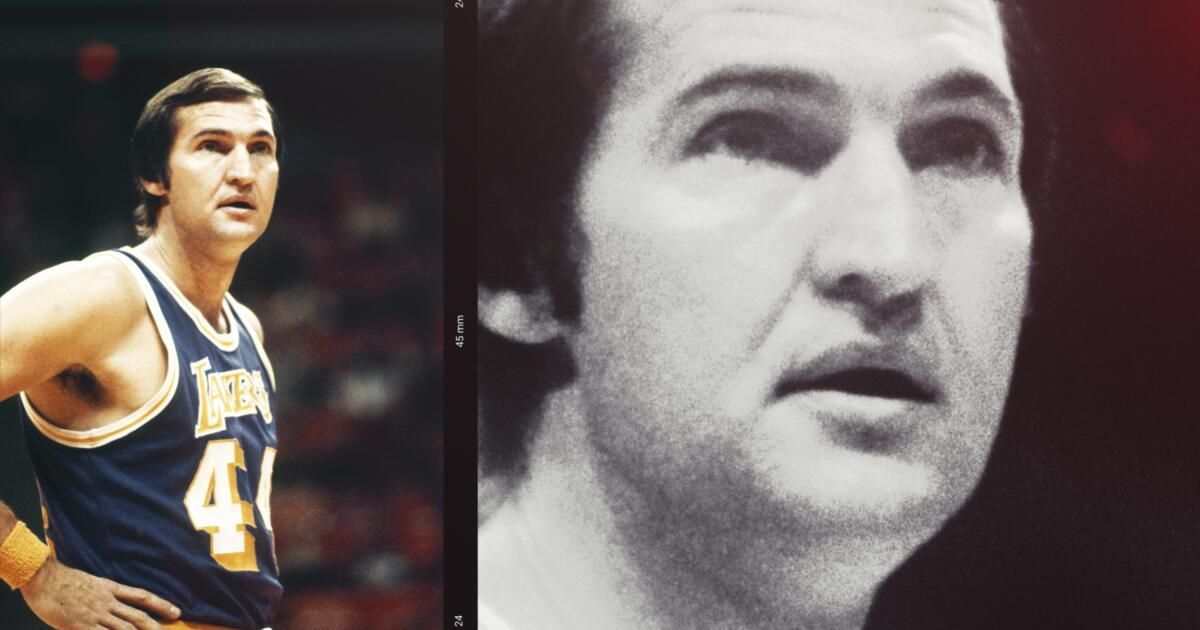
The legend of Jerry West was so well established when he retired from the Los Angeles Lakers in 1974 that he had already been the inspiration for the NBA logo. Half a century later, West remains seventh all-time in points per game and holds the record for points per game for a playoff series, numbers even more notable because he did it without the three-point shot.
But of course, West wasn't done. As a scout and general manager, he was a key architect of the Showtime Lakers teams of the 1980s and then acquired Kobe Bryant and Shaquille O'Neal to build another dynasty. West was also an executive for the Golden State Warriors in their heyday, providing crucial advice on player personnel.
However, throughout all of this, West struggled with depression and a sense of self-loathing, and struggled with intimacy, largely as a result of a difficult childhood in West Virginia with a domineering father.
That dichotomy, his outward success and his inner turmoil, are at the heart of “Jerry West: The Logo,” a new documentary for Prime Video, from “blackish” creator Kenya Barris, who is directing her first documentary.
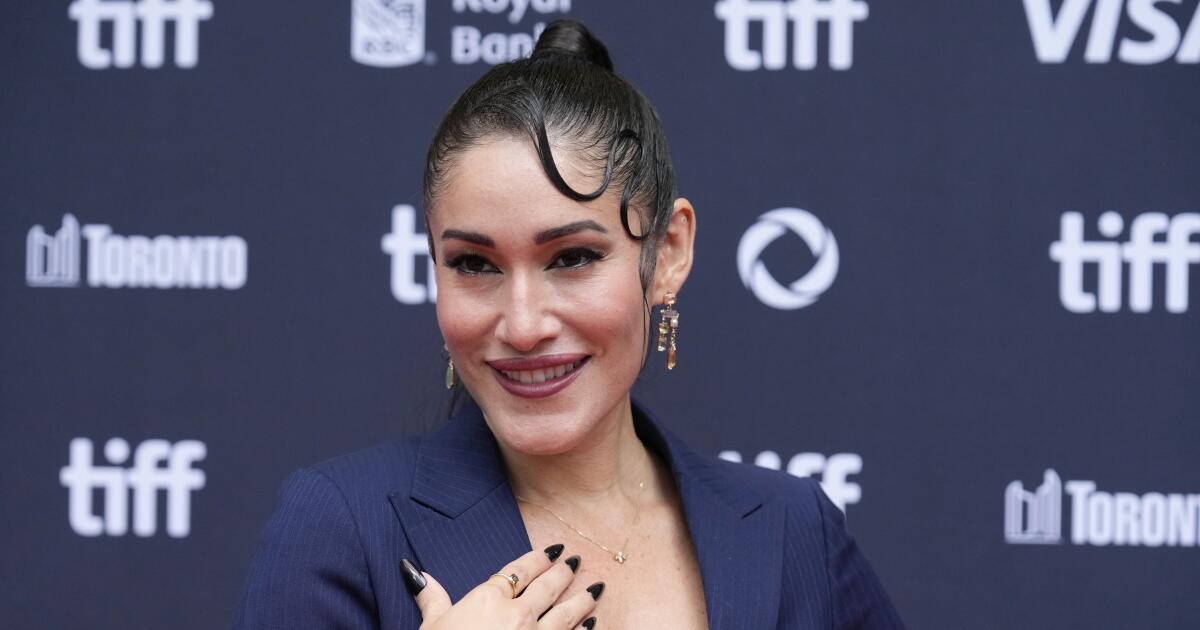
Kenya Barris in “Jerry West: The Logo.”
(Major)
“I'm from Los Angeles and I was a Showtime Lakers fan growing up,” Barris says, so he put his name on the project thinking he'd at least meet a hero. “But we immediately hit it off and I felt a kinship with him.”
That ability to connect was part of West's magic, as attested to by the host of NBA legends who pay tribute to him in the documentary, including Lakers such as Magic Johnson, James Worthy, Pat Riley and O'Neal, along with Steph Curry and Michael Jordan.
West traded Vlade Divac to secure the rights to Bryant, but selected West to present at his Hall of Fame induction. In a recent phone interview, Divac praised West as “a father figure when you needed him and a friend when you needed him. He was very honest, he cared about people and he helped you achieve your goals. He's one of the best guys I've ever met. Period.”
Barris, who conducted extensive interviews with West before the Laker icon died in 2024, recently spoke via video about the making of the documentary, which also includes NBA commissioner Adam Silver acknowledging for the first time that West was the sport's logo. This conversation has been edited for length and clarity.
Jerry had already opened up about his life in his memories, “West by West” But do you think this was still cathartic for him?
His book really attracted me to do the documentary because it was so honest. I think the idea of him saying these things out loud in front of a camera with his children and grandchildren around was cathartic for him.
Did you feel like you were approaching the end?
Jerry said, “I feel like I'm in God's waiting room.” He didn't like getting older because he was so in touch with his body as an athlete: he could jump higher and run farther than his friends. When I met him, he was on the treadmill and running with weights. He was over 80 years old but he said: “Before I could run with more weights.”
He felt old, but I don't think he thought he was about to die.
Were you upset about your portrayal in the HBO Lakers series?Time to win”, which generated controversy in 2022?
The show was entertaining, but it really bothered him and didn't seem fair. I think that series might have pushed him to want to do this, if I'm being completely honest.

“Jerry was like, 'I feel like I'm in God's waiting room,'” said director Kenya Barris, who conducted extensive interviews with the Lakers legend before his death in 2024.
(Major)
He and his family speak openly on camera about their mental health issues. Was it difficult to balance that tone with your great basketball accomplishments?
I didn't want to do something that was moody or a melodrama. But it wouldn't be complete if I didn't talk about the struggles. When I first met him, he was coming out of a depression and anyone who has been through that understands that it really is a struggle. So, forming a complete picture of who this character was was really important. And it was also important for his family because they experienced this with him too. They were sad to see him suffer, but they had suffered too.
We really wanted to talk about who this character was and what shaped him. Most of who we are was formed between the ages of 0 and 12, and in those years, Jerry saw a lot and went through a lot.
When his older brother was killed in Korea and his father put the coffin next to the Christmas tree…
That was crazy. If we could get the audience to understand who this man was, it would give them empathy for everything that followed.
As GM [general manager]he was a white guy in this predominantly black sport, but he also came with resentment, and he saw these young players who hadn't had strong father figures and came from socioeconomically disadvantaged backgrounds like him, and he was able to build real relationships with them.
He didn't want to talk about it too much in the documentary, but he did a lot for civil rights and for defending NBA players, for black players, who didn't have the same voice as him. But he did it in silence.

Jerry West signed Shaquille O'Neal with the Lakers in 1996 after four years with the Orlando Magic. (Andrew D. Bernstein/NBAE via Getty Images)

Jerry West, left, Kobe Bryant and Lakers head coach Del Harris in 1997. Bryant was acquired in a trade for Vlade Divac. (Juan Ocampo/NBAE via Getty Images)
One thing the documentary avoids is the troubled relationship with Phil Jackson (who isn't even mentioned) and the cause of West's departure from the Lakers right after building that dynasty. Didn't you want to discuss it?
We talk about it. You can't have such a long career and not accumulate some controversial things. But I didn't want this to be a leer at negative accounts. I came up with the idea of tension with the Lakers, but I wanted to make sure I didn't taint that relationship based on certain things that I wasn't going to delve into. It wasn't some sort of catch-you documentary. It was more of a tribute to him.
People have wondered if he had stayed, if he could have prevented the relationship between Kobe Bryant and Shaquille O'Neal from getting worse, and I would have been interested to know what he thought.
We talked about that. He believes he could have gotten them to stay together and said he thinks they could have gone on and won four or five more championships.