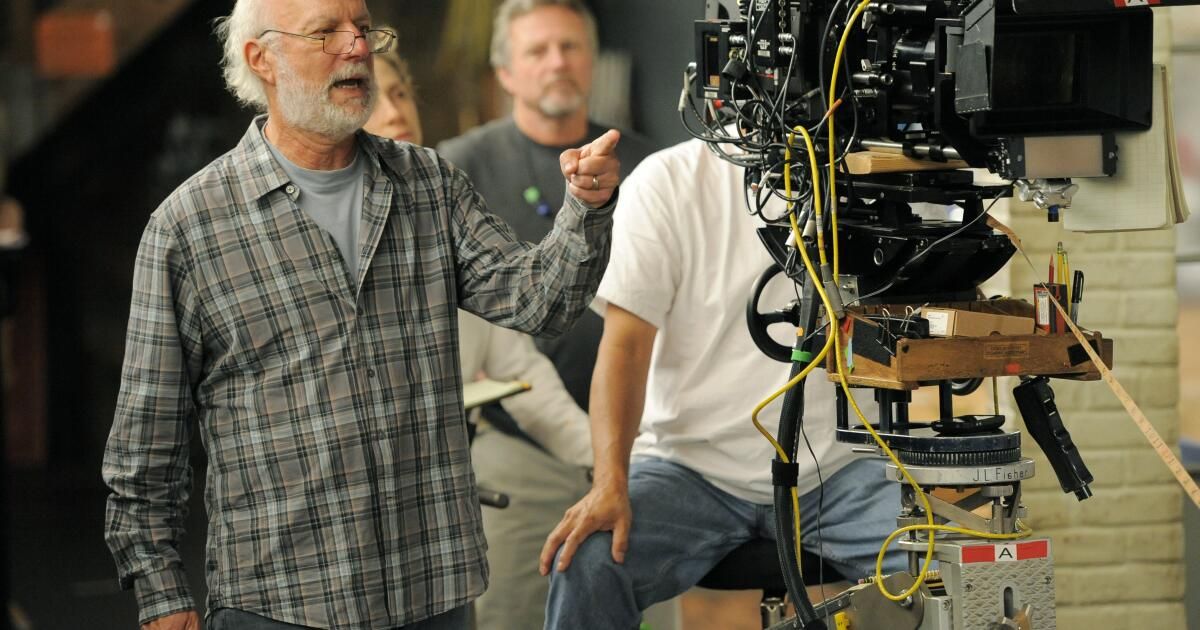
Unlike film, where directors get the glory, television directors are lower in the hierarchy, below creators, producers and actors. In most series, which can use several throughout a season, they are interchangeable, which does not mean that they are not valuable, since they transform the words on a page into a four-dimensional living being. But a director hired to helm a pilot, such as James Burrows, who died Friday at age 85, time and time again, almost like a lucky charm, helps set the tone of the series. Jake Kasdan's input was crucial to the feel (and philosophy) of “Freaks and Geeks,” as was Hiro Murai's to “Atlanta” (and more recently, “Widow's Bay”). In some cases, a director is a co-creator in all but title and union membership. A show may later be passed on to later hands, but they will respect its established look.
But Burrows was more than a little known. If you had seen the opening credits of “Taxi,” whose pilot he directed along with 74 other episodes (and why not, with its pleasant theme of Bob James and Checker Cab crossing the Queensboro Bridge), you would have seen his name for weeks. You may have noticed him in “Cheers,” which he co-created and for which he directed 236 episodes, or in “Will & Grace” (246 episodes), or in “Frasier,” “The Big Bang Theory,” “3rd Rock From the Sun,” “Caroline in the City,” “Two and a Half Men,” “2 Broke Girls,” “The Neighborhood” or, just last year, “Mid-Century Modern,” all series whose pilots he directed. You may have caught it on episodes of “The Mary Tyler Moore Show,” “Phyllis,” “Rhoda” or “Laverne & Shirley,” until you started thinking that maybe there was no one else directing multicamera network sitcoms, the most humane of television formats and a specialty from which it rarely deviated.
And you may have seen him as himself this year in the third season of Lisa Kudrow's “The Comeback,” as the man she recruits to save a TV pilot from AI jokes. “The surprising thing only comes from a group of writers huddled in a corner, beating themselves up for a better joke,” he says.
“As a director, I am there to help build the ensemble, do whatever I can to foster a community within the company, and train a new group of actors to behave as a group and respect each other,” he wrote in his 2022 memoir, “Directed by James Burrows.” He famously took the cast of “Friends” to Las Vegas before the show premiered to foster bonds in a state of anonymity that would soon become impossible. “I guess I have a gift for creating families,” he told the New York Times in 2023.
But if “Friends” refers to the characters and the people who play them, it also includes the audience. Burrows' talent was to create a real relationship between the viewer and what was seen. “You want to go where everyone knows your name,” says the song “Cheers,” and where you know everyone's name. The families he excelled at creating were also your own, and you watched knowing that these things were happening in real time in real space, and that you could be in the room, if you made the effort. Tickets were available.
The son of Abe Burrows, who wrote or co-wrote the “Guys and Dolls” books, “Can-Can” and “How to Succeed in Business Without Really Trying,” and co-created the radio comedy “Duffy's Tavern” (set, like “Cheers,” in a bar, although the younger Burrows denied any influence), he had been directing dinner theaters when he had the idea to write to Mary Tyler Moore, whom he had met on the set of a musical “Breakfast at Tiffany's” never released. His stage experience (and his degree from the Yale School of Drama, presumably) proved eminently transferable to the proscenium reality of the multi-camera sitcom.
What Burrows' shows share (the ones we remember, at least, from many who don't) is that they are fundamentally joyful. They lack cynicism. They are expressive of their time without being strikingly edgy. They walk a line between freshness and familiarity, making you want to come back week after week. They may go further (after all, “Friends” was something new), but in a subtle way. We can assume, given his reputation and the fact that he could have retired with just “Cheers,” that he liked what he did and did what he wanted, and consider his choice of projects a form of personal expression in itself, the foundation of a body of work that has endured and will endure.