The clamor surrounding the World Cup controversy involving US President Donald Trump and FIFA chief Gianni Infantino had barely died down when another erupted following Argentina's controversial 3-2 victory over Egypt in the round of 16 match in Atlanta.
As the defending champions staged a stunning comeback against the Pharaohs in Tuesday's knockout match, questions were raised about an unusually late VAR call that disallowed Egypt's second goal, followed by a chain of events that led to Argentina's victory.
Recommended stories
list of 4 itemsend of list
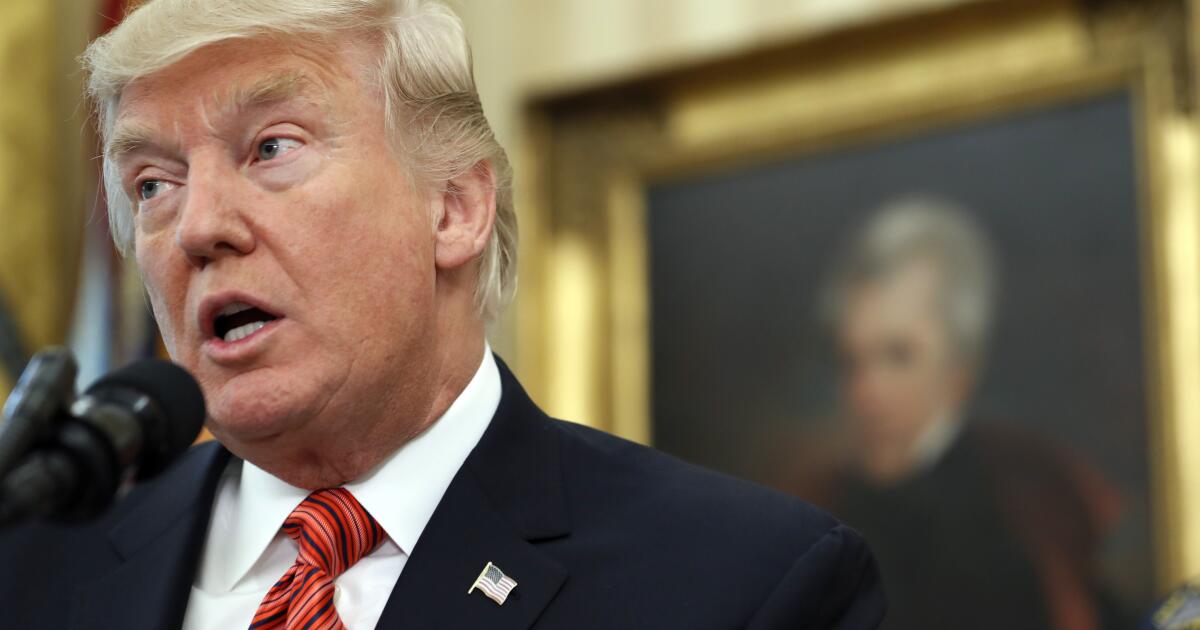
A day earlier, Trump had revealed that he had asked FIFA to review and overturn American striker Folarin Balogun's one-match suspension for a red card, and the governing body controversially agreed. Belgium put the matter to rest when they ousted the hosts from the tournament with a 4-1 victory in the match from which Balogun was initially suspended but ended up playing, unsuccessfully.
Trump's remark on the World Cup
While the anger surrounding Fifa's red card decision was directed at both football's governing body and Trump, Egypt's outburst was directed solely at the organisation, which, according to Egypt's manager, had “wanted to keep the world champions in the competition”.
Coach Hossam Hassan speculated that referees had been pressured to ensure one of the biggest names, Argentina's Lionel Messi, remained in the tournament.
“Maybe they wanted Messi to stay in the race,” Hassan told beIN Sports after the match.
“In football sometimes there are external factors that go beyond the technical aspects. The world champions received support at all levels.”
While the tournament has been no stranger to the political spotlight of questionable integrity, experts say the lines between sport and politics have become even more blurred.
“After the Balogun affair, who knows which decisions are legitimate and trustworthy and which are not?” Simon Chadwick, professor of Afro-Eurasian sports at Emlyon Business School in Shanghai, told Al Jazeera.
“If the Trump administration maintains a brief oversight over the tournament, it is worth remembering: Argentina's president, Javier Milei, is a strong Trump supporter.”
Trump and his Argentine counterpart share a close relationship. Milei is a regular fixture at pro-Trump political rallies in the United States, and Trump has described Argentina's far-right populist leader as his “favorite president.”
Chadwick also opined that Hassan's vociferous support for Palestine at the World Cup could have led some officials to “have built-in biases when making decisions.”
Hassan dedicated part of his pre-match press conference on Monday to making a passionate appeal for the people of Palestine, especially those in the besieged Gaza Strip.
Advantage, Argentina
Returning to the VAR call that halved Egypt's lead and was followed by decisions that conveniently favored Argentina, Chadwick said the period of play was “unusual.”
He wondered why the referee had not called a foul in real time that the VAR detected several moments later and only when Egypt scored their second goal.
“There was something clearly unusual about the goal and the VAR decision, something that was amplified when Argentina scored one of their goals,” Chadwick said, questioning the refereeing standards in the match.
“In the build-up, an Argentine player committed an infringement, which could have been interpreted as a similar infringement to that allegedly committed earlier by the Egyptian player. To say the least, the refereeing standards during the match were somewhat inconsistent, although critics clearly make much more serious claims.”
But while many social media commentators and soccer experts were outraged by the decisions (Portuguese soccer icon Jose Mourinho reportedly called the match a “daylight robbery”), some soccer experts said it was a closer call.
“Stealing can be a strong word,” said soccer analyst Ali El Garni.
“I would say that the decisions made by both the referee and the VAR could have gone either way, and Argentina benefited from all the 50/50 incidents.
“The incident that led to Egypt's disallowed goal was an undisputed foul. The question is how far VAR should go back to check the legitimacy of a goal,” said El Garni, who has reported extensively on European and North African soccer.
However, he questioned whether VAR would have intervened if the score had been 2-0 in favor of Argentina.
“Would the goal have been disallowed if Argentina had scored? It's unlikely,” he said.
“What makes matters worse for Egypt is the fact that a similar incident involving what appeared to be a foul in [Mohamed] “Salah intervened before Argentina's third goal and the VAR did not intervene,” he said.
Meanwhile, Chadwick questioned why VAR officials had raised the issue if the referees on the field did not call a foul when Egypt's Marwan Attia tugged lightly on the shirt and stepped on Lisandro Martínez's foot.
A logical solution to the VAR problem, Chadwick proposed, would be “for fans and spectators to hear an assessment of the alleged infringement, hear the various arguments and have a clear idea of the basis for a decision.”
Chadwick admitted that although the Egyptian players should not have been overcome with emotion, “the VAR decision induced a sense of injustice.”
“This technology was supposed to minimize hesitation and provide consistency. Instead, its use during this match had important cognitive and behavioral effects,” he said.
“In fact, instead of brandishing cards and further aggravating the situation, the referee should have used his discretion and judgment to calm the situation.”
While Chadwick dismissed rumors of match-fixing in favor of Messi and Argentina, he acknowledged the appeal of the iconic footballer's star power.
“There is no doubt that Messi is a box office attraction that the tournament cannot do without.”