California researchers are leading a nationwide effort to find out why some Asian American communities have high rates of certain types of cancer.
It comes as health experts see rising rates of lung cancer among Asian American women who have never smoked and rising rates of early-onset breast cancer.
“Asian Americans are actually the first racial and ethnic group for whom cancer is the leading cause of death,” said Scarlett Gomez, an oncology epidemiologist at the University of California, San Francisco and leader of the project.
UCSF joins researchers from UC Irvine, UC Davis, Cedars-Sinai and Temple University in launching a $12.5 million National Cancer Institute-funded study called the ASPIRE Cohort, which will follow 20,000 Asian Americans over time. Researchers say it is the first large-scale longitudinal cancer study focused on Asian Americans.
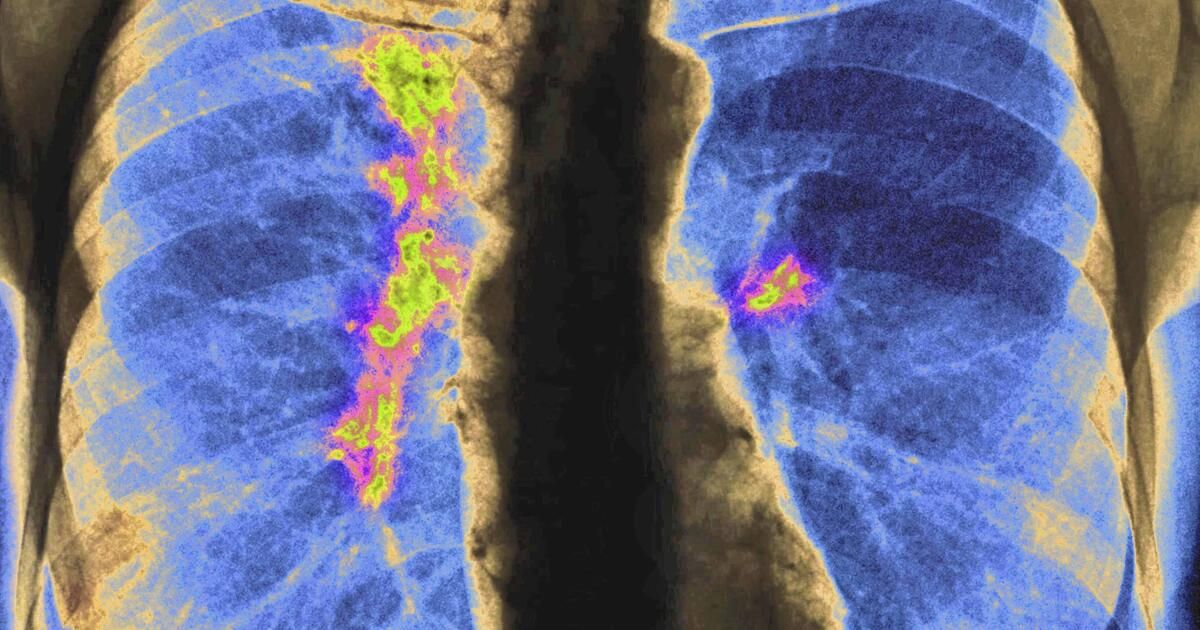
The incidence of lung cancer has decreased in much of the United States as smoking rates have decreased. However, researchers have noted a slight increase among Asian Americans, despite relatively low smoking rates, particularly among women. They say more than half of Asian American women diagnosed with lung cancer are non-smokers.
Many existing studies on lung cancer risk among non-smokers have been conducted in Asia, where exposure patterns can differ significantly from those in the United States, said Iona Cheng, a molecular epidemiologist at UCSF and also the project leader.
Researchers know that outdoor air pollution, secondhand smoke, and cooking oil fumes can contribute to lung cancer risk. But it's unclear whether this explains disease patterns among Asian Americans in the United States.
Rising rates of breast cancer among Asian American women are also driving the push.
“Early-onset breast cancer” (diagnosed before age 50) “is increasing most rapidly among Asian Americans,” Gomez said. Recent data shows that rates among Asian Americans, Native Hawaiians and Pacific Islanders are approaching those of non-Hispanic white women, she said. Cancer experts don't know why.
One of the central goals of the ASPIRE study is to move beyond treating Asian Americans as a single category. The term can include people with roots in dozens of countries, from Sri Lanka to China's border with Russia and the Pacific Islands, with completely different exposure patterns and cuisines.
“When we separate and look at all the different Asian ethnicities, we see a wide variation,” Cheng said.
Filipino women have a higher incidence of thyroid cancer, and stomach cancer has been more common among some Koreans and Japanese. Combining all Asian Americans into one category can make those differences impossible to detect.
The study also seeks to address longstanding gaps in representation. Although Asian Americans make up nearly 8% of the U.S. population, they have historically received little research funding.
The researchers said existing cancer studies have also often included too few Asian Americans to draw meaningful conclusions about specific ethnic groups. Salma Shariff-Marco, a social and behavioral scientist at UCSF and also a leader of the projects, helps make it difficult to demonstrate the need for more specific research. The ASPIRE cohort, he said, is designed to show variation by including a broader range of ethnic groups and more contemporary exposures than previous work.