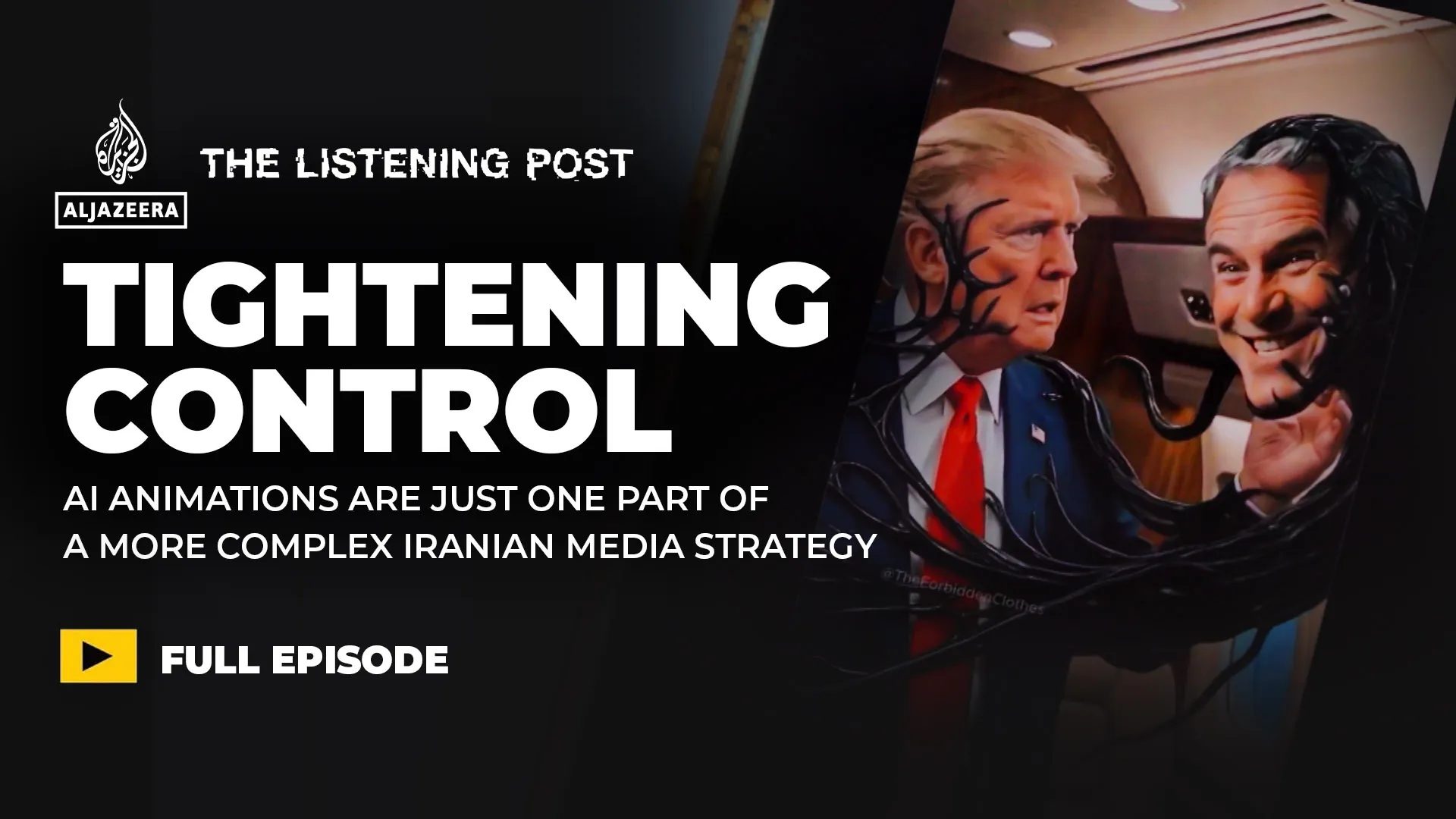
The information front has been critical to the Iranian government's war effort.
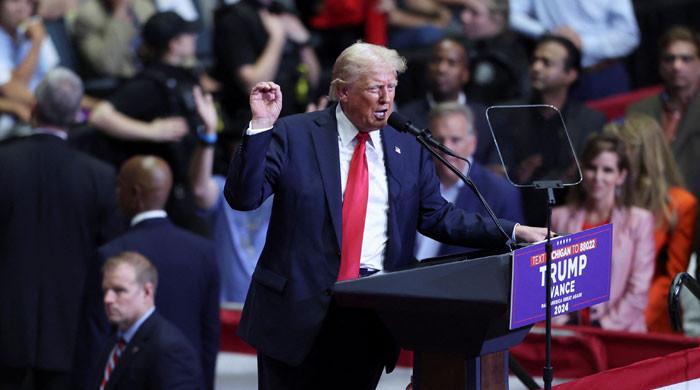
For an external audience, there is an innovative online strategy that has consisted of AI Lego, memes, and hip hop tracks aimed at Donald Trump and the MAGA base. But this coexists with more brutal internal tactics: repression, arrests and internet blackouts.
The result has been that the Iranian authorities have made use of the Internet for international public relations, while preventing the Iranian people from openly accessing the Internet.
Collaborators:
Ali Hashem – Correspondent, Al Jazeera English
Mehran Kamrava – Professor of Government, Georgetown University in Qatar
Tara Kangarlou – Journalist and author, The Heartbeat of Iran
Maral Karimi – Professor, Metropolitan University of Toronto
on our radar
The murder of Lebanese journalist Amal Khalil unfolded in the same way as so many Israeli murders of journalists in Gaza: minute by minute, hour by hour, in a pattern that has become strikingly familiar. There is the surveillance, the strike, the obstruction of the rescue and then the denial: Israel's insistence that it does not attack journalists, doctors or rescue workers.
Meenakshi Ravi reports.
Pakistan's peacemaking moment and the missing stories
Pakistan has found itself at the center of one of the world's most consequential stories: hosting talks between the United States and Iran, negotiating ceasefires, earning public praise from Donald Trump and making headlines around the world.
But this public relations moment is obscuring many things, including a covert war with Afghanistan and a crushing cost-of-living crisis at home. We spoke to Amber Rahim Shamsi about the domestic politics behind Pakistan's diplomatic moment.
Presenting:
Amber Rahim Shamsi – Pakistan Editor, Nukta
Published April 25, 2026