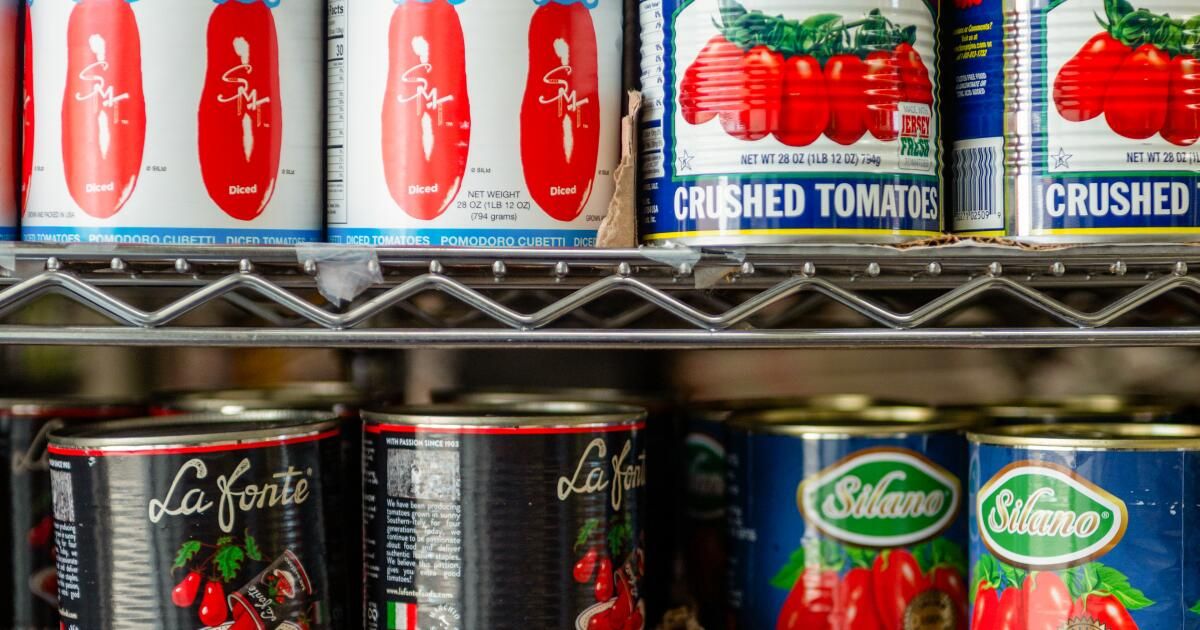
A popular American food distributor has long promised premium Italian tomatoes in its products. Two Californians claim the company is committing tomato fraud.
A lawsuit filed this month alleges that Cento Fine Foods, a U.S.-based Italian food distributor, falsely labels its products as containing San Marzano tomatoes.
The tomatoes in question are a premium variety that can only be grown in Italy's Campania region and are recognized by the food industry as the “Ferrari or Prada” of tomatoes, the lawsuit claims.
Cento, which won a similar case in New York, says its tomatoes come from the correct region, although they do not have the same certification from the Italian government.
The complaint alleges that the company is falsely branding its tomato products because they lack the proper certification necessary to use the name.
“They lack the flavor, consistency and other physical characteristics associated by consumers with certified San Marzano tomatoes,” the lawsuit states.
The plaintiffs in the California lawsuit claim they were deceived by misleading labels when they purchased the product more than a dozen times in California stores. The lawsuit seeks class action certification and asks the judge to award more than $25 million to the clients.
Cento refuted the claims made in the complaint and will seek to have the lawsuit dismissed in court, a company spokesperson told The Times on Monday.
The ongoing battle to define who can use the name San Marzano underscores the importance of food branding at all levels.
The case goes beyond regional requirements, such as calling something champagne because it is made in that part of France. It's more like Washington apples. The Washington Apple label is supported by a system of requirements and controls. Apple growers, even if they are located in the western state, can only label their fruit as Washington apple if they have gone through that process. Otherwise, you will have to use Washington apples.
San Marzano tomatoes have protected status in the European Union, meaning that an independent consortium must regulate and certify that the product is grown in the right region and with the right techniques before it is sold.
Cento says he has the right to use the name since his tomatoes are grown in the same region. Its website offers a detailed description of its harvesting and packaging process, which it claims are in line with the consortium's guidelines. Cento's tomatoes, however, are certified by an independent agency not affiliated with the consortium.
The lawsuit is unfounded, said the company spokesperson, who added that the collection process is subject to strict quality controls and is periodically audited.
“We take nothing more seriously than the quality and integrity of our products,” a company spokesperson said. “We are proud of the fact that our labels accurately describe the products they contain. Cento is a brand that consumers can trust.”
Cento was certified by the consortium until the 2010s.
A federal judge dismissed a similar case against the company filed in New York in 2020. The judge ruled in favor of Cento, ruling that a reasonable customer was not likely to seek tomatoes certified by the consortium over a product that met the same standards but was certified by a different agency.
The company then defended its harvesting methods, stating that the tomatoes are grown in the right region and with the right techniques.
The company's tomatoes are grown in the Sarnese-Nocerino area of Italy, located near Mount Vesuvius, according to its website. Tomatoes have an elongated plum shape and a pointed tip.
The third-party certifying body administers random testing throughout the growing process and tests every product that arrives at the company's warehouse in New Jersey before being released to stores, according to the website.
The website also has a traceability feature, allowing customers to use the lot number on a can to find the field in Italy where the tomatoes were grown.