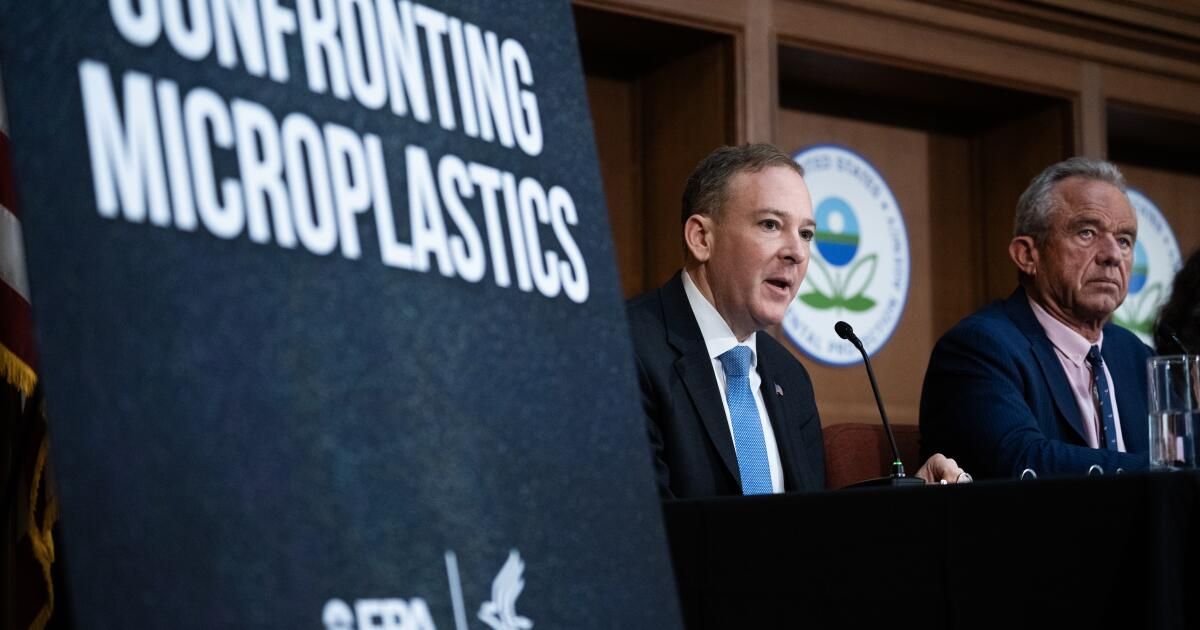
to the editor: The EPA's proposal not to control microplastics in drinking water is a failure to meet the minimum and a clear concession to the plastics industry, which has expressed its opposition to microplastic regulations in various ways (“After bold promise, EPA suspends testing for microplastics in US drinking water.” June 30).
Americans are paying attention. A recent Ocean Conservancy survey found that in just three years, awareness of microplastics increased by 33%, while nearly 9 in 10 Americans are concerned about the impacts of microplastics.
And they are right to be worried. Microplastics have been found almost everywhere researchers have looked. While scientists are still analyzing how these particles affect human health, we know that in ocean animals, microplastics can alter hormones, feeding behaviors, and more.
Monitoring alone won't solve the microplastic crisis, but we can't fix what we're not tracking. With more plastics than a garbage truck entering the ocean every minute, now is not the time to bury your head in the sand.
Anja Brandon, Portland, Oregon.
This writer is director of plastics policy at the Ocean Conservancy, a nonprofit environmental advocacy organization.