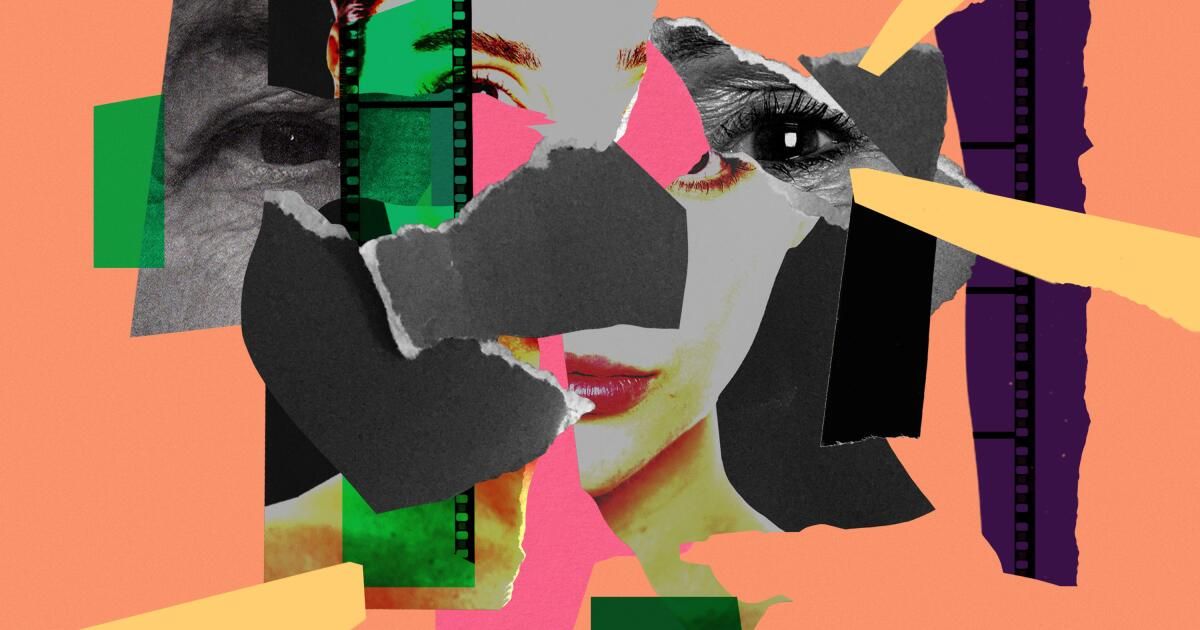
The brief for a project I was directing seemed pretty simple: We needed an actress in her 30s and 40s who could convincingly play younger and older versions of herself throughout her life. Over a few weeks, we auditioned hundreds of talented women from all over North America.
But as the performances progressed, I found myself struggling with something unexpected. The smallest emotional shifts, the fleeting flashes of joy, fear, uncertainty, pain and longing, the micro-expressions that make a performance seem human, seemed muted and numb. Faces that should have felt different and should have carried the unique imprint of a life lived were frozen in a narrow range of expressions. They began to blur.
Time and time again, I found myself searching for authentic emotional complexity and struggling to find it. Many of the actors received so many Botox injections and other cosmetic interventions that I could no longer fully read their faces. My reaction to this surprised me. As tape after tape progressed, I found myself becoming more and more restless. Then frustrated. So if I'm honest, angry.
And there was some hypocrisy here. The process was taking place just a few weeks before his 40th birthday. Every time I looked in the mirror, the wrinkles on my forehead screamed at me, insisting that it was time for a Botox refill.
That left me facing an uncomfortable truth: I passionately advocated for authenticity in other women's faces while struggling to accept it in my own.
Acting is, in essence, the art of feeling. Cinema asks us to study the human face more closely than perhaps any other medium. A close-up is an act of intimacy. We lean in and search for thoughts, emotions and meaning in the movement of a mouth, the closing of an eyelid, the tremor beneath composure.
Hollywood has made significant strides for women in recent years. We have talked about abuse, discrimination and unequal treatment. With entire movements from #MeToo and Time's Up to battles over representation, ageism and AI, the industry has increasingly recognized that women's voices, autonomy and experiences matter. But at the same time, many of the faces we put on screen are becoming less capable of expression.
In 2024, women for the first time achieved parity with men in leading roles in Hollywood's highest-grossing films. The result is a strange contradiction. We celebrate women for their strength, resilience and achievements while asking them to erase evidence of the years and experience that produced them.
On the other hand, a man with gray hair, for example George Clooney, stands out. A woman with gray hair is often said to “let herself go.” A male actor's wrinkled face is often interpreted as evidence of seriousness and experience; Just look at Brad Pitt's deepening wrinkles. A woman's expression lines are treated as problems that need to be corrected.
The face of a 60-year-old woman cannot and should not appear identical to that of a 30-year-old woman. It must contain traces of laughter and heartbreak, motherhood, ambition, exhaustion, delight, survival and loss.
I look around me and realize that women who age naturally have become the exception in Hollywood rather than the rule. There are, of course, Meryl Streep, Sarah Jessica Parker and Kate Winslet (although the list is not limited to them). The fact that they stand out among so many others who are applauded for looking the same over the decades is in itself telling.
What worries me most is not just what this means for today's artists, but what it means for the young girls watching. For generations, film and television have helped shape our understanding of who we can become. They offer us models for adulthood and show us our future.
The industry has been debating for years how artificial intelligence could replace actors. However, what if the biggest irony of the AI era is that we end up using technology to simulate the emotional complexity that real women no longer display? It would be a profound loss.
Young women are growing up in a culture where almost all visible signs of aging have been erased from the women they see on the screen and on every billboard that dots Sunset Boulevard. The lesson is clear: a woman's worth is tied to her youth. We are teaching another generation to fear the natural progression of life.
In mythology, a woman's life is often divided into three archetypes: The Maiden, who embodies possibility. The Mother, creation and care. The Witch, wisdom and experience. What worries me is that we seem increasingly comfortable with the first two, but deeply uncomfortable with the third, even though The Witch is where many of our richest stories live.
The answer is not to shame women for the decisions they make under immense pressure. This is not an argument against cosmetic procedures. I firmly believe that women should be free to make the decisions they want about their faces and bodies. It's not about blaming the actors either. If anything, they are responding rationally to an industry that has been punishing women for aging for decades. The answer is to release the pressure itself.
Studios, directors, casting directors, producers and audiences all have a role to play. We can choose to celebrate the faces of women that reflect lived experience. We can stop treating aging as a failure and start treating it as evidence of a fully inhabited life. And we can admire (and hire) women who look their age.
Because aging is not the opposite of beauty. It is one of its deepest expressions.
For my project, I finally found the woman I was looking for: an actress who had aged beautifully and naturally. As I watched his face on camera, I marveled at how the lines around his eyes and mouth did not diminish his presence; They deepened it. Something in me changed. I realized that we are rarely encouraged to see aging as something beautiful. Not despite the years, but thanks to them.
There was a grace in his face that I found deeply moving. A sense of wisdom, of self-control. She seemed more comfortable with the weather than at war with it. Looking at her I felt an unexpected reverence.
And then I realized that what I admired wasn't simply his looks. That's how she made me feel about getting older. For the first time in a long time, I found myself longing not for youth, but for grace.
I canceled my Botox appointment.
In the second half of my life as a woman and as a director, I hope for a different vision. One that honors not only youth, but also experience. Not eternity, but time.
I want to live in a culture where women's bodies are allowed to change over time, to show their years and experiences and speak their truths. And where the stories written on their faces are seen not as something to be erased, but as something worth reading.
Nicole Ackerman is a South African artist and filmmaker known for directing emotionally vibrant commercials for global brands such as Universal Studios, Lexus and Pepsi.