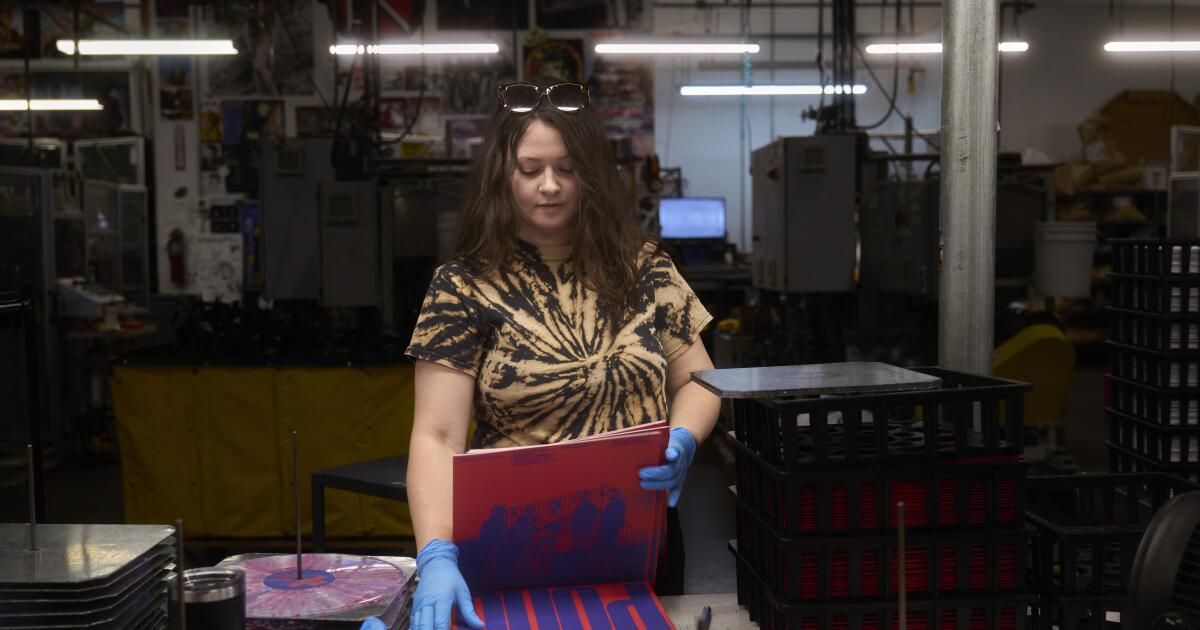
to the editor: This article raises a fair question about the environmental footprint of records, but also runs the risk of leaving readers with a misleading impression of vinyl in general (“Vinyl records are back, but they're polluting the planet. These labels are trying to help.” June 5). The framing of the story suggests that the industry is stuck in the past, but that couldn't be further from the truth. In reality, PVC continues to evolve and is often chosen because it is durable, efficient, and built to last.
Like any material, PVC should be judged over its entire life cycle, not by brief assumptions about “plastic.” More than half Most of PVC's composition comes from chlorine derived from common salt, so it is less dependent on fossil raw material inputs than many people assume. Their long lifespan also means less maintenance and replacement over time, which can reduce overall resource usage.
That's one reason vinyl is still widely used today in products ranging from construction materials and water infrastructure to critical medical equipment. And the industry does not stand still; Recycling volumes are growing, new recovery technologies are expanding options, and manufacturers are working to reduce emissions and increase recycled content. None of that means vinyl has no environmental footprint, but readers deserve a more balanced discussion, one that reflects a material that's still improving, not one frozen in outdated assumptions.
Evan Tracey, Washington
This writer is vice president of marketing and communications for the Vinyl Institute, a trade organization representing manufacturers of vinyl, vinyl chloride monomer, and vinyl additives and modifiers.