Could there be a better metaphor for the Democratic Party's plight out of power than the fact that it has already been debating for a week how the party botched an “autopsy” on how it botched the 2024 presidential election?
Or that the Democratic National Committee forced release of that 2024 autopsy last Thursday, after his leak to CNNproduced headlines that nearly eclipsed news about much more consequential neglect on the Republican side, including President Trump's continued humiliation in his war against Iran and congressional Republicans. riot about his billion-dollar ballroom, his $1.8 billion slush fund to reward the January 6 insurrectionists and other allies, and his revenge against his fellow elected Republicans?
First, dispense with the autopsy: As former Obama strategist and podcaster Dan Pfeiffer titled his recent newsletter, “Ken Martin Has to Go.”
Martin, the chairman of the Democratic National Committee, is, by all indications, a good guy. You are right to promote a 50 state strategy that funds partisan organizations in both red and blue states; he wisely refuses to lead a political party that loses half the nation. Yes, that funding is a burden when donors aren't putting up money amid the months-long controversy over the autopsy draft that Martin suppressed. But no party raises money easily if it does not occupy the White House or Congress.
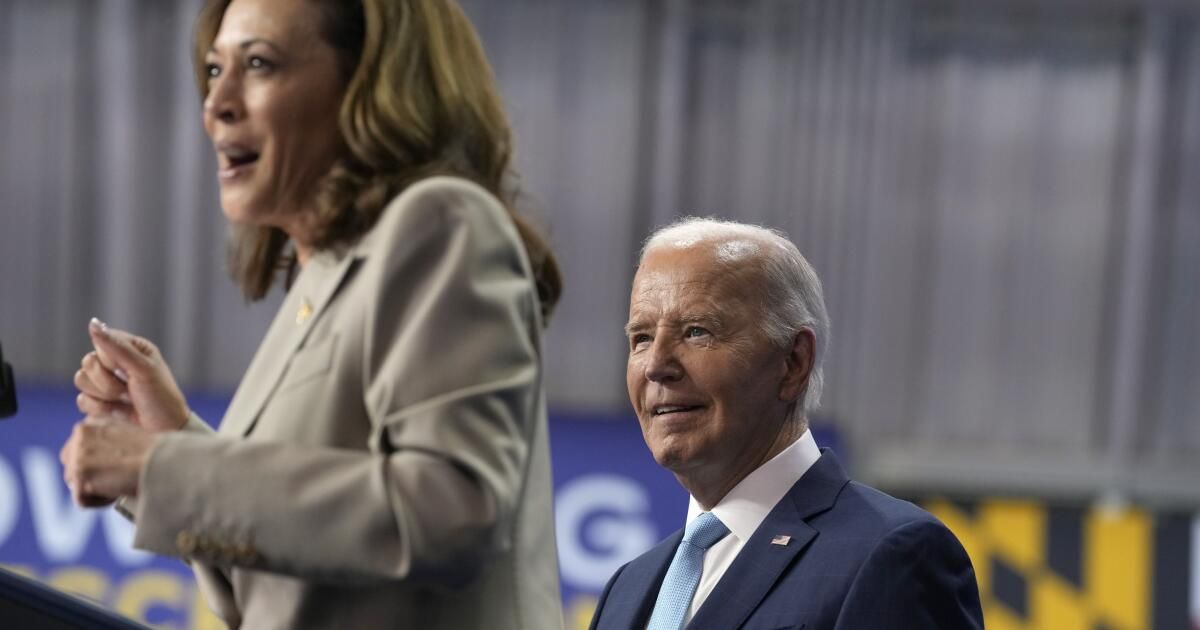
Still, Martin alone bears responsibility for the enormous embarrassment that is the so-called after-action report. He promised immediately after his election as president 16 months ago to produce and publicize it. He tapped a crony to produce it, then failed to supervise the effort to realize how woefully the draft was falling short: At 192 pages it lacked a conclusion and made no mention of Joe Biden's age and obvious weakness, the divisive issues of Israel and Gaza, or why last-minute vice president nominee Kamala Harris lost the votes of so many black and Latino men — all issues that should have been central to the report.
Once he realized the draft was a disaster late last year, Martin refused to take corrective action or start over. Instead of coming clean, he remained silent about the draft's numerous shortcomings and simply reneged on his promise to release a report, claiming it was time to focus on the 2026 and 2028 elections.
So now the hapless Democrats are months away from the midterm elections and are obsessing and spitting furiously over an autopsy that would embarrass a small town coroner's office.
“If you can't do the small things, you can't do the big things,” Pfeiffer concluded of Martin's management.
And the Democratic National Committee has big things to do, including deciding the schedule, procedures and debates for the 2028 presidential primaries that will determine the party's choice for its post-Trump future. It is the headquarters of the nominating convention, but in general its work of supporting the political apparatus to win elections remains in the background. That the national committee allows itself to become history, and that it shouts “weak and hapless”, is unforgivable.
Whether the Democratic Party gets rid of Martin or not, its leaders – not just those of the Democratic National Committee – need to demonstrate that they have the vision to see clearly that the advantage Democrats have in this midterm election year has almost nothing to do with the appeal of their party, but comes despite their unpopularity and thanks instead to that of Trump and the Republicans themselves. Sure, Democrats may win some elections in the short term as voters send a message to the Republicans in power. But the party cannot build a political future by competing against a man who is an outgoing duck.
The Democrats' challenge is all too obvious. The party's popularity in the polls is lower than Trump's and no better than the Republican Party. The nonpartisan Pew Research Center reported this month that 59% of American adults have an unfavorable opinion of the Democratic Party, a statistically insignificant percentage point above their unfavorable opinion of the Republican Party. A Quinnipiac University survey The mid-month poll put Trump's job approval rating at a new low of 34% among registered voters, but only 20% approved of the performance of Democrats in Congress, seven percentage points below the rate of Republicans in Congress.
It is evident that the number one task for Democrats is to redefine themselves.
Yes, in the minds of many voters they are unfairly labeled as their top priorities: supporting transgender rights in school sports, defunding the police, open borders, and high spending (the most fiscal irresponsibility). accurately describes Trump and his party). But the negative labeling is largely due to Democrats' weakness in countering Republican attacks and their misfortune in telegraphing alternative, positive messages to what they stand for.
More fairly, the Democratic Party is seen as too distracted by fringe culture war issues, such as transgender teens in women's sports, and too intimidated by identity groups, the pro-Israel lobby, teachers unions, immigrant rights groups, and left-wing activists.
In fact, more voters consistently support Democrats' positions on many issues, particularly health care, than Republicans. Meanwhile, Trump is squandering his party's leadership on issues like the economy and immigration.
Yet former Rep. Barney Frank of Massachusetts, a proud liberal Democrat, felt strongly enough that Democrats were allowing themselves to be defined by their left, playing into the hands of Republicans, that he literally turned his final words into a constructive warning, with hospice interviews in the weeks before his death on May 19.
“Let's get rid of the perception, which we have allowed to grow, that the entire Democratic Party is committed to a series of very drastic social reconstructions that go beyond what is politically acceptable,” Frank told a New York Times reporter.
The good news for Democrats is that they have a broad group of politicians who reflect Frank's prescription: pragmatism and a willingness to support incremental progress. Forget 2024. Win in 2026. Then let the race begin to decide the 2028 presidential nomination and define the party.
Blue sky: @jackiecalmes
Rags: @jkcalmes
UNKNOWN: @jackiekcalmes