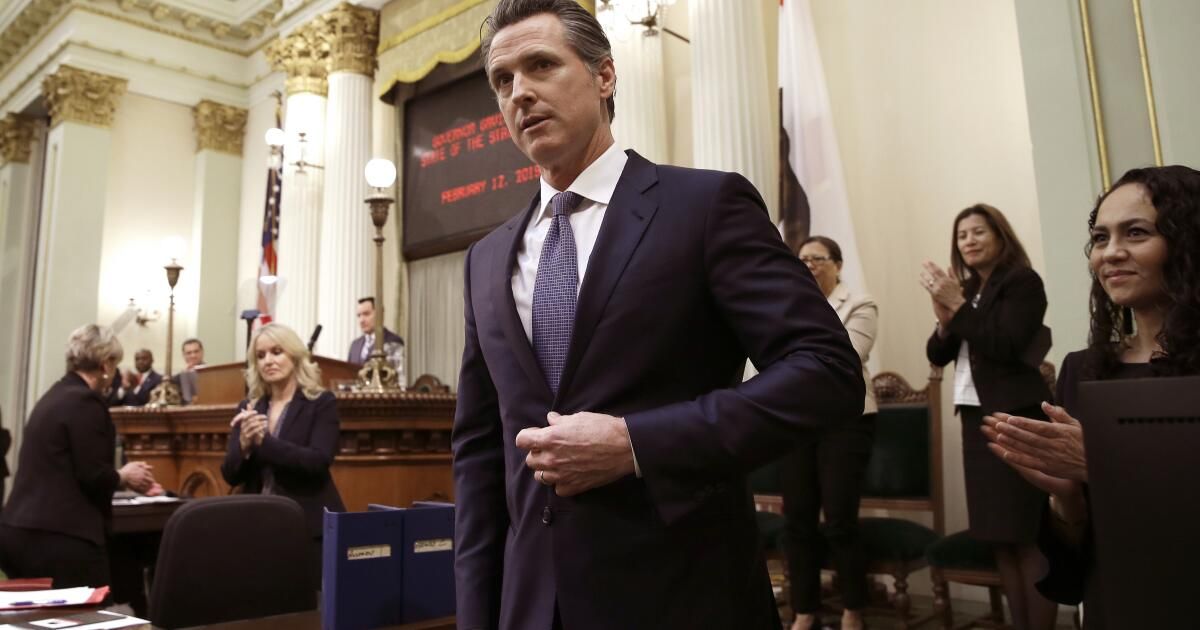
SACRAMENT- Gov. Gavin Newsom on Monday signed his final state budget as governor, a $351.7 billion spending plan that seeks to help the poorest Californians through a tax system that relies on the stock market profits of the wealthy.
In a video message, Newsom praised free school meals, universal transitional kindergarten, 130,000 subsidized child care spaces and other achievements during his tenure in the state Capitol, a period in state history marked by a dramatic expansion of state government and more than $100 billion in increased spending.
“Over the last eight years, we built great things for the people of California — some of the boldest actions any government in this country has taken in a generation,” Newsom said. “And we did it without breaking the bank. We did it by design.”
The agreement ends weeks of lobbying by outside interests and negotiations between lawmakers and the governor at the state Capitol over how to handle an increase in the income tax collected on stock market gains related to artificial intelligence.
Economists have warned that the revenue increase is potentially temporary, and analysts say the growth in state spending could leave California in a difficult position if the economy declines.
Assemblyman David Tangipa (R-Fresno) agreed with Democrats that the budget is “compassionate.”
“My fear is that it's not a very competent budget, and that the budget will follow a pattern that Californians know all too well: spend now, justify it later and hope that someone else picks up the tab,” he said during a floor debate Monday.
Here's what you need to know about the spending plan, which goes into effect July 1.
Who decides the state budget?
The simplest answer is: Democrats. California voters have elected Democrats to represent 30 of the 40 Senate seats and 60 of the 80 Assembly seats. The budget was approved by a majority vote in each chamber of the Legislature and signed by Governor Gavin Newsom, also a Democrat.
A more complex answer is that the budget is the product of dozens of legislative hearings, millions of dollars spent on lobbying by outside interests, conversations between lawmakers and the governor and, ultimately, subject to the same political dynamics that govern the Democratic Party.
Senate President Pro Tem Monique Limón (D-Goleta) and Assembly Speaker Robert Rivas (D-Hollister), in consultation with budget committee chairs, represent their Democratic caucuses and reach a final agreement on the details of the spending plan with Newsom. In reality, staff members from all three parties handle most, if not all, of the negotiations to get there.
Union leaders seeking better wages, working conditions, worker benefits and opportunities to expand their ranks are often called upon to consult or negotiate thorny deals as business groups try to fight more regulations, taxes and costs, and support policies that improve their financial performance.
Democrats are spending more than ever. How is that possible?
The Legislative Analyst's Office, lawmakers' nonpartisan fiscal adviser, recently examined the increase in state spending since 2019-20, Newsom's first full year in office.
Between the budget passed that year and the spending proposal Newsom unveiled in January, spending from the state's main operating fund had grown by more than $100 billion, or 70%. This was largely due to a 60% increase in revenue during that time. California typically operates under deficit spending because Democrats spend more money than the state takes in.
The LAO found that the increase in spending was due to the rising cost of maintaining programs and services that were already in place when Newsom took office. About 30% of the remaining spending growth was classified as new, either from newly created programs or from the expansion of existing services.
Among the report's conclusions: California could not afford the pre-Newsom programs and the ones he and the Legislature adopted.
To balance the budget in recent years, Newsom and lawmakers have dipped into the state's reserves at a time when California is experiencing strong revenue growth, which the LAO has warned against. Democrats also raised taxes on businesses, paid for programs with other funds and suspended reserve deposits, among other solutions.
This year, the state budget places $6.4 billion in higher-than-expected revenues in a temporary holding account to reduce a deficit and balance the budget through 2027-28.
Democrats are seeking a change to the state constitution in the November elections that would allow them to set aside more money in years of good revenue growth to avoid cuts in future crises.
Where does the money go?
Education and Medi-Cal are the two largest costs for the state.
Medi-Cal is the state's version of subsidized health insurance for low-income Californians and provides medical, dental and vision care to about 14.5 million people, or about a third of the state's population.
The federal government pays more than half the cost of the program. California is expected to spend about $50 billion from the general fund next year out of a total estimated at more than $220 billion in cost sharing between the state and federal governments, according to LAO. State taxes and fees on providers also help fund Medi-Cal.
Overall, Medi-Cal costs more than any other state program and accounts for about 40% of total spending, including federal funds the state receives, according to the LAO.
Spending on Medi-Cal has more than doubled over the past 10 years, which the LAO attributes to increased costs per enrollee, more enrollees, and a higher proportion of seniors seeking care, among other factors.
Under Newsom, California has expanded Medi-Cal, including offering coverage to include all immigrants regardless of their immigration status, which the governor said has reduced the state's uninsured rate to 5.9%.
The cost of Medi-Cal has grown beyond what Democrats expected and led Newsom to suggest spending cuts.
The final budget deal rejects a call from Newsom to lower the asset limit to $2,000 now and instead lowers it to $21,000 in 2027-28 to be eligible for Medi-Cal. The Legislature also delayed the governor's proposal to reduce dental coverage and shift asylum seekers and other immigrants to narrow-scope Medi-Cal, according to Jason Sisney, the Assembly's senior budget adviser who posts about the budget on Substack.
The budget includes Newsom's proposal to move enrollees with unsatisfactory immigration status, a term that includes undocumented immigrants and others, from managed care to fee-for-service to save costs.
Under Proposition 98, approved by voters in 1988, California has a minimum funding guarantee for schools and community colleges and devotes approximately 40% of general fund revenues to education.
Sisney said the budget increases the Local Control Funding Formula by $2.2 billion and provides historic per-pupil general fund spending of $21,148. Support for special education also increased by $1.8 billion.
The California Community Schools Partnership Program received a $1 billion boost and Democrats allocated $2.8 million in additional funding to the program that provides free meals to schoolchildren.
The budget also establishes 22,770 new free and reduced-price child care spaces, which Newsom had proposed reducing.