WASHINGTON- The Supreme Court on Monday refused to block an excessive force lawsuit against a former Los Angeles Police Department officer who shot and killed a knife-wielding man whose speeding truck had crashed into several cars near downtown Los Angeles.
The court rejected an appeal petition from the Los Angeles City Attorney's Office, despite objections from Judges Clarence Thomas and Samuel A. Alito Jr.
Litigation over the six-second shooting incident has spanned six years.
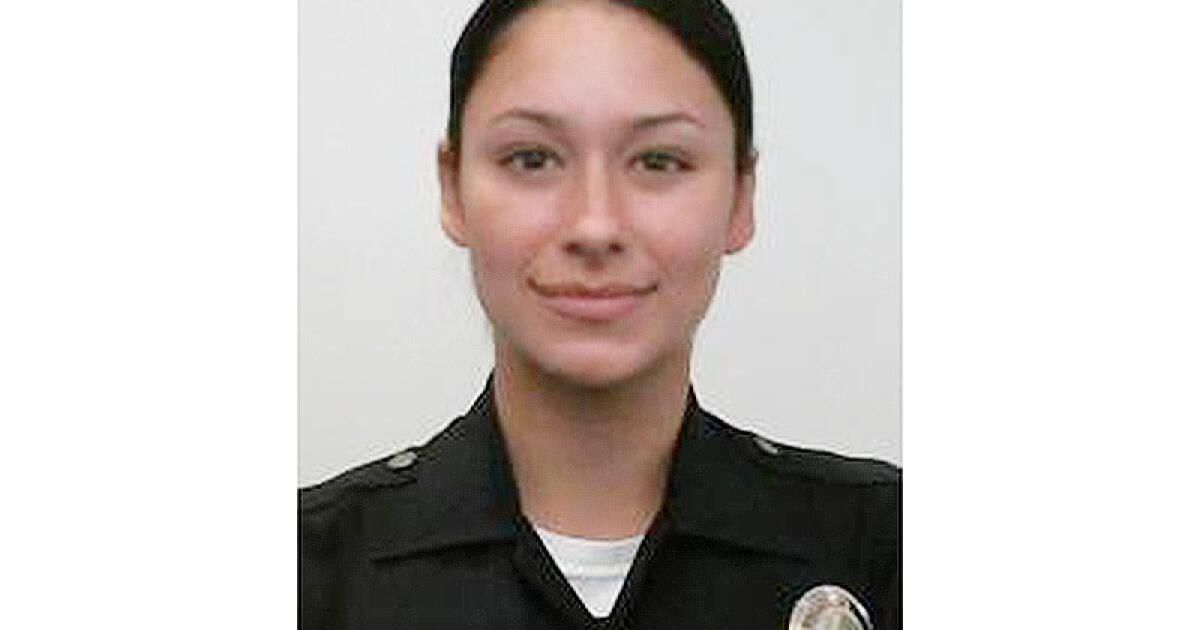
Federal judges in California agreed that Officer Toni McBride had reason to fire four shots at the suspect in April 2020, but not the final two shots that killed him.
Daniel Hernandez was allegedly under the influence of methamphetamine when he got out of his truck and walked toward the officer. She repeatedly ordered him, “Drop the knife,” as he approached.
But the 9th Circuit Court of Appeals, by a 6-5 vote, ruled last year that a jury could decide the officer went too far when he fired two final shots after the suspect fell to the ground.
The majority reasoned that in the one-second pause between shots four and five, McBride “could and should have first reassessed the situation” and possibly concluded that the suspect no longer posed a danger.
That ruling would have sent the case to trial.
But the Los Angeles city attorney's office appealed to the Supreme Court in October and urged the justices to review and overturn the Ninth Circuit's decision.
The city's attorneys said the appeals court failed to consider the “totality of the circumstances from the perspective of a reasonable officer on the scene” and its decision refused to “allow for reasonable errors in rapid, life-threatening encounters.”
UC Berkeley Law Dean Erwin Chemerinsky filed a response on behalf of the Hernandez family. He urged the court to stay out of it and let a jury decide whether the officer's actions were reasonable.
“The Ninth Circuit simply held that it should be up to the jury to resolve the factual dispute about what happened,” he said.
The judges had considered the appeal since late February before finally rejecting it without comment on Monday.
The Supreme Court has repeatedly ruled that police officers can be sued for unreasonable searches and seizures only if they are proven to have knowingly violated a clearly established law.
However, this “qualified immunity” doctrine has divided judges over whether a particular rule or limit has been clearly established.
The 9th Circuit majority said shooting a fallen suspect crosses the line.
“It has been clearly established for more than a decade that when an officer shoots and wounds a suspect, and he falls to the ground, the officer cannot continue shooting at him unless there is some indication that he poses a continuing threat,” Judge Jacqueline H. Nguyen wrote.
“A downed and injured suspect, armed only with a pointed instrument, does not pose a continuing threat simply because he makes non-threatening movements on the ground… Under such circumstances, a jury could reasonably find that he used constitutionally excessive force. If so, he is not entitled to qualified immunity,” he said.
The five dissidents said the officer made a reasonable decision in a split second.
Judge Ryan Nelson said McBride “was justified in shooting Daniel Hernandez to alleviate the risk he posed when he advanced toward her while armed and ignoring orders to stop…She could not reasonably be expected or required to reassess her shooting within a brief six-second period during an intense and dangerous situation during which Hernandez was getting up and never stopping moving.”
Justice Patrick Bumatay echoed this concern.
“Judges review police shootings only in retrospect. We review police tapes years after the fact. We can rewind, pause and fast forward, analyzing the situation frame by frame. While the advent of police body camera video has been a welcome change, we cannot ignore that real life is not in slow motion,” he said.