Last update:
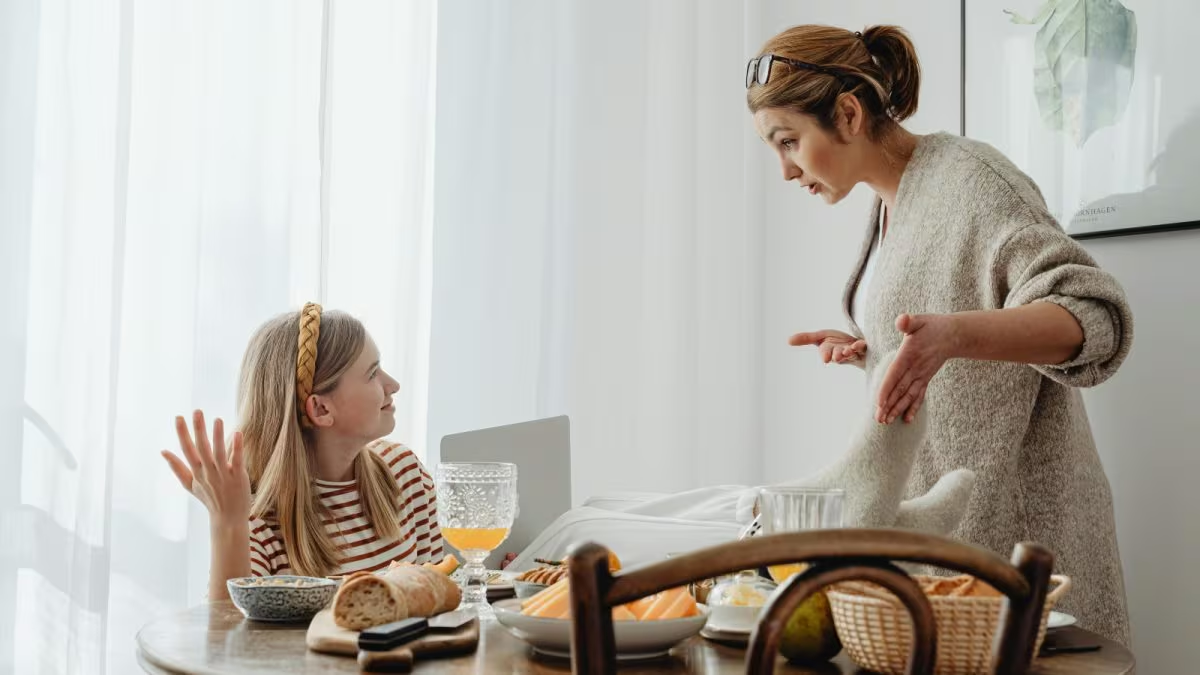
It has been found that physically or psychologically harsh parenting (such as spanking or yelling) can reverse the effects of preschoolers learning to self-regulate.




Parents who are hard on their children are actually raising them to not be able to handle big emotions on their own.
Bringing a child into this world is one of the most important decisions parents can make in their lives. It is also a lot of work to raise a child in this modern age. Now that new generations become parents, they are changing the way they reprimand or punish their children. The term “gentle parenting” is used a lot and a recent study also supports this method.
This study was conducted by Penn State and they discovered that children who have been raised harshly may need more help from their parents over time to become independent and more evolved beings. The research was led by doctoral student Jianing Sun and Psychology Professor Erika Lunkenheimer and published in Child Development.
They stated in a press release that as children grow from toddlers to preschoolers, they generally become more independent and need less outside help to calm down and manage their feelings. But when parents resort to harsh or aggressive parenting, such as yelling or spanking, this natural change can slow down or even reverse. Instead of needing less help over time, children may end up needing more as their parents have to continue regulating their stress and emotions for them.
The study focused on how parents and children influence each other's “stress systems” in each other's bodies, a process called “coregulation.” When a parent is calm and firm, the child can also learn to calm down.
In a healthy situation, this balance slowly changes as the child grows: the child's body and brain learn to handle more stress on their own, and the parent's role is reduced. But the researchers found that in some children this change does not occur.
The study examined 129 pairs of mothers and their children in two stages: when the child was three years old and again a year later.
Before the visit, the mothers had to answer questions about their parenting, including how often they yelled or used physical punishment. During the visits, the children attempted to solve a difficult puzzle and the mothers were allowed to guide them but not finish the puzzle for them. Both mother and child wore small monitors on their chests that measured their heart and breathing patterns, focusing on a marker called RSA (respiratory sinus arrhythmia), which shows how the body adapts to stress.
“Toddlers depend on their parents' responses not only to meet their needs, but also to learn appropriate rhythms to regulate their physical and emotional states,” Lunkenheimer said, adding: “According to the theory, parents' responsive and consistent responses foster security, so that the child's nervous system can calm down. Beyond parental behavior, our work suggests that parents' calmer, better-regulated physical state during parenting also plays a key role, laying the foundation for how parents behave. children regulate stress in their bodies over time.
What the researchers found was simple but powerful: When the mother's nervous system stabilized, the child's often followed soon after. This means that a calm mother can help calm her child very quickly. In mothers who were kinder and less harsh, this influence slowly decreased as the child grew from age three to four, suggesting that the child was learning to self-soothe.
But in mothers who used harsher parenting, the opposite happened: the mother's influence on the child's stress system remained strong or even grew, and the child's body remained stressed longer and found it more difficult to return to a calm state. In other words, children who face harsh parenting don't learn to calm down as easily as their peers. Their bodies stay “on the go” longer and need more outside help to relax as they grow.
This pattern may help explain why children who are treated harshly are more likely to develop stress and self-control problems later in life.
“This study did not evaluate parenting behaviors or interventions, but it provides additional support to what I have found throughout my career in multiple studies: Children do best if parents are sensitive and in tune with their children, while remaining flexible and able to regulate themselves,” Lunkenheimer said.
She added: “And that can be very difficult: You may be in tune with your child, but sometimes they throw a big tantrum when you're already feeling overwhelmed. Parenting isn't always easy, but our work suggests that if you take a moment to regulate yourself, perhaps even pausing and taking a few deep breaths before responding to your child, there is an important benefit in your child learning to regulate themselves.”