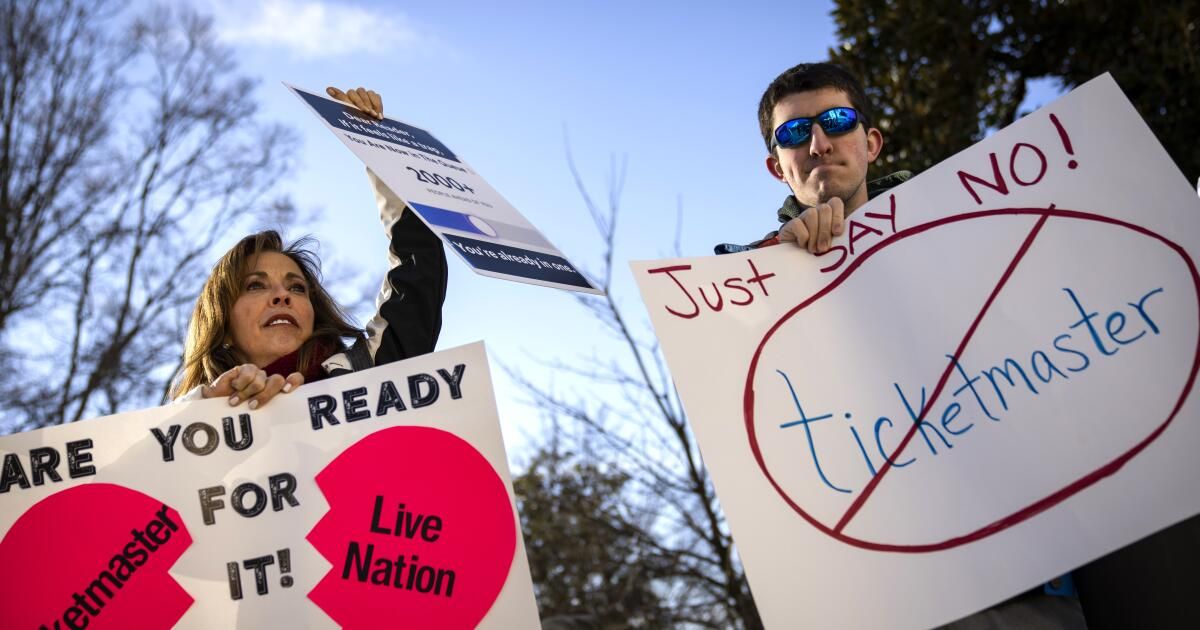
After years of frustrations and complaints about fines, the trial for the Justice Department's antitrust lawsuit against Live Nation is officially underway.
As part of its case, the Justice Department accused Live Nation of requiring music artists to use its promotional services when they play at one of its venues. Because many venues are owned by the entertainment company, the government claims Live Nation's alleged practices are anti-competitive.
Jury selection began Monday in federal court in New York and opening statements are expected Tuesday. Since the complaint was first filed in 2024, the antitrust case against the Beverly Hills-based ticketing giant has been streamlined, examining whether Live Nation uses illegal anticompetitive practices and whether the company and Ticketmaster, its subsidiary, should be dissolved.
The legal proceedings are expected to last about a month, with Judge Arun Subramanian, who also presided over the sentencing of disgraced music mogul Sean Combs last year, leading the charge.
Live Nation presidents Michael Rapino and Joe Berchtold, executives at competing companies such as Anschutz Entertainment Group and Irving Azoff, former CEO of Ticketmaster, are expected to testify. Musicians like Ben Lovett of Mumford & Sons and Kid Rock could also take the stand.
Key Claims in the Lawsuit
The original lawsuit, led by a group of interested parties including the federal government, 39 states and the District of Columbia, alleged that Live Nation and Ticketmaster have monopolies on various aspects of the live music industry, such as concert promotion, venue operations, artist management and ticketing services.
The lawsuit claims that Live Nation manages more than 400 artists and controls more than 265 venues in North America. Ticketmaster simultaneously controls around 80% of the primary ticket market and is also increasing its share of the resale market.
Many of the big monopoly claims were dismissed during a pretrial hearing with Judge Subramanian last month, including an allegation that Live Nation's industrial power drives up ticket prices and harms consumers.
The claim with possibly the biggest potential impact centers on whether Live Nation should own Ticketmaster. The companies merged in 2010, a move that has been considered controversial. Beyond ownership of Ticketmaster, the Department of Justice claims that Live Nation forces venues to sign exclusive contracts with Ticketmaster, excluding the inclusion of other ticket providers.
“For more than a decade, Ticketmaster and Live Nation have promised reform, but meaningful competition has remained out of reach. The industry now finds itself at an inflection point: restore a competitive marketplace that supports innovation, or allow the status quo to continue reducing options for American consumers,” Dustin Brighton of the Ticket Fairness Coalition said in a statement.
“However, the same competitors that could control this monopoly and restore balance are routinely excluded by restrictive practices that limit innovation and reduce consumer choice,” Brighton added.
Live Nation did not respond to a request for comment. When the complaint was first filed, the company called the claims “baseless.”
“Calling Ticketmaster a monopoly may be a public relations victory for the Department of Justice in the short term, but it will lose in court because it ignores the basic economics of live entertainment,” Live Nation wrote in a previous statement.
Next steps after the trial
If Live Nation loses the trial, the judge will decide how the company should be restructured, which could mean selling Ticketmaster to a competitor. Live Nation would maintain the right to appeal that decision and take the matter to a higher court.
“If the court finds that Live Nation violated the law, monetary penalties and behavioral commitments alone will not be enough,” Stephen Parker, executive director of the Independent Venue Assn., said in a statement.
“Repair must be proportionate to the damage,” Parker added, “and that means serious consideration must be given to the structural separation of primary ticket sales, resale ticket sales, venue operations, national tours, advertising/sponsorship, and artist management.”
Live Nation also faces a lawsuit from the Federal Trade Commission and a handful of class-action lawsuits from groups of concertgoers.