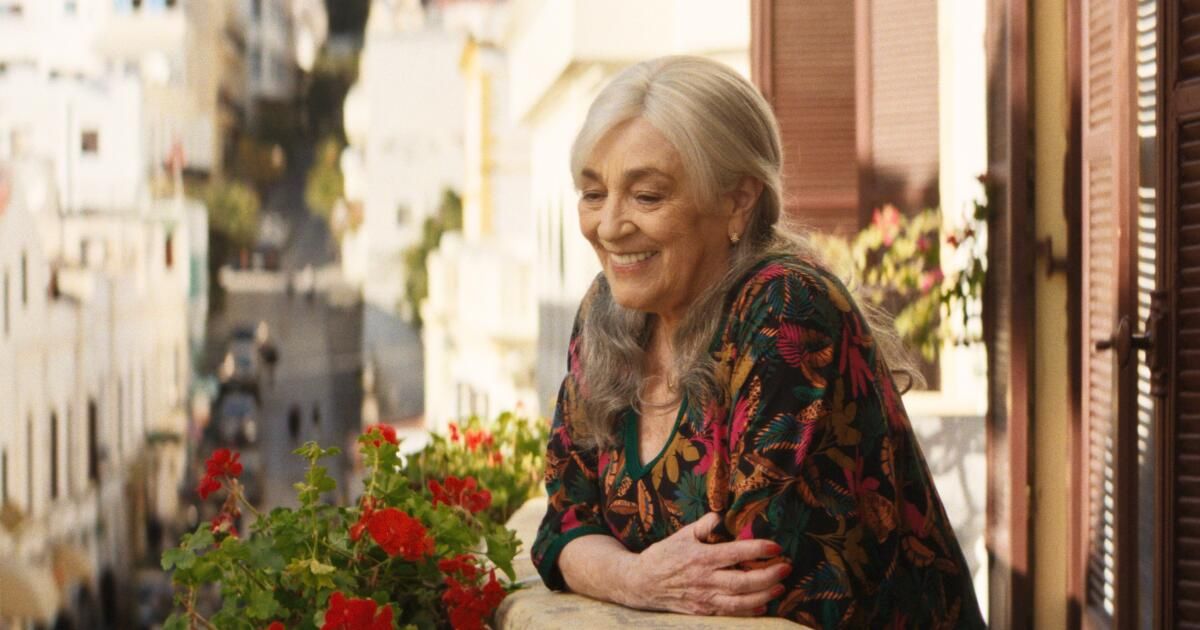
To grow older is to discover that your appreciation for life's everyday joys deepens, especially as more uncomfortable realities take over. María Ángeles (Carmen Maura), a lifelong resident of Tangier and part of the bustling Moroccan city's deep-rooted Spanish community, is one of those grateful seniors. We see her at the beginning of “Calle Málaga” smiling happily, walking through the streets of her neighborhood and being greeted by the vendors.
However, what he surely doesn't expect, as he buys food and prepares croquettes in preparation for his daughter's long-awaited visit from Madrid, is that this trip will threaten everything he loves. That's because Clara (Marta Etura), a divorced mother struggling to pay the bills, arrives with news that she is going to sell the large, old apartment her widowed mother has lived in for 40 years. Wouldn't it be better for María to live with her in Spain and be closer to her grandchildren? Or at least receive local care in an assisted living facility specialized in Spanish?
The expression on Maura's face, the most perfected tool of this famous actor, suggests a variety of emotions regarding forced old age or grandmotherhood that are much less complacent.
How Maria handles her impending uprooting is at the heart of Moroccan filmmaker Maryam Touzani's third feature, her follow-up to the equally sensitive family drama “The Blue Caftan.” However, “Calle Málaga,” written with Touzani’s husband, Nabil Ayouch, is not a passive narrative, simply content with the internalized pain of acceptance. It is to some extent an emotional heist film and a protest story in delicate harmony, in that after initially agreeing to be committed to that senior center in Tangier while her belongings are packed up or sold, Maria plans to steal her life from under her absent daughter's nose.
If you don't look too closely at the details of Touzani's charming setting, which requires a lot of things to fall into place, however enjoyable, the film becomes a sweet and spicy counternarrative to the aging stories that sponsor its protagonists. (Another noteworthy example was last year's enthusiastic American indie “Familiar Touch.”) Maria essentially becomes a cunning squatter in her own apartment for sale, retrieving a few items from a tough but increasingly sympathetic antiques dealer (a well-cast Ahmed Boulane) and devising a clever way to make money with the help of friendly neighborhood kids who adore her. His tactic even opens the door to an unexpected romance, giving his frequent chats with Josefa (María Alfonsa Rosso), a childhood friend, an increasingly revealing candor.
It is difficult to imagine anyone other than Maura, with her almond eyes as powerfully suggestive as ever, conveying Maria's rejuvenated spirit and sensuality with such magnetism. A patient, unassuming director with a penchant for the simplicity of human interaction, Touzani implicitly trusts her star to carry the film's effervescence and complexity, though she may wish the making were a little less straightforward.
After all, there is an analysis of Mary's situation that we can't help but have in the back of our minds. Because our first brief glimpse of Clara is sympathetic, rather than suitably antagonistic, we know that “Calle Málaga” won't settle for a tidy resolution. And it doesn't, except to leave us with a view of Mary's attempt at freedom that, like the rose petal that is one of Touzani's favorite images, beautifies the air, whether still connected to the roots or separated and scattered like so many fragile things in life.
'Malaga Street'
In Spanish and Arabic, with subtitles.
Not classified
Execution time: 1 hour, 56 minutes
Playing: Opens Friday, February 13 at Laemmle Monica Film Center and Laemmle Town Center, Encino.