Earth Wind & Fire’s “September,” with its nonsensical phrase “ba-dee-ya,” has been streamed more than 2.3 billion times on Spotify, more than the band’s next five songs combined (including “Let’s Groove,” “Boogie Wonderland,” and “Shining Star”).
In his visually and sonically vibrant film “Earth, Wind & Fire (To Be Celestial vs. That's the Weight of the World),” drummer, DJ and director Ahmir “Questlove” Thompson (“Summer of Soul”) shows how the funky but aspirational band was much more than their biggest musical success.
Well documented
As networks and streamers look to create engaging content, many have found the answer in real stories. But with the rise of documentaries, it can be difficult to determine what's worth your time. Each month, we provide an inside look at a documentary and others you should add to your list.
But it also explores in depth the complexities of the band's central figure, Maurice White. White, a visionary who wanted to bring hope to people, mixed journaling with conversations about spaceships and metaphysics. However, he was also traumatized by a childhood in which his mother moved to Chicago in search of more opportunities, leaving White in Memphis, where he was once brutally beaten by white police officers. Those scars created a man who was a distant and equally remote father to his gang members at the top, mistreating them with casual disdain until everything fell apart.
Questlove recently spoke via video call about the film, now streaming on HBO Max, including interviews with the family, surviving members of the band, childhood friend Booker T. Jones, and a pair of fans named Barack and Michelle Obama. This interview has been edited for length and clarity.
What attracted you to this story?
In 2020, I was DJing on the internet, livestreaming, and DJing to calm people down so they wouldn't think they were going to die in the apocalypse. One day I did an Earth, Wind & Fire set and by the time I got to the fourth hour, I thought, “Hey, is this one of the most relentlessly positive bands of all time?”
I started researching the lyrics and realized that this band was tricking us into being positive, like making us eat vegetables. I started to wonder how a band like that made it past the velvet rope and realized that none of it was by accident, it was all by design. Their music was very good and you start singing the lyrics and there is an osmosis effect of positivity that catches you.
When I started this in 2023, I had a creepy feeling that the turmoil of 2020 would visit us again, so I thought people would want to see something to help them plant seeds about what to do.
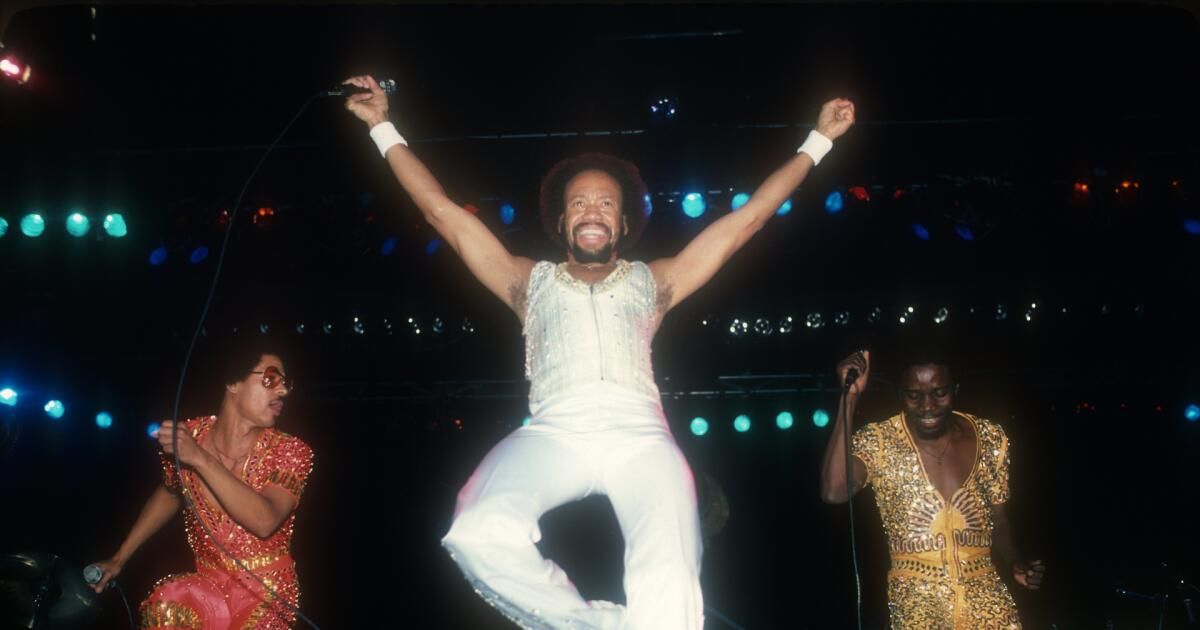
Maurice White, the central figure of the band.
(Henry Diltz/HBO)
You save “September” for last. Was it to make people see that the band was more than their biggest hit or to make the audience leave humming and happy?
It's an unlikely legacy song. They have as many meaningful songs as “Shining Star,” while “September” is a leftover filler song from a greatest hits album that became a career-defining song.
Initially, I was walking out the door with “September,” just, “Let's put this aside.”
It took a while. At first, the Obamas were not part of the project. I interviewed them the morning after the 2024 election; They were very professional and very attentive in the moment and also helped us process the day.
We had never gotten to see them sit next to each other and be playful and dance. And I didn't say, “Okay, let's see how you move, dance for 12 seconds,” I was just playing something and they started dancing and the camera was running.
But they put the song in context. In 2009, they said, “What is the statement we want to make to America to show that this is a new era in the White House?” And Earth, Wind & Fire was chosen to be one of the bands at the inauguration and it was that song. Then my producer said, “Now we can treat 'September' as an encore.” We used that story to show how that song grew on its own organically.
White is a complicated guy. Was it a challenge to balance everything in your narrative?
Black artists are often seen as caricatures or one-dimensional. It's easy to say, “You're so positive and metaphysical, what's up with this or that?” My goal is always to find a human element in which you see yourself. In the case of Maurice with his career, he did drink the Kool-Aid. But his personal life grew out of never forgiving his mother for leaving him behind when he was little. When we suppress anger and other emotions, when we refuse to talk to our partner or friends (and you want people to read your mind), that's when it becomes a problem. But I wanted to show that in a way that doesn't explain everything. Hopefully people will make the connection between the importance of dreaming, planning and affirmations, but also the importance of letting things go, like forgiving people.