Singer-songwriter Anaïs Mitchell first wrote the numbers for “Hadestown,” a popular musical based on Greek mythology, in 2006. Twenty years later, the Tony-winning smash hit the big screen in a version filmed in the West End in 2025, directed by Brett Sullivan. The production reunites the original Broadway cast (André De Shields, Patrick Page, Reeve Carney, Eva Noblezada and Amber Gray) six years after the show debuted and swept the Tonys in 2019.
There is a timelessness to Mitchell's work, thanks in large part to the ancient source material, the myths of Orpheus, Eurydice, Hades and Persephone. Developed in collaboration with Rachel Chavkin, who directed the Broadway show, the action takes place around the 1930s in the deep south of the United States. The story expresses enduring themes of love, sacrifice, oppression, addiction and devotion, juxtaposing the tragedy of how things are with the hope of how they could be.
There are moments when Mitchell's songs seem eerily prophetic: the show's villain, Hades (Page), rules Hadestown's underworld as a fascist industrialist; its closing Act I number is titled “Why We Build the Wall.” Factory workers respond: “We built the wall to keep ourselves free,” a chorus that predicts the Trumpian rhetoric of 2016 and a reminder that these patterns of division and othering are the eternal tools of the oppressor.
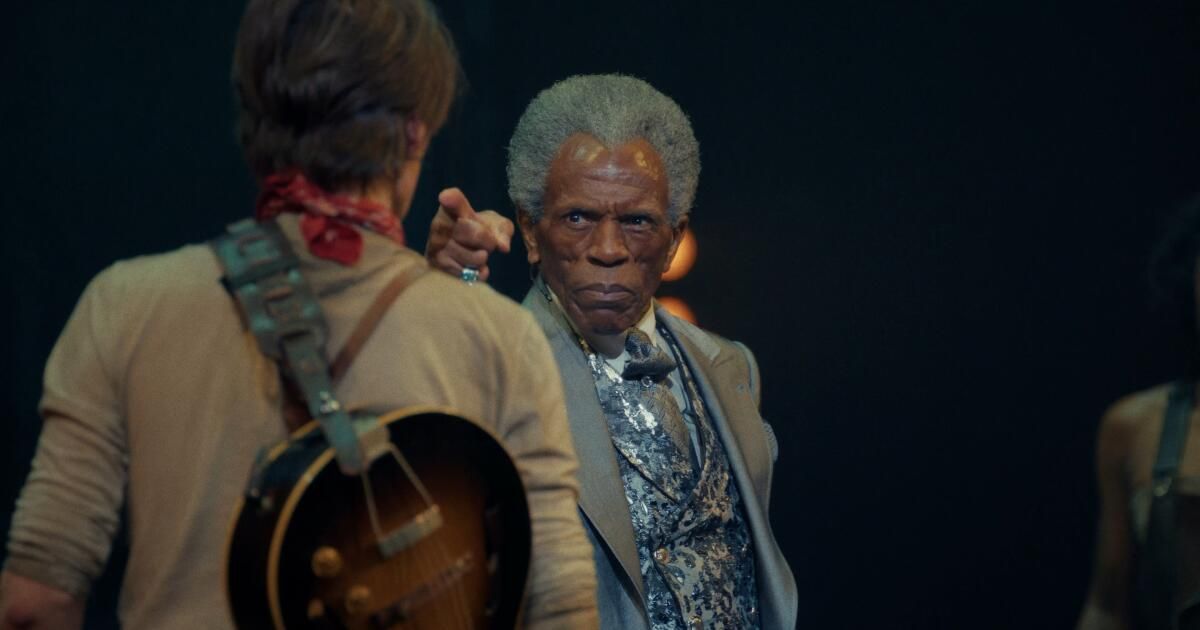
“Hadestown” is first and foremost a love story, set in a happy music venue, with the band playing on stage. The camera follows our narrator, Hermes, played by American theater legend De Shields, as he walks on stage and kisses the heads of his company.
But the show doesn't begin until De Shields, 79, elegantly opens his jacket, to a roar of approval from the audience. It features the doomed Orpheus (Carney), “touched by the gods themselves,” a born yearner with a gift for singing. When Eurydice (Noblezada), a ruthless and skeptical girl, arrives in town, Orpheus instantly falls madly in love. They have nothing but each other, their love symbolized by a red flower that Orpheus offers.
Party girl Persephone (Gray) brings the fun of summer, but her jealous lover Hades wants to have her to himself in his domain, trapping the world in a long winter. Orpheus promises to write a song to summon spring again, but a struggling Eurydice is seduced by Hades' promises of safety in Hadestown, and she descends with him, giving up her life to work in his factory. Orpheus attempts to rescue his love, but his faith in her is tested when they return to the summit: if he returns to see if she is there, she will be banished to Hadestown forever.
Real-life couple Carney and Noblezada married several months after this production; They met at Noblezada's audition. Their chemistry makes the emotional devastation of this tragedy that much more real: each lead actor sheds a real tear throughout the show. Carney's unique tenor ranges from Jeff Buckley to Freddie Mercury; His rock background and guitar skills are necessary to Orfeo's lyre playing and lend themselves to the folk roots of Mitchell's songs.
Cinematographer Clayton Jacobsen captures unexpected camera angles that a spectator (not even one with decent seats) wouldn't catch, both from below in the circular pit and from above. He sends the camera flying over the heads of the audience in intimate medium shots. Sullivan makes the lively and often rowdy crowd an integral part of the movie experience, including a lengthy curtain call with De Shields toasting the audience, sending them off with the warmth with which he brought them.
There is a temporal quality to theatre, a shared moment in time and space. This production seems like a fleeting moment: a gathering of friends and collaborators retelling a myth that has been told over and over again. “It's a sad song, but we sing it anyway,” Hermes reminds us, and it's a sentiment worth repeating. There may be tragedy, but summer will inevitably return.
'Hadestown: The Musical'
Not classified
Execution time: 2 hours, 21 minutes
Playing: Opens on Friday, July 24 in a wide version