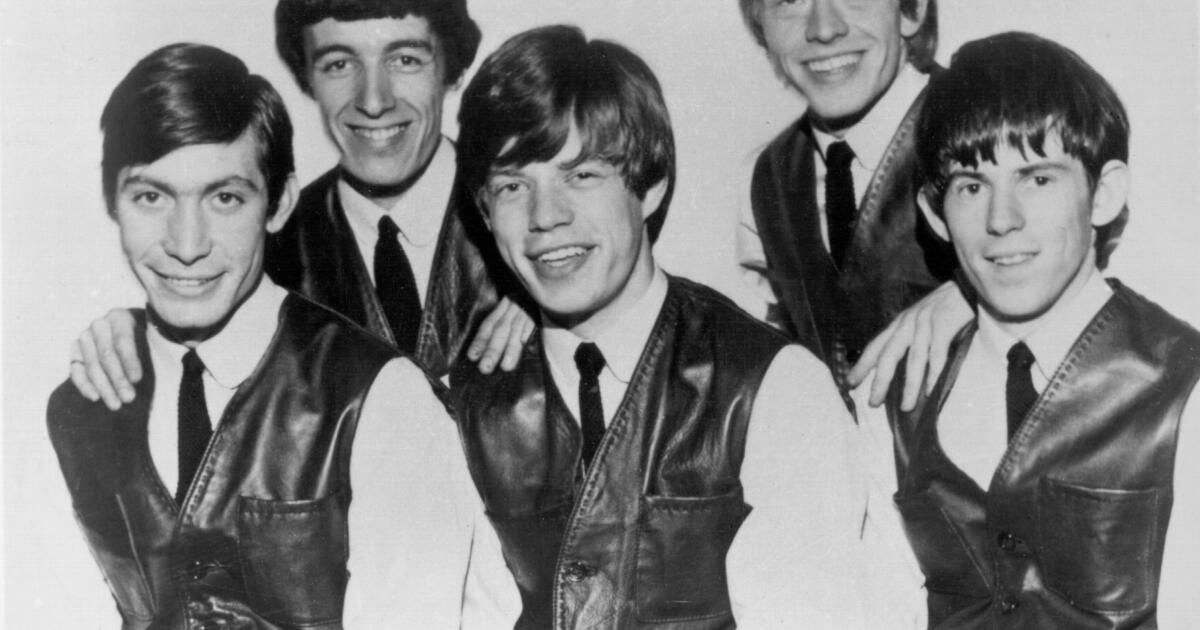
By early 1963, London's Station Hotel had become the epicenter of the burgeoning British blues scene. On a blustery, snowy February night, the classic Rolling Stones lineup took the stage for the first time, dazzling the crowd with fierce renditions of blues standards like Muddy Waters' “I Want to Be Loved” and Jimmy Reed's “Bright Lights, Big City.”
Multi-instrumentalist Brian Jones, the band's founder and leader, synchronized guitars with Keith Richards, who favored a distinctive, cutting and stinging style. Drummer Charlie Watts, the group's newest member, a jazz aficionado and accomplished percussionist, drove the music with a rock-solid beat.
Joining him in the rhythm section was bassist Bill Wyman, who was recruited more for his spare VOX AC30 amplifier that guitarists could plug into than for his musical abilities. The stoic bassist proved to be a strong and innovative performer. Together, he and Watts would form one of rock's most decorated rhythm sections.
Ian Stewart's energetic boogie-woogie piano style completed the sound. Months later, manager Andrew Loog Oldham kicked him out of the band for being “ugly,” although Stewart continued recording, touring, and serving as the band's road manager until his death in 1985.
This file photo from April 8, 1964, shows the Rolling Stones during rehearsal. Members, from left, are Brian Jones, guitar; Bill Wyman, bass; Charlie Watts, drums; Mick Jagger, voice; and Keith Richards, guitar.
(Associated Press)
Leading the group was Mick Jagger. Channeling the music like a crazed shaman, Jagger swayed and swayed, taking over the stage like few singers have done before or since. By the end of the night, the Stones had the crowd going wild. Although only 30 people had attended the concert due to dangerous weather conditions, the hotel manager had seen enough: he offered the Stones a regular concert.
“The Rolling Stones had caught fire. The music they were playing and the way they played it struck a chord with a young audience hungry for something different, something of their own… It was soulful, loud and uncompromising,” writes Bob Spitz in “The Rolling Stones: The Biography,” his masterwork charting the 60-year journey of “the greatest rock and roll band in the world.”
Spitz, the author of intense biographies of the Beatles and Led Zeppelin, as well as Ronald Reagan and Julia Child, captures the drama, trauma, and betrayals that have kept the Stones in the public consciousness for more than six decades. It's all here: the Stones' evolution from a blues cover band to an artistic rival to the Beatles; the musical peaks: “Aftermath”, “Let It Bleed” and “Exile on Main Street”, as well as failures like “Dirty Work”; Keith's descent into a debilitating heroin addiction that nearly destroyed him and the band; the death of the '60s at the ill-fated Altamont free concert; Marianne Faithfull, Anita Pallenberg, Bianca Jagger, Jerry Hall and other lovers, partners and muses; the breakups, reconciliations and breakups; and perhaps most importantly, the unbreakable bond between Jagger and Richards at the center of it all.
Although Spitz uncovers little new information, he excels by presenting the Stones in glorious Technicolor. Spitz focuses on the revealing details and anecdotes that give the band's story a deep richness and poignancy.
Take “Satisfaction,” the Stones' 1965 classic and their first US chart hit. The often-told story is that Richards woke up in the middle of the night, grabbed the guitar next to his bed, and recorded the iconic riff and line “I can't get any…satisfaction” on a cassette recorder in his hotel room in Clearwater, Florida, before falling asleep again. But as Spitz points out, the song initially went nowhere in the studio. That was until Stewart bought a fuzz box for Richards a few days later, giving the song a raunchier sound that matched Jagger's lyrics of frustration and alienation perfectly. A classic was born.
Mythology drilling the stones
Spitz's in-depth reporting often pierces the mythology surrounding the band. Contrary to the popular belief of many fans, for example, Jones bears much of the responsibility for the breakup with his bandmates and their tragic demise.
The most musically adventurous member of the group (he plays sitar on “Paint It Black” and dulcimer on “Lady Jane”), Jones was not a composer. That fueled his jealousy and insecurities, plus leader Jagger stole his attention. A monster of a man, Jones impregnated several teenage girls and physically and emotionally abused several women, including Pallenberg. Maybe that's why she left him for Richards. Over time, Jones made fewer contributions in the studio and on stage, becoming a catatonic drug victim. The Stones fired Jones in June 1969, but they would have been justified in doing so a couple of years earlier. He drowned in his pool less than a month later.

Author Bob Spitz
(Elena Seibert)
Similarly, Stones lore has long romanticized the making of “Exile on Main Street” in the sweltering, dingy basement of Richards' rented Villa Nellcôte in the south of France, where the Stones had moved to avoid British taxes. In this narrative, Richards, mired in the throes of heroin addiction, somehow managed to create one indelible riff after another built around his signature open G tuning, taught to him by Ry Cooder, leading the band to create one of the greatest albums in rock history. According to Spitz, this is not entirely accurate.
Yes, Richards came up with the licks for “Rocks Off,” “Happy,” and “Tumbling Dice.” But it's equally true that a nervous Richards missed countless recording sessions, invited dealers, hangers-on, and other distractions to Nellcôte, and repeatedly failed to show up to write with Jagger. Far from completing the album in the drug-addled haze of a French basement, the band spent six months doing overdubs at Sunset Sound in Los Angeles, where Jagger contributed many of his vocals.
Beatles against stones
One of the most interesting themes that Spitz develops is the symbiotic relationship between the Beatles and the Stones, with the Fab Four mostly overshadowing them, until they didn't.
John Lennon and Paul McCartney wrote “I Wanna Be Your Man” and gave it to the Stones, whose 1963 performance, with Jones on slide guitar, became the group's first UK Top 20 hit. The Lennon-McCartney songwriting partnership inspired Jagger and Richards to begin writing their own songs. In early 1964, the Beatles came to the United States for the first time, making television history with their appearance on “The Ed Sullivan Show” and playing Carnegie Hall. A few months later, the Stones began their inaugural US tour at Swing Auditorium in San Bernardino. In 1967, the Beatles released “Sgt. Pepper's Lonely Hearts Club Band,” a psychedelic masterpiece. The Stones responded with “Your Satanic Majesties Request,” a psychedelic disaster.

Rolling Stones Cover: The Biography
When the Beatles began to split up, Spitz writes, the Stones sharpened their focus. The band released “Beggars Banquet” in late 1968 and “Let It Bleed” the following year, albums as innovative and visionary as “The White Album” and “Abbey Road.” For the first time, the two groups were evenly matched.
When the Beatles broke up in 1970, the Stones moved on. With Jones replaced by virtuoso guitarist Mick Taylor, whose fluid, melodic style served as a tasty foil to Richards, they produced what many consider their best works, “Sticky Fingers” and “Exile on Main Street.” Most impressively, the band, with Taylor's successor Ronnie Wood, has continued to dazzle audiences with incendiary live shows, touring as recently as 2024 behind their final career triumph, “Hackney Diamonds.” The Beatles, on the other hand, retired from touring in 1966 and devoted their energies to the studio.
Hundreds of books have been written about the Rolling Stones, but few shine as bright as Spitz's. For anyone who loves or even likes the Stones, it's a must have.
Like most of the band's biographers, Spitz gives short shrift to the post-“Exile” period after 1972. He curtly dismisses 2005's strong “A Bigger Bang” and 2016's “Blue & Lonesome,” an album of back-to-basics blues covers, as “adequate efforts that indicated a band living on borrowed time.” That criticism is wrong and underdeveloped. Spitz ignores the band's legendary live album, “Brussels Affair,” recorded in 1973, or why the band waited decades before officially releasing it.
These are small quibbles. Spitz has written a book worthy of its 704 pages; another 50 pages or so covering the last few years would have made it even stronger. To quote the Rolling Stones: “I know it's just rock 'n roll, but I like it, I like it, yeah, I like it.”
Marc Ballon, a former reporter for Times, Forbes and Inc. magazines, teaches an advanced writing class at USC. Lives in Fullerton.