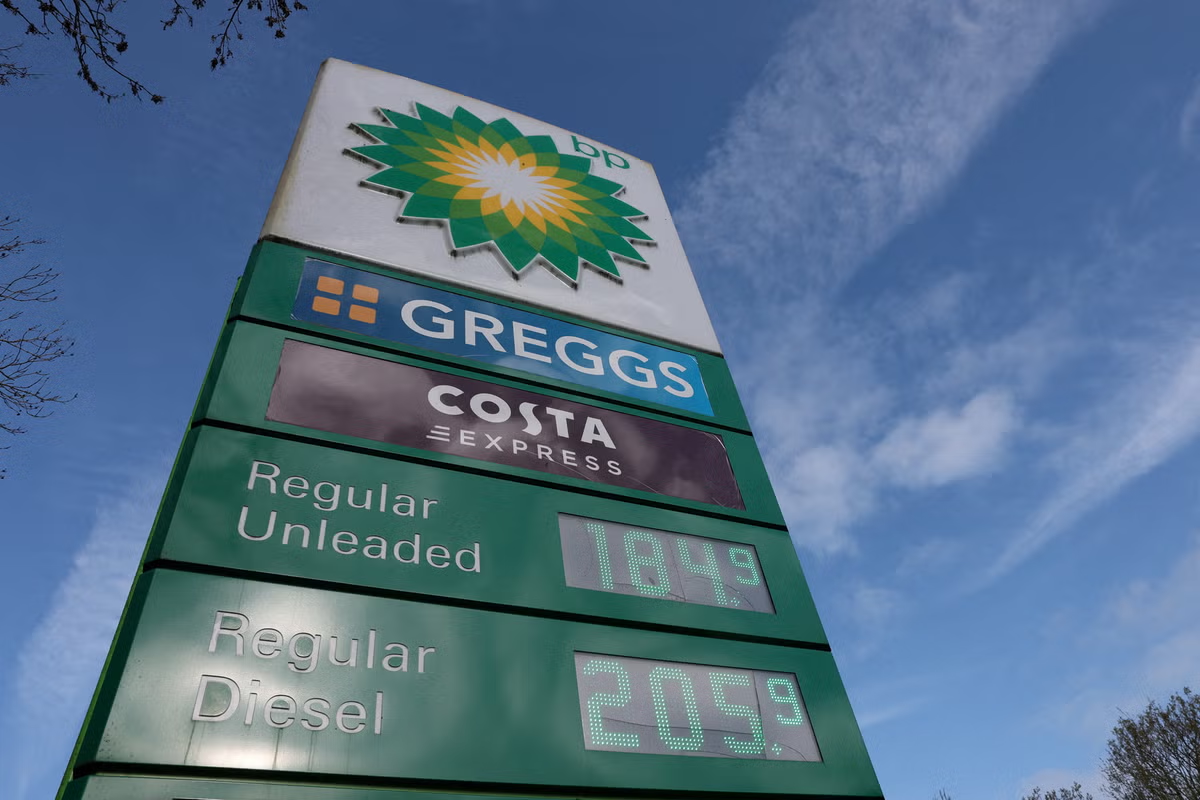
The British economy is expected to show signs of a significant slowdown when official figures for April are published on Friday, after a surprisingly strong start to the year. Forecasts anticipate a sharp decline, largely attributed to geopolitical tensions in the Middle East affecting fuel prices.
Data from the Office for National Statistics (ONS) will reveal the initial squeeze on household finances as the conflict drove up the costs of petrol and diesel. Retail figures for April have already indicated a marked slowdown, with sales falling at their fastest pace in almost a year, down 1.3 percent.
This decline was exacerbated by a substantial 10.2 per cent drop in motor fuel sales, the largest drop since November 2020. This reversal is believed to be partly due to households stocking up on fuel in March as prices began to rise.
The expected poor performance in the dominant services sector in April is expected to drop overall gross domestic product (GDP) significantly below the 0.3 percent growth recorded in March.
The March results helped drive overall growth of 0.6% in the first quarter of 2026, much better than expected.
But the strong growth is likely to start to fade over the course of the second quarter, experts say.
Deutsche Bank UK chief economist Sanjay Raja said: “After a super strong start to the year, we expect the UK to see some course correction in the second quarter.
“Indeed, with the energy impact of the Iran conflict in full swing, household incomes will likely be reduced.
“The cost of living and the cost of doing business will likely have increased, weighing on activity and investment.”
He said he doesn't expect a “big drop in momentum just yet,” but expects GDP to fall by around 0.1% month-on-month in April as the effects take hold.
Raja added: “We continue to think activity will remain subdued as the energy shock hits households and businesses, while domestic political uncertainty is likely to increase over the summer.”
Pantheon Macroeconomics experts are more pessimistic and predict a 0.2% monthly drop in GDP in April, while Investec Economics expects the economy to remain stable.
Investec economist Ellie Henderson said: “Despite challenging global economic conditions, the UK economy managed to expand by 0.3% month-on-month in March, beating expectations.
“While output growth was fairly broad-based, some of the strength could be attributed to consumers and businesses bringing forward certain purchases in anticipation of subsequent price increases as the impact of rising energy prices filters in.
“This frontloading could also have lifted production in some areas in April, but ultimately its effect will be temporary and lead to weaker numbers thereafter as inventories are depleted.”
He added: “We anticipate some weakness in broader discretionary spending in April, which is likely to have affected spending on food services, accommodation and the arts.”