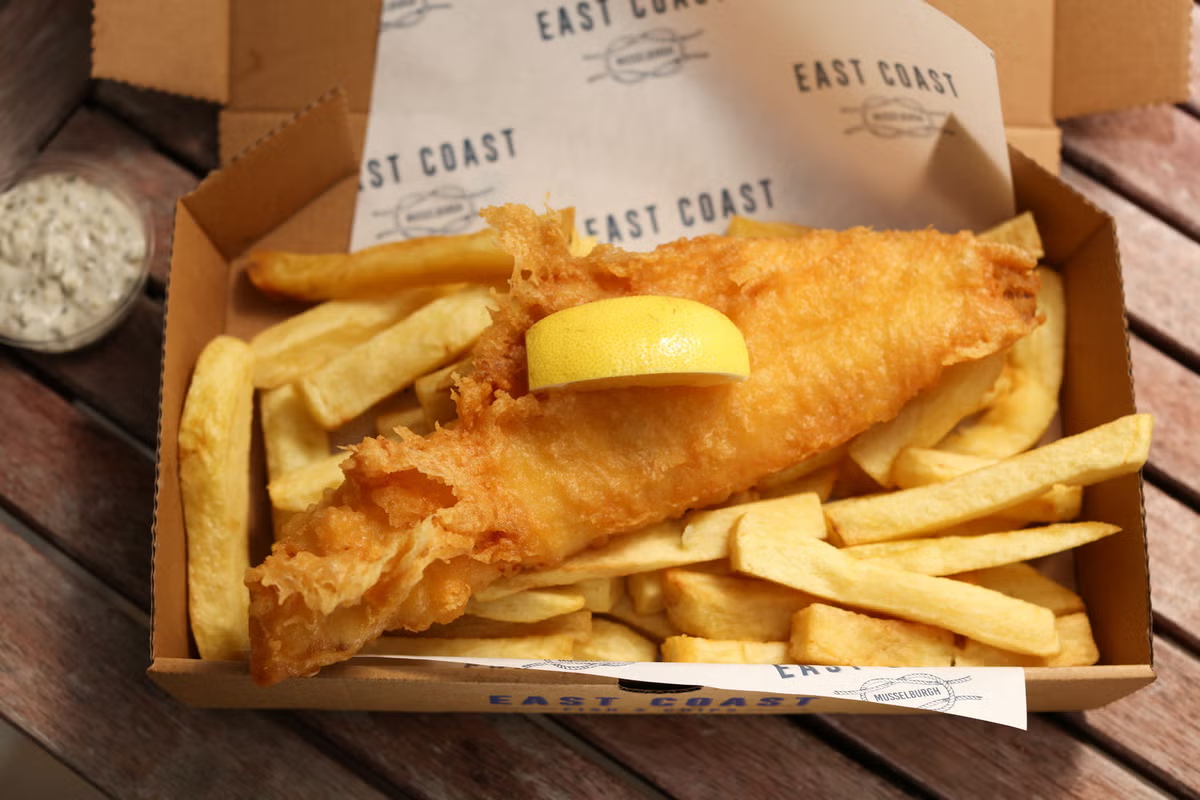
A portion of haddock and chips now costs an average of £10.29 across the UK, while cod and chips has reached £11.41, according to a report.
Around 7,210 fish and chip shops operate across the UK, according to industry body Seafish.
But the rising costs of fish, potatoes, oil and energy are putting pressure on shop owners, many of whom are diversifying their menus with items such as kebabs, pizzas or fish masala or cutting options to increase efficiency, according to the report, the first from Seafish to compile data.
Cod, haddock, prawns and fishcakes are the most common seafood products found on menus; Haddock dominates in Scotland and parts of Yorkshire and the Midlands, and cod remains the most common choice in other parts of the UK.
Report author Jennifer Robson of Seafish said: “Our report confirms that fish and chips is very much alive and well in the UK – it remains one of the country's most iconic and recognizable meals, enjoyed by millions of people every year.
“We embarked on this research to better understand a sector that plays a huge role in local economies and communities across the UK and provides a vital route through which consumers can enjoy seafood.
“Fish and chip shops also play an important role in connecting the public with a wide range of seafood beyond traditional cod and haddock – for example, lesser-known species such as plaice, skate and haddock, which can offer excellent food quality and a greater variety of choice.”
Chairman of the National Federation of Fish Friers, Andrew Crook, said: “This is a very welcome report – its findings help us not only benchmark the fish and chip sector but also begin to calculate its value to the economy.
“The findings also highlight the resilience and adaptability of fish and chip businesses.
“While the sector faces challenges, businesses continue to evolve in response to changing consumer preferences and operating conditions, whilst maintaining a food tradition that remains an important part of British culture.”