No one is forcing survivors of the Altadena and Pacific Palisades fires to rebuild their new homes with all-electric systems. But many of them want to do it, for health reasons, to save costs or because they are concerned about climate change.
Burning gas and propane for cooking, water heating, and space heating in California homes and businesses generates 10% of the state's greenhouse gas emissions. It also releases contaminants inside.
That's why, in recent years, state policy has pushed electrification, and about 39% of new homes in California in 2024 were left without gas lines. Only 8% of all homes were all electric in 2020.
However, after last year's fires, Gov. Gavin Newsom waived a 2025 building code that strongly recommended electric heat pumps in new construction, allowing residents in burned areas to return to building to older, less efficient standards.
The city of Los Angeles also waived the requirement that new homes be all-electric.
Climate experts called these setbacks a missed opportunity. Early numbers show that 1,300 residents have already requested reconnections through SoCalGas, which serves most of Los Angeles.
However, some determined groups of neighbors are building all-electric vehicles anyway, even without the requirements. These are some of their reasons:
Neighbors build passive houses in Altadena
Leo Cheng is part of a group of about 10 Eaton Fire survivors working together to build passive housing in Altadena.
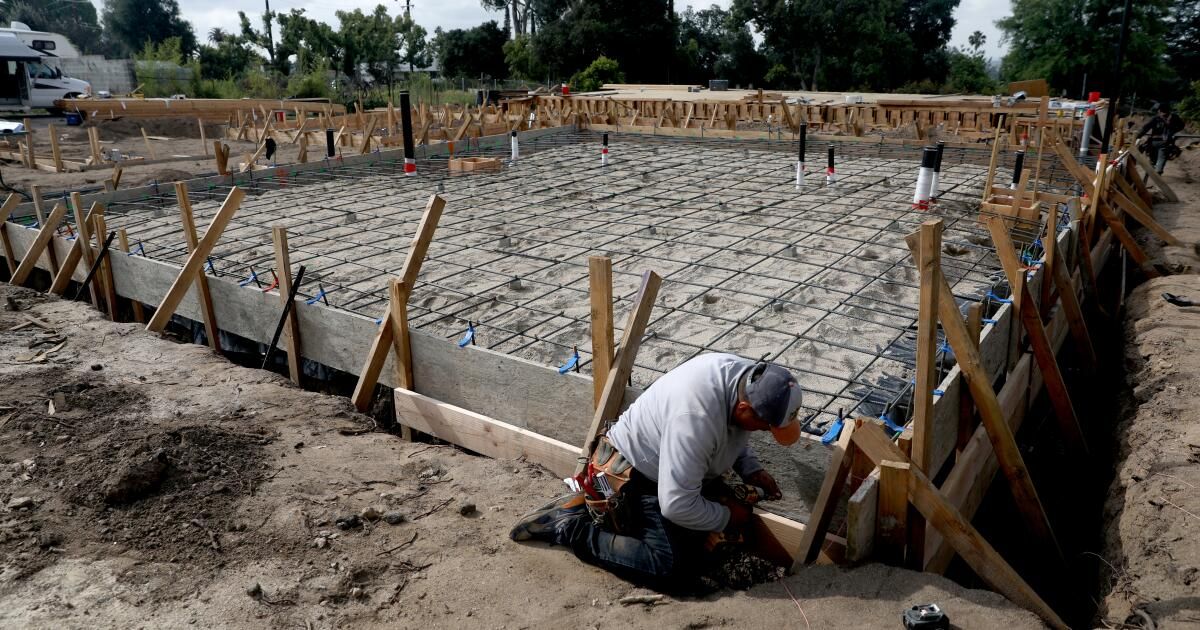
Felipe Jimenez, a construction foreman, reads the plans for a new house on East Mariposa Street in Altadena on Friday.
(Gary Coronado / For The Times)
A passive house is airtight and highly insulated, designed to reduce the need for air conditioning and heating to the greatest extent possible.
Cheng, who previously lived in a house with a gas stove, boiler and water heater, became interested in the concept when he learned it could prevent more smoke and toxic ash during a fire.
For him, passive houses go hand in hand with fully electric appliances, because “in an airtight construction, having a gas stove at home especially does not make sense” for indoor air quality.
Cheng was one of the west Altadena residents who received evacuation orders late on Jan. 7, 2025. He remembers running out of his house in the middle of the night with no time to turn off the gas, so he also likes the idea of reducing fire risk by eliminating it entirely.

Leo Cheng, 60, where he lived with his wife in a 1960s California ranch on East Calaveras Street in Altadena.
(Gary Coronado / For The Times)
After taking a passive house tour led by his neighbor Jaime Rodríguez, who he credits with starting the passive house movement in Altadena, Cheng became part of a small but growing group that meets once a week to support each other in rebuilding all-electric, energy-efficient homes. A former engineer at NASA's Jet Propulsion Laboratory, he decided to become a passive house consultant.
In addition to indoor air quality, climate change is a major concern.
“I firmly believe that climate change played a major role in the intensity and extent of these fires,” Cheng said. “Using fossil fuels today is not a good idea.”
Companies that build all-electric catalog homes
Building a custom-designed home can pose a number of obstacles. For those looking for a simpler, more affordable approach, the Foothill Catalog Foundation offers pre-approved all-electric home designs in styles that honor Altadena's architectural heritage.
Local architects Cynthia Sigler and Alex Atenason were inspired by early 20th-century Sears catalogs that sold houses as kits when they founded the nonprofit last year.
They are already working with 11 families with houses under construction and have 50 more registered to build their catalog houses.
Atenason said they did not set out to design their models fully electric, but decided to go that route for health and safety reasons. Another factor was the money and time they could save customers by eliminating the need for two utility connections.

A sign in front of Leo Cheng's house announces that an all-electric house will be built where his house burned during the Eaton Fire.
(Gary Coronado / For The Times)
According to the Building Decarbonization Coalition, an electrification advocacy group, all-electric homes cost between $3,000 and $10,000 less to build than mixed-fuel homes in Los Angeles. This savings helps when purchasing appliances such as heat pumps, which are the most efficient but tend to be more expensive from the beginning.
The heat pump will result in lower utility bills for summer cooling because they use much less electricity than traditional air conditioners. They also result in savings on winter heating bills in Los Angeles.
The biggest question Atenason receives from customers is about electric cooking, especially when they are used to cooking with gas. But he said concerns usually go away when they learn more about induction cooktops. “If you ask most chefs, that's the most precise and personalized way to cook,” he said.
Genesis Builders LA also offers fixed-price pre-approved catalog homes in Altadena, with models that can be all-electric or use gas. Builder Devang Shah said he is working with about 30 survivors of the fire, half of whom opted for all-electric vehicles.
“Some people prefer gas cooking and the look of a gas-lit fireplace,” Shah said. But all of their customers will use electric heat pumps to heat spaces and water. Although the state waived the requirement that all new homes have solar power for burned areas, they still must be solar-ready. All of Shah's models come with solar power and that, he said, helps the heat pumps run at all times.
An incentive program for all-electric rebuilds
After a long delay, a $22 million incentive program was launched April 6 to support residents rebuilding all-electric in California disaster areas served by investor-owned utilities like Southern California Edison. Customers can qualify to receive between $7,000 and $10,000 in subsidies, with more available for low-income fire survivors and bonuses for batteries and passive housing.
In just the first 10 days, 116 people from Altadena applied.

A plan for a new house on East Altadena Drive.
(Gary Coronado / For The Times)
The Los Angeles Department of Water and Power, which serves most of the Palisades, also has a wildfire electrical rebuild rebate program, with subsidies for all-electric homes or individual appliances.
Reza Akef, a Palisades builder and chair of the Pacific Palisades Community Council's Infrastructure Committee, said people consider these incentives when deciding which appliances to buy. On the other hand, SoCalGas offers wildfire rebates for more energy-efficient gas appliances. More than 1,100 households have signed up.
About 90% of Akef's 45 Palisades customers will conserve gas. He said the fuel is faster for heating pools and spas, where electric heat pumps are more energy efficient than gas ones but heat water more slowly. Some of his customers feel that a gas line will increase the resale value of their home, he said, and others worry about being dependent on an electric company if the power goes out.
A spokesperson for Newsom said California is “aggressively pursuing widespread electrification” but would not burden survivors with “additional mandates and red tape.” Mayor Karen Bass's office said she was giving Palisadians “options on how they want to rebuild,” prioritizing fire resistance.
Kari Weaver is an interior designer who lost her home in the Palisades Fire and a member of Resilient Palisades, a group that advocates for all-electric rebuilds. She plans to build an all-electric home with a solar and battery system in case of power outages. But he will keep a gas line on the property and is still deciding whether to connect it to his pool. It is studying options such as a water-insulating cover, hybrid heaters and new electric heating models.
“These types of appliances are getting better and better,” he said.