A Russian official says Western powers that seize sanctioned ships carrying Moscow's oil are committing “piracy-like attacks.”
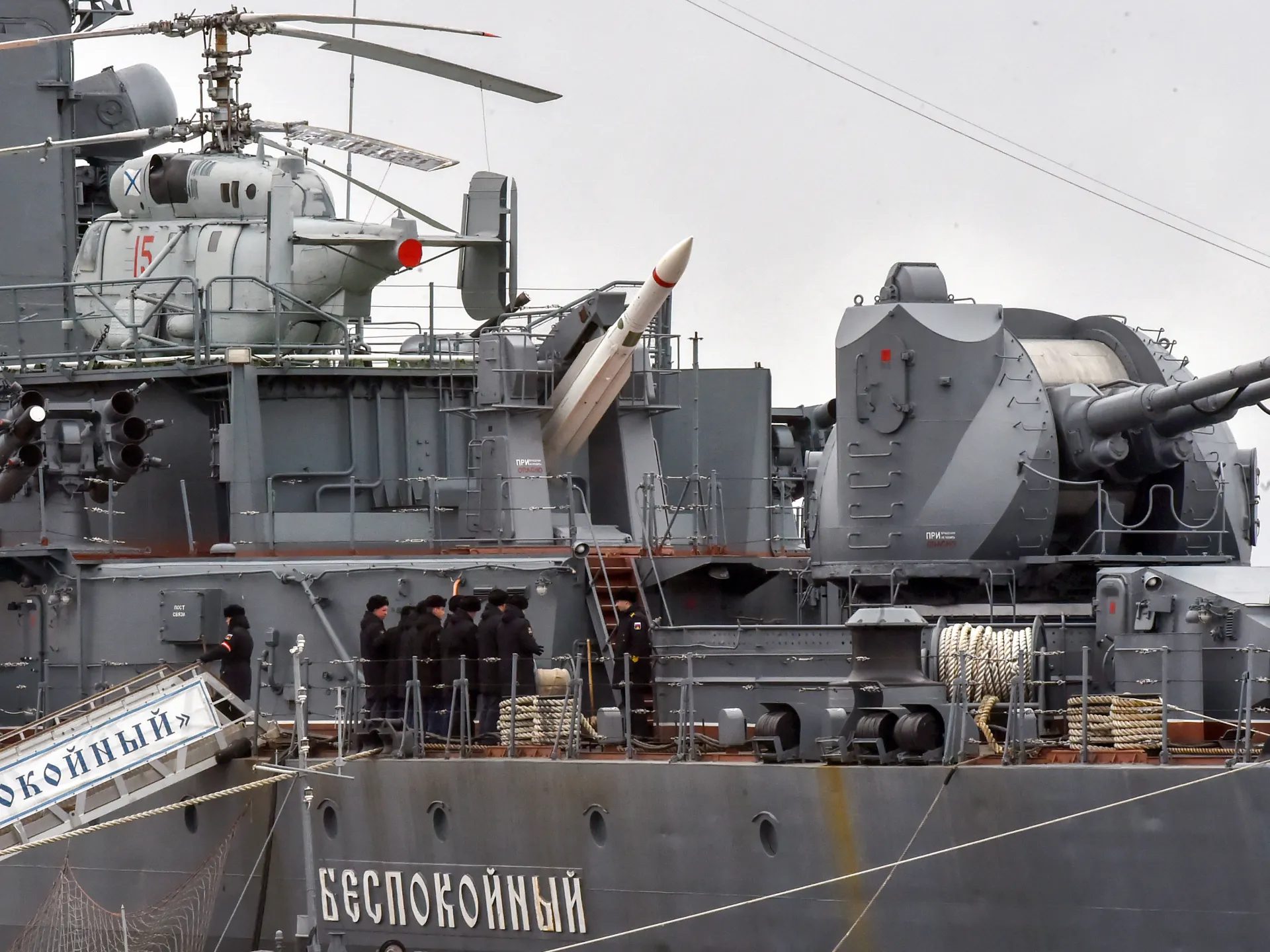
A senior Kremlin official warned that the Russian navy could be deployed to prevent Western powers from seizing Russian ships as part of sanctions against the country's oil shipments and Moscow's so-called “shadow fleet.”
Nikolai Patrushev, a Kremlin adviser responsible for shipping and a close ally of Russian President Vladimir Putin, was quoted on Tuesday as saying Russia needed to send a strong message, particularly “to the United Kingdom, France and the Baltic states.”
Recommended stories
list of 4 itemsend of list
“We believe that, as always, the best guarantor of navigational safety is the navy,” Patrushev said in comments to Moscow newspaper Argumenty i Fakty, where he referred to “piracy-like attacks” by Western countries against Russian shipping.
“If we do not resist decisively, the English, the French and even the Baltic countries will soon dare to try to block our country's access to the seas, at least in the Atlantic basin,” he warned.
Patrushev said Russia had to be able to ship oil, grain and fertilizer to keep its economy operational. He accused Moscow's Western opponents of attacking one of the most important sectors of the Russian economy: shipping.
“In the main maritime areas, including regions remote from Russia, substantial forces must be permanently deployed, forces capable of cooling the ardor of Western pirates,” he said.
He also said that Western powers were undergoing radical technological changes and modernization in their navies, amid what he called clear “gunboat diplomacy” by Washington over Venezuela and Iran.
Russia believes, he added, that the NATO military alliance plans to blockade the Russian enclave of Kaliningrad in the Baltic Sea.
“By implementing their naval blockade plans, the Europeans are deliberately seeking a scenario of military escalation, testing the limits of our patience and provoking active retaliatory measures,” he said.
“If a peaceful solution to this situation fails, the navy will break and remove the blockade,” he added.
“Evading European sanctions has a price”
In January, US special forces seized a Russian-flagged oil tanker with ties to Venezuela in the North Atlantic after a weeks-long chase, prompting a harsh rebuke from Moscow. The US military said the Marinera oil tanker was seized “for violations of US sanctions” on Venezuela.
Russia's Transport Ministry said the US seizure violated international maritime law.
Also in January, French authorities boarded an oil tanker, named Grinch, in the Mediterranean between Spain and Morocco, which they accused of being part of Moscow's “shadow fleet,” a reference to a network of merchant ships that the West says are operated by Russia to evade sanctions imposed due to Moscow's invasion of Ukraine.
The Grinch, who began his journey in Russia, was escorted to a port near the city of Marseille, in the south of France.
On Tuesday, France said it had freed the Grinch after his owner paid a multimillion-dollar fine.
“The tanker Grinch leaves French waters after paying several million euros and enduring a costly three-week detention,” said French Foreign Minister Jean-Noël Barrot in X.
“Bypassing European sanctions has a price. Russia will no longer be able to finance its war with impunity through a ghost fleet off our coasts,” Barrot said.
In September 2025, French authorities detained another ship linked to Russia, called Boracay, a ship claiming to be flagged from Benin. Putin condemned the move as “piracy.”
Boracay's Chinese captain will be tried in France next week.
European Union authorities have listed 598 vessels suspected of being part of Russia's “shadow fleet” that are prohibited from accessing European ports and maritime services.