As Iran contemplates the economic consequences of a prolonged blockade of the Strait of Hormuz, attention shifts north.
With Gulf shipping routes disrupted and oil exports limited, Tehran could seek to rely less on the Gulf and more on a patchwork of railways, Caspian ports and sanctions-era trade networks linking it to Russia.
Recommended stories
list of 4 itemsend of list
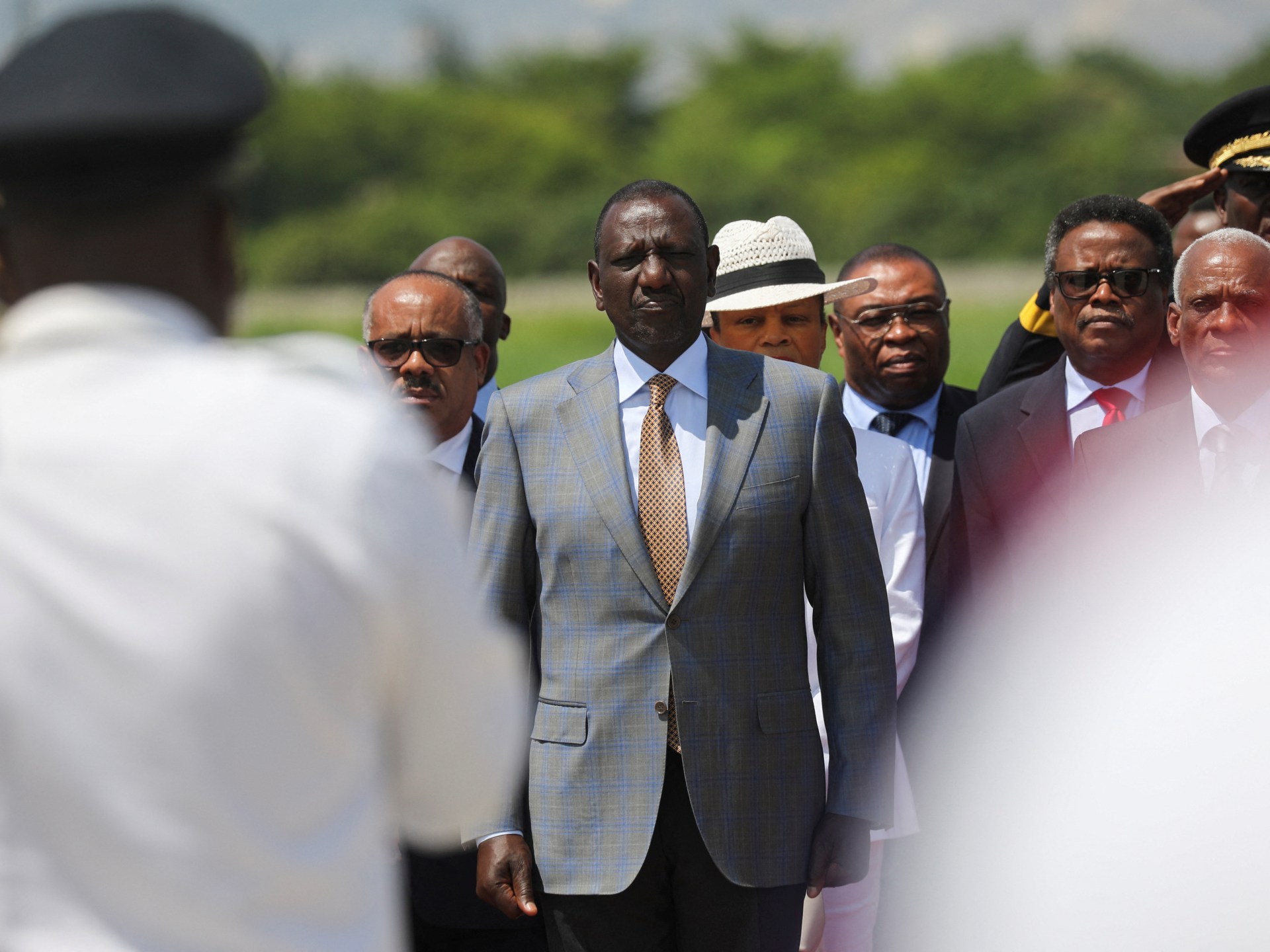
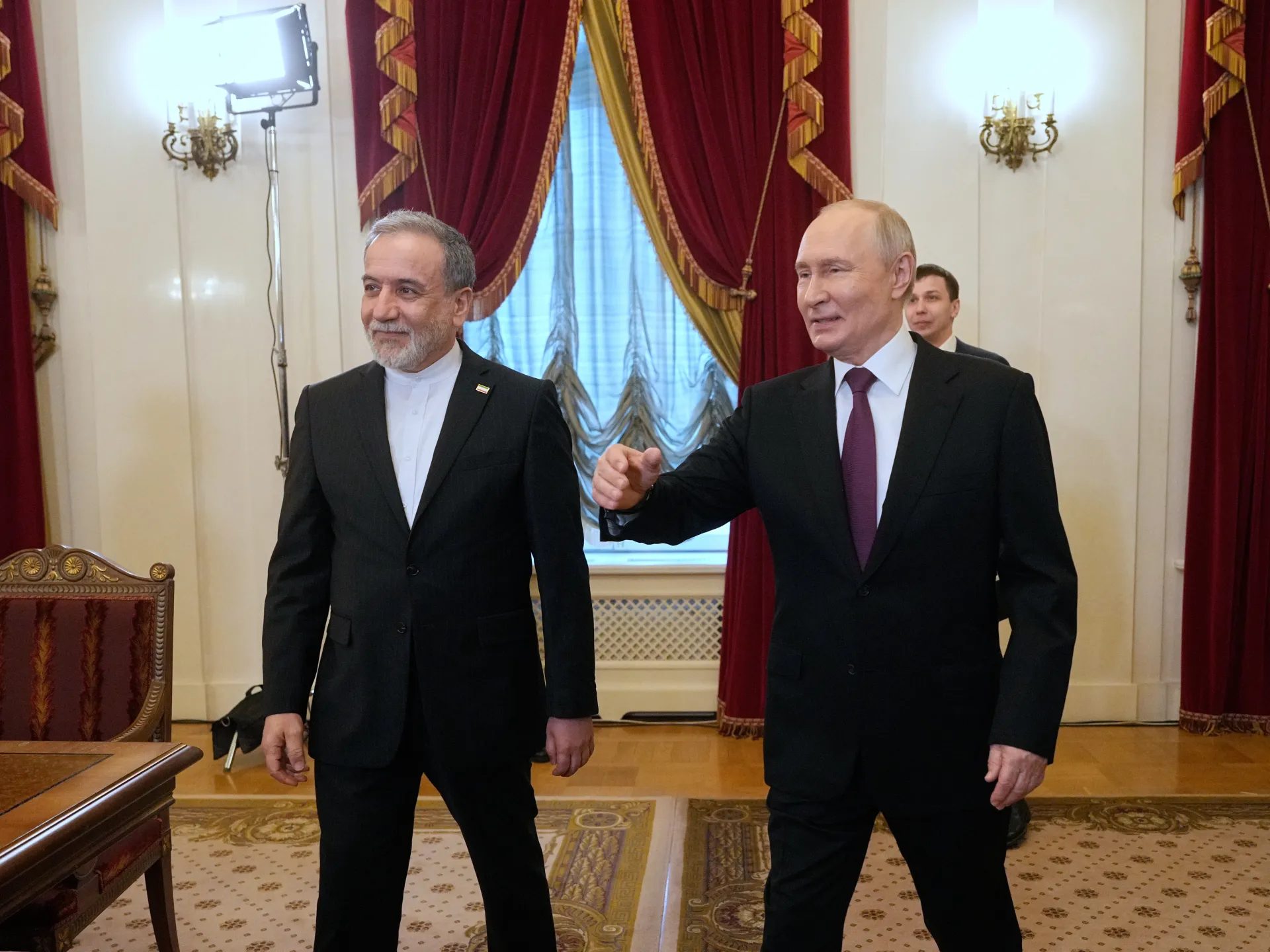
The importance of that relationship was underscored this week when Iranian Foreign Minister Abbas Araghchi traveled to St. Petersburg for talks with Russian President Vladimir Putin and praised Moscow's “firm and unwavering” support as the two sides discussed war, sanctions and the future of the Strait of Hormuz.
But could Moscow really offer a lifeline to Iran's beleaguered and devastated economy, and would it even want to? We spoke to experts to find out.
Growing but modest bilateral trade
Economic relations between Iran and Russia deepened after the United States withdrew in 2018 from a 2015 nuclear deal with Iran and other nations and reimposed sweeping sanctions on Tehran.
The full-scale Russian invasion of Ukraine in 2022 served to accelerate that trend, as both countries found themselves increasingly isolated from the Western financial system. They turned to sanctions evasion networks, alternative payment systems and non-Western trade corridors to keep goods, energy and money flowing.
Today's trade is dominated by agricultural products – especially wheat, barley and corn – along with machinery, metals, wood, fertilizers and industrial inputs. Tehran has also supplied Russia with low-cost Shahed drones, which Russia has upgraded and has been using in its war against Ukraine.
“Trade turnover reached $4.8 billion last year [2024]but we believe that the potential for our mutual trade is much greater,” Russian Energy Minister Sergey Tsivilyov told an intergovernmental commission on trade and economic cooperation between Moscow and Tehran in 2025.
Bilateral trade reportedly increased by 16 percent during that period, driven largely by Russian exports of grains, metals, machinery and industrial products.
But experts say that despite this increase, the overall trade relationship remains relatively modest compared to Iran's trade with China or Gulf countries.
Trade between the two “is not substantial, because both countries produce almost similar products and the industries are similar,” Mahdi Ghodsi, an economist at the Vienna Institute for International Economic Studies, told Al Jazeera.
Alternatives to Hormuz
The backbone of Russia-Iran trade is the International North-South Transport Corridor (INSTC), a network of sea routes, railways and highways linking Russia with Iran and towards Asia, bypassing Western-controlled sea routes.
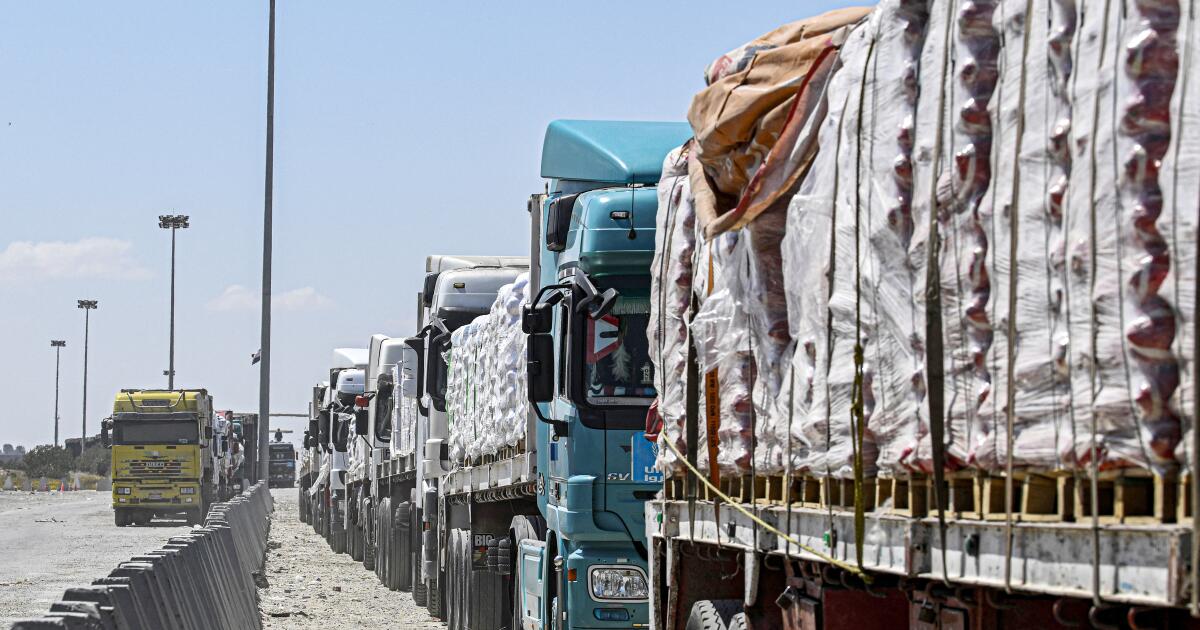
Goods move from ports in southern Russia, across the Caspian Sea, to ports in northern Iran, including Bandar Anzali, before continuing by rail or truck.
The route has become increasingly important for Russian industrial, machinery and grain exports to Iran.
This route can serve as a “viable but partial lifeline,” Naeem Aslam, chief market analyst at London-based Think Markets, told Al Jazeera, adding that Russian ports in Astrakhan, in the Volga River delta near the Caspian Sea, and Makhachkala, on the Caspian Sea, are already “prepared for an increase in grains, metals, timber and refined products.”
A western branch also runs through Azerbaijan, although a key missing rail link between Rasht and Astara in northern Iran remains unfinished.
In 2023, Moscow agreed to help finance the line, with Russia's president calling the deal a “major event” that “will help significantly diversify global traffic flows.”
Easier in theory than in practice
Analysts say that while these routes may provide a temporary solution, the Strait of Hormuz offers a scale and efficiency that rail and land corridors cannot easily replicate.
Although maritime trade has been very volatile in recent weeks, “from a historical perspective it is simply the fastest and most cost-effective way to transport anything,” Adam Grimshaw, an economic historian at the University of Helsinki, told Al Jazeera.
“Approximately 90 percent of Iran's international trade is maritime trade passing through the Gulf, which cannot be quickly or immediately replaced by land access to Iran or by air transport to circumvent the US blockade,” Nader Hashemi, an associate professor at Georgetown University, told Al Jazeera.
Ghodsi said Russia could offer a “lifeline” in the short term, as it did when it exported grain during Iran's droughts, but in the long term it simply “cannot substitute” the huge amounts of sea trade.
Diverting overland trade routes “takes time,” raising prices for consumers and generating more food waste as perishable goods rot along the way.
Does Moscow want to help Iran?
Most analysts say throwing an economic lifeline to Iran is not in Russia's interest.
“They have their own economic problems,” John Lough, foreign policy chief at the Center for New Eurasian Strategies, told Al Jazeera, pointing to signs of stagnation within Russia, pressure on reserves and growing frustration over the protracted war in Ukraine.
While Moscow could offer symbolic support or limited humanitarian assistance, “now is not a good time” to invest in Iran, he said, referring to the US-Israel war against the country.
Replacing maritime trade with land routes would be extremely difficult, despite years of discussion about alternative corridors linking the two nations, he said.
It also won't necessarily help Iran's economy, which needs all the export revenue it can get, experts say.
“Much of Iran's economy revolves around the sale of oil, and with that blocked or prevented by the American blockade, Russia can't really help in that regard,” Hashemi said.
Others, however, are more optimistic.
“Propping up [up] “Iran secures higher global oil prices that boost Russia's war economy, cements INSTC's dominance in Asian trade and keeps alive a key anti-Western ally; there is no downside for Moscow in a fragmented Gulf,” Aslaam said.