- Scientists intentionally leak photons inside a silicon chip to study quantum disorder
- Quantum noise becomes measurable data instead of useless interference during experiments
- Silicon photonic chip studies disordered quantum environments using programmable light paths
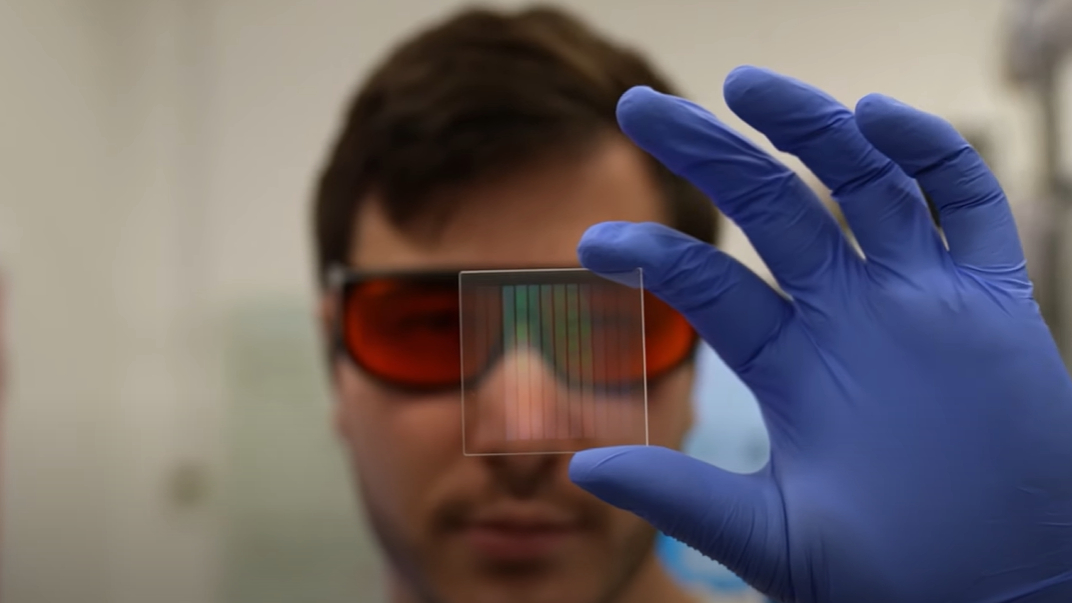
A research team at the KTH Royal Institute of Technology has built a silicon chip that uses light instead of electricity.
This chip doesn't try to eliminate quantum noise (those random fluctuations that normally ruin calculations); Instead, the device deliberately allows some light particles, called photons, to leak through a controlled pathway.
As these photons escape, scientists can measure exactly what is lost and use that information productively.

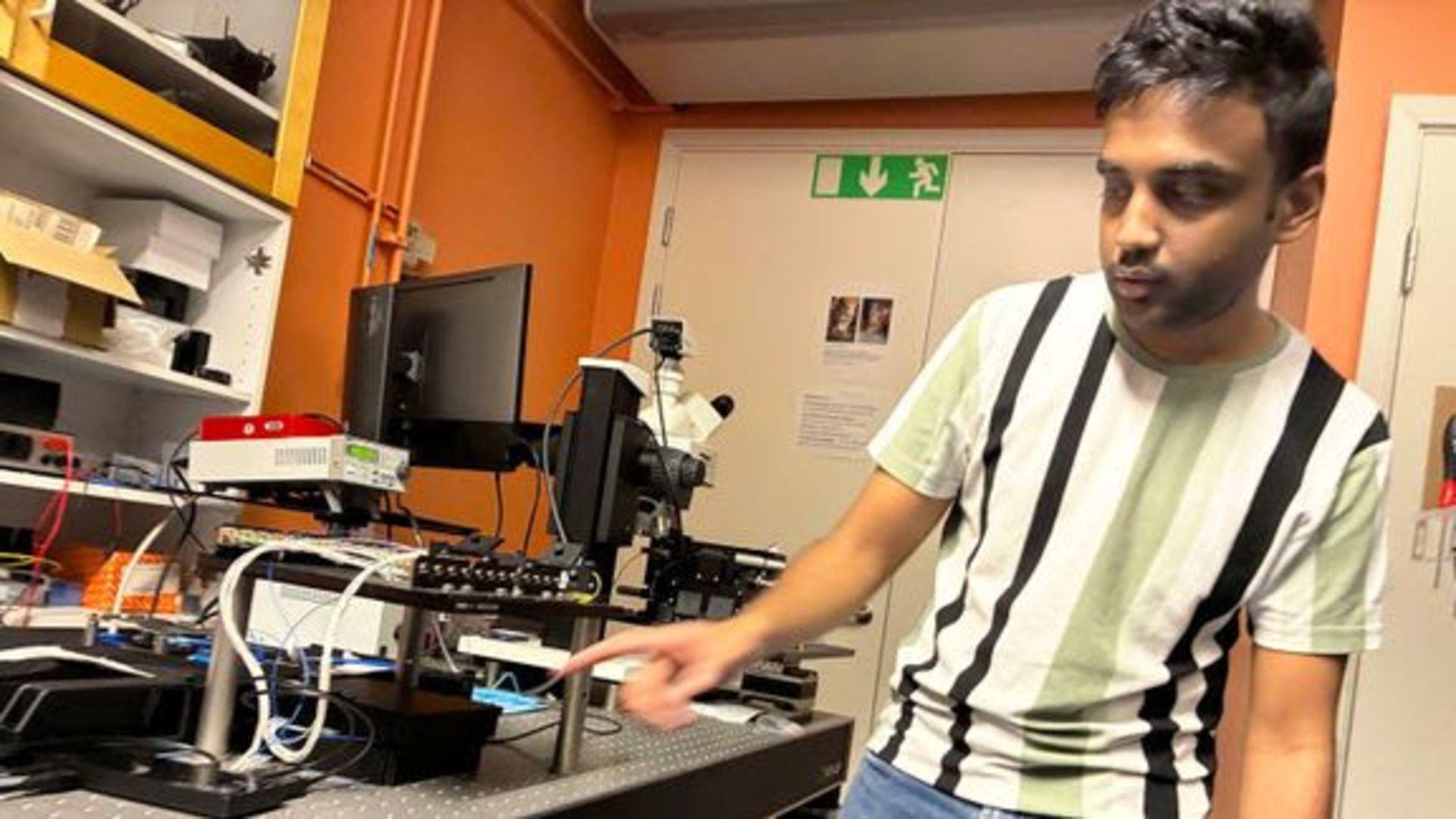
“The chip allows us to simulate those non-ideal processes in a controlled way,” said Govind Krishna, a doctoral student at KTH.
A portion of those traveling photons are redirected to a separate outlet that plays the role of an environment or loss channel, essentially a designated capture vessel for escaping particles.
Researchers measure this channel carefully to track the fate of individual photons throughout each experiment.
Electrical signals determine how much light leaves the main path and enters this side path, meaning scientists can widen or narrow the leakage on command rather than accepting a fixed loss rate.
Ali Elshaari, associate professor at KTH, points out that this device works as a programmable railway crossing for quantum light.
“By changing the control signals, we can decide whether the photons stay mostly in the main track, are mostly diverted to the loss channel, or end up in superpositions that depend on their quantum interference.”
Turn old problems into possible solutions
Real quantum devices always suffer from energy leakage, fading signals, and surrounding ambient noise.
Scientists often treat anything outside the perfect textbook picture as useless waste that should be completely ignored.
This new chip embraces that messiness as a feature rather than a defect, turning conventional wisdom on its head.
“Our chip gives us a controlled way to study how quantum information flows… when things that used to be seen only as problems, like losses, can become useful resources,” said Jun Gao, co-author and associate professor at Huazhong University of Science and Technology.
The chip uses photons as surrogates for particles in any natural system being modeled, allowing scientists to study real-world behavior rather than idealized fantasy.
Most quantum experiments only examine idealized configurations that completely ignore real-world perturbations.
However, understanding how quantum systems behave under real imperfections remains crucial for practical applications.
“Understanding how quantum systems behave in this disorder is crucial if we want our experiments to say something about nature as it really is, not just idealized configurations,” explains Krishna.
This tightly controlled setup allows teams to repeatedly reproduce and study photon behavior in different system configurations, giving them a laboratory for their own imperfection.
This research demonstrates a clever method for studying energy leakage in a laboratory controlled with light particles.
But at this stage it remains a completely open question whether imperfections can actually become assets outside of controlled experiments.
The gap between a proof-of-principle silicon chip and a commercially viable quantum computer remains vast and largely unexplored.

Follow TechRadar on Google News and add us as a preferred source to receive news, reviews and opinions from our experts in your feeds.