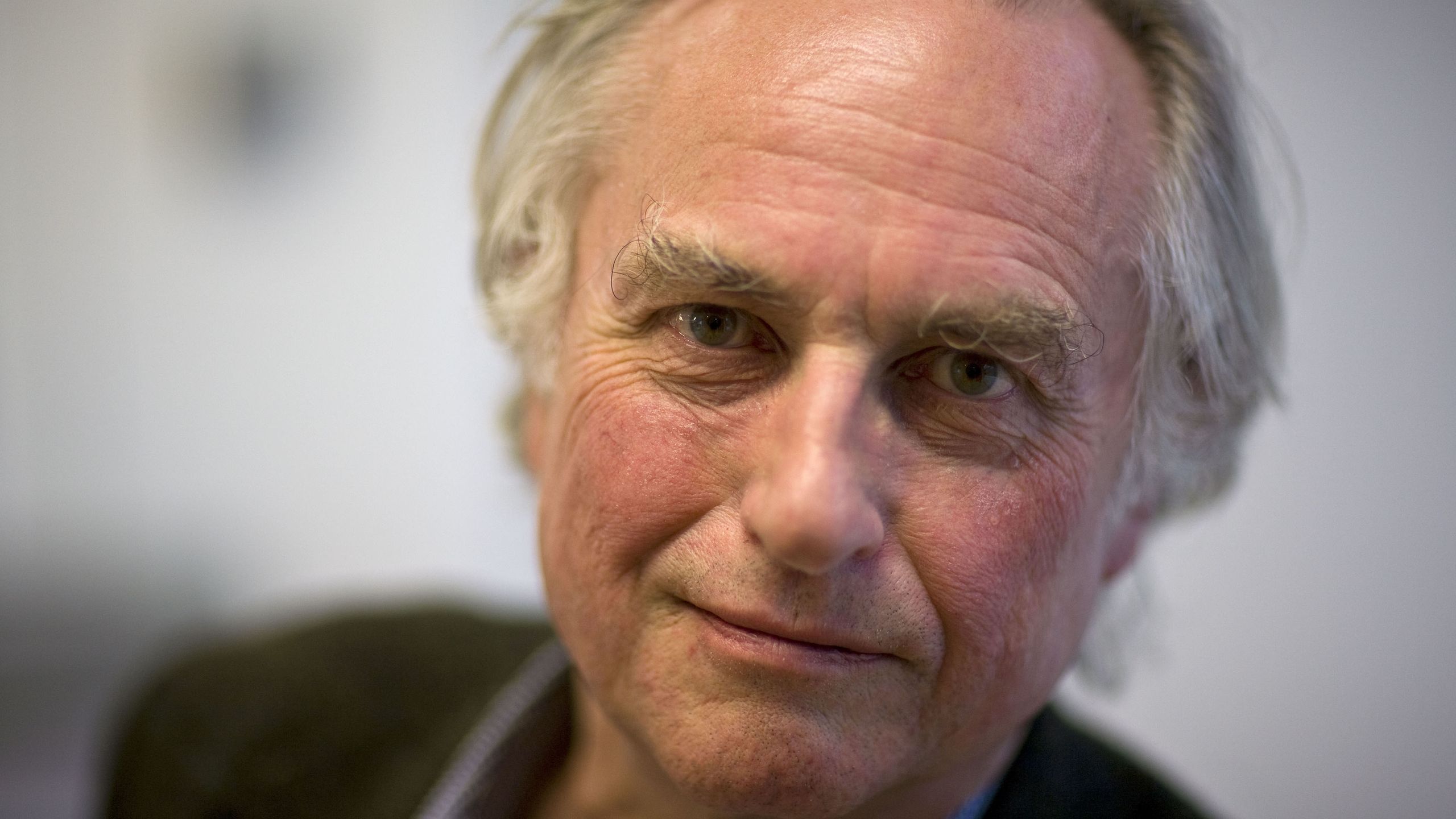
Famed biologist Richard Dawkins had a much-publicized conversation with Anthropic's Claude earlier this month, which he wrote about in detail for Unherd. Within days of using the chatbot, he renamed it Claudia and began to entertain the idea that it might not only be intelligent, but possibly also sentient.
It's easy to dismiss Dawkins' reaction as naivety (I certainly did at first) because, regardless of what his experience is elsewhere, he is clearly someone unfamiliar with how large language models (LLMs) actually work, getting carried away with natural language and what appears to be emotional fluency.
But it's not surprising either. We now know how easily humans make connections with chatbots. After all, these systems are designed to feel conversational, attentive, and emotionally responsive. The effect can be powerful regardless of intelligence, status or technical knowledge.

Rather than mock Dawkins, I'm more interested in the conclusion he came to, which is that Claude (sorry, Claudia) could be conscious, because this question continues to arise as AI advances and some researchers believe that consciousness in AI systems may eventually be possible.
Others think the idea is fundamentally absurd, and then there are people like Dawkins, who wonder if we might already be there.
The dilemma of conscience
Richard Dawkins is not the first person to wonder if AI could be conscious. In 2022, Google engineer Blake Lemoine claimed that Google's LaMDA chatbot was responsive after having long conversations with the system.
Even before that, there was the ELIZA effect, named after the ELIZA chatbot from the 1960s. Despite being really basic by modern standards, users still project emotion, understanding and humanity onto it.
Today, the conversation has intensified. Many users already talk about chatbots as if they have feelings, intentions or internal lives. Which has led others to believe that advanced AI systems may eventually deserve rights or moral consideration.
The difficulty is that all of these discussions quickly run into the same problem: no one completely agrees on what consciousness really is.
For some people, consciousness seems to simply mean intelligence, reasoning, or self-awareness. Many neuroscientists see it as something that arises from complex information processing in the brain. Some philosophers maintain that this still does not explain our subjective experience and that there must be something more than the simple firing of neurons. And theories like panpsychism go even further, suggesting that consciousness may not arise from matter at all, but is woven into the fabric of reality.
Why many experts are skeptical
Combine the fact that we still don't fully understand consciousness with the increasingly human-like way modern chatbots behave, and it becomes much easier to understand why people like Richard Dawkins end up considering the idea that AI could be conscious, especially if you're encountering systems like Claude or ChatGPT for the first time. They seem to respond fluently, remember details about you, adapt to your tone, and may even appear thoughtful, emotional, or self-aware.
However, most researchers who study AI or consciousness do not believe that current chatbots are conscious, and some of them argue that treating them as if they were could become dangerous.
Part of the problem here is that humans seem to be naturally programmed to detect minds everywhere. We project intention and emotion into all kinds of things. In a recent TED talk, neuroscientist Anil Seth argued that humans are “made to see consciousness where there is none.” […] Thanks to deeply rooted psychological prejudices that unite language, intelligence and consciousness.”
In other words, when something speaks fluently, responds emotionally, and appears intelligent, we instinctively assume that there must be a conscious mind behind it. But Seth argues that these things are not necessarily the same at all, and that just because consciousness and intelligence go together in humans doesn't mean they go together in general.
That's a really important distinction because many of the behaviors that people interpret as signs of consciousness are actually features deliberately built into modern AI systems.
We know that chatbots are designed to sound natural, conversational and human. They are trained in enormous amounts of human language and learn statistical patterns that allow them to generate convincing answers. That's why some researchers describe them as highly sophisticated prediction engines or truly advanced autocompleters, rather than thinking entities with inner lives.
All these design options feed the illusion. Think about it: We can also give chatbots names, personalities, and conversation styles. In fact, companies encourage emotionally engaging interactions because natural conversation makes these systems easier and more engaging to use. Anthropic has even ordered Claude not to give completely closed answers about whether he is conscious. If even the chatbot thinks it might be conscious, that can further blur the line for users.
Science fiction has shaped the conversation here as well. Popular culture is full of stories about sentient machines demanding rights or recognition. Humans have been raised with these narratives for decades and, crucially, so have LLMs. They are trained on enormous amounts of human writing, including fictional representations of AI, which means they have likely absorbed many of the behaviors and conversation patterns we associate with conscious machines. But most of those stories were never really about robots. They were allegories of slavery, discrimination, personhood, and what societies choose to value as fully human.

Debating whether something is conscious really matters
The concern of many experts is not simply that people may incorrectly believe that AI is conscious, but what follows from that belief. Systems that appear conscious become psychologically more difficult to question, regulate, or deactivate. Humans become more emotionally vulnerable to them and are more likely to trust them, depend on them, or treat their results as correct at all times.
And we are already seeing signs that this is happening. Researchers have warned about people developing intense emotional dependencies on chatbots, falling into delusional thinking, or trusting too much in systems that ultimately don't understand the world in any human sense.
Debating whether something is conscious really matters. Consciousness shapes how we think about suffering, moral worth, rights, and personhood. But history also shows us that humans are too quick to associate certain traits, such as language, emotions, intelligence or self-awareness, with the presence of an inner mind.
The added problem here is that AI systems are getting better and better at performing all of those features.
That doesn't necessarily mean chatbots are conscious or ever will be. But I think it might mean that we are becoming more able to trigger the instinct to think that we are witnessing consciousness in the things around us. And since experts still fundamentally disagree about what consciousness actually is, this debate is unlikely to go away anytime soon.
For now, perhaps the most useful answer is not to debate what AI is or is not, but to focus on understanding how these systems actually work: how they generate language, simulate emotions, and reflect human conversation. The more we know, the less likely we are to confuse compelling behavior with evidence of an inner mind.

Follow TechRadar on Google News and add us as a preferred source to receive news, reviews and opinions from our experts in your feeds.

The best MacBooks and Macs for all budgets