Honda's history with electrification has been up and down, to say the least. The Japanese brand has been developing electric vehicles since the early 1990s and has been a pioneering force behind hybrid technology, but in the meantime it has been quickly overtaken by countless rivals.
Their 2020 Honda e received high critical praise and was actually one of my favorite cars of the era, but it was overpriced and the electric range was poor. You could argue that he was ahead of his time.
But then, in a very un-Honda move, it introduced the clearly mediocre e:Ny1 which, while slightly more acceptable in terms of price and range, failed to make a splash with its vanilla styling, forgettable handling and aging in-car technology.


The promise of a cutting-edge 0 Series was subsequently postponed due to increasing global pressures and supposedly declining demand for electric vehicles. Even his long collaboration with Sony on the Afeela project ended abruptly earlier this year. Honda has yet to realize its electric dreams.
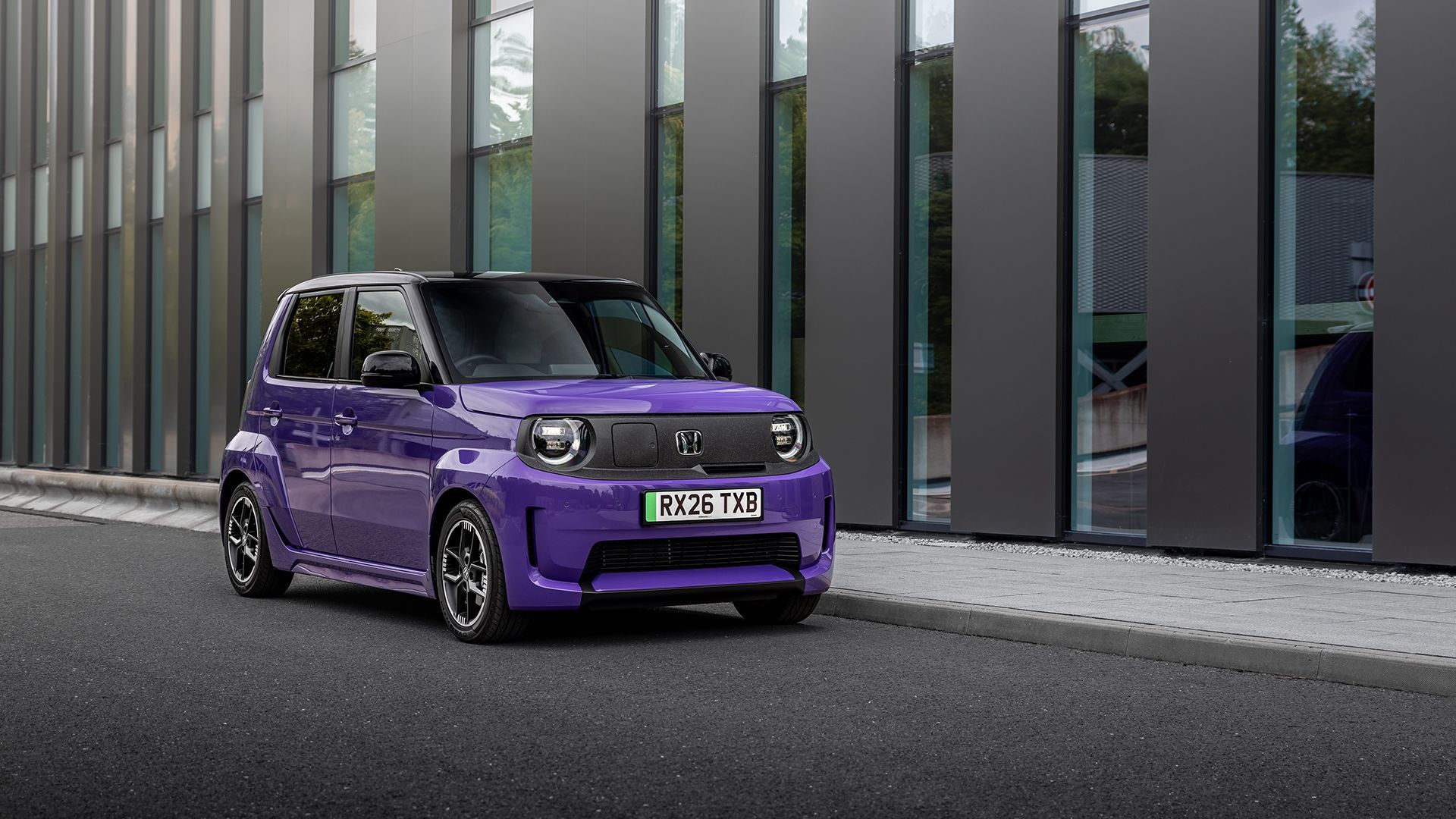
However, you could argue that one small car has been carrying the weight of expectations on its tiny shoulders, and that's the Honda Super-N.
For the first time in the history of the Japanese brand, it has decided to introduce the hugely popular Kei car category to markets outside its territory.
The Kei category, which roughly translates to “light” in Japanese, accounts for about 30% of new vehicle sales in its home market. Its popularity is because the strict size and weight standards that govern the sector allow those who live in densely populated areas to own a car.

In much of Japan, if you can't prove that you have a dedicated parking space for your car, you simply can't have one. Enter the Kei car.
While the Super-N is marginally too large to be legally classified as a true Kei, it borrows much of its underpinnings from a car that is, and the small but perfectly formed Super-N aims to prove that “small electric cars can be genuinely fun,” as project leader Hidetomo Horita puts it.
Limited release
To keep costs down, the Super-N will be limited to right-hand drive markets (as it is in Japan), meaning the UK is one of those lucky places in Europe that will be able to enjoy the deliberately improved styling and roguish handling.

Gone is the small petrol engine found in the rest of Honda's Kei-car N range, and in its place is a 29.6 kWh battery and a 94 HP electric motor driving the tiny 15-inch front wheels.
On paper, the Honda N isn't particularly impressive. It takes a good 10 seconds to reach 100 km/h from a standstill and the top speed is pegged at a measly 133 km/h.
It's not exactly a road trip tool either, as its all-electric range is around 128 miles if you're careful and maximum charging rates are 50kW, meaning it takes around 30 minutes to complete a 10-80% charging session.
There are worrying echoes of the Honda e here, but this is a vehicle that will cost less than £19,000 (around $25,000/AU$36,000) in the UK… not nearly £30,000 (around $40,000/AU$56,500) like its predecessor.

It's also missing the point, because Honda has designed the Super-N to be a real pleasure to drive and a tool for traversing cities.
“We were inspired by the City Turbo II model from the 80s,” explains Horita.
The car, which was a muscular, wide-body urban sports car from the electro-pop era, featured a 1.2-litre turbocharged petrol engine and used a special processor to reduce turbo lag.
Performance figures are very similar and the Super-N shares the same features as the so-called 'Bulldog', with a surprisingly firm ride that has clearly been designed for handling prowess rather than comfort.
Press a big purple button on the steering wheel labeled 'Boost' and the full 70kW (or 94bhp) is unleashed, often enough to spin the front wheels and generally allow the Super-N to attack country roads with old-school gusto.
honda engineering

There is a special place in my heart for Honda, simply because it is a company that over-engineers its mass-produced products. Google the V-TACS system on the Honda FC50 for a good example.
The Super-N is no different and, despite costing just £18,995 in the UK (or around £199 a month on finance), it just about comes out on top on the tech front.
In Boost mode, there's a synthesized engine note that's delivered through the excellent eight-speaker Bose sound system.
But, in true Honda style, engineers have ensured that engine noise is predominantly played through the front speakers, while an exhaust note (inspired by an Integra Type R, no less) is played through the rear speakers for a more realistic finish.

There are several levels of regenerative braking, including a one-pedal driving function, accessed via shift paddles on the steering wheel. In sportier driving modes, these become shift paddles, allowing the driver to cycle through virtual gears.
Press and hold the left paddle for three seconds and the car will go into full manual mode, with the tech even reaching for a virtual rev limiter, much like the system in the much more expensive Hyundai Ioniq 5 N.
Arguably the Super-N doesn't need all of these extra tricks because the unit is already attractive enough, but it's great to have them.
It's not particularly fast or powerful, but its 1,097kg weight, well-calculated steering and firm suspension are perfect for delivering big smiles on the right roads.
I would venture to guess that most owners will leave it in Boost mode all the time and put up with the front tire bills.
Small but extremely practical
The Super-N's four doors open at a 45-degree angle to the body, resulting in a huge opening through which you, your friends or your children can enter the interior.
The front passengers naturally almost elbow each other due to the small proportions, but it is perfectly capable of transporting four adults, or even five in one push.
Better yet, Honda's Magic Seats are included, which fold flat or fold upright with the pull of a lever to create all sorts of space-saving configurations for hauling larger loads.
Of course, the interior is affordably priced and most of the plastics feel particularly cheap and scratchy, but the infotainment system is easy to use and offers Apple CarPlay and Android Auto as standard.
One of my biggest complaints is the lack of space for a smartphone, as all the cubby holes Honda offers are too small. Buy a Super-N and you'll probably need to buy a smartphone holder too.

However, in a nice twist, the Super-N has been homologated for the UK and therefore doesn't have to meet a host of pesky European safety standards.
It means the speed limit alert comes in the form of a subtle flashing logo rather than an incessant noise, while lane keep assist is one of the least intrusive systems I've tested.
Everything works exactly as it should, without interrupting driving or forcing the driver to fumble through digital menus to turn everything off – something premium players like Volvo, BMW and Mercedes-Benz could easily learn from.
According to Honda UK's Andrew Winfield, there has been a significant increase in sales of A-segment compact electric vehicles such as Dacia's Spring, Fiat 500e, BYD Dolphin Surf and the larger Renault 5 contributing to a 300% year-on-year increase in sales volume from 2025 to 2026.
The Japanese brand is hoping that the Super-N can introduce another affordable, practical and fun electric city car to the segment, which will soon also house the Renault Twingo, but which offers real driving thrills and a little reminder that Honda is still capable of making automotive magic.

Follow TechRadar on Google News and add us as a preferred source to receive news, reviews and opinions from our experts in your feeds. Be sure to click the Follow button!
And of course you can also follow TechRadar on TikTok for news, reviews, unboxings in video form and receive regular updates from us on WhatsApp also.