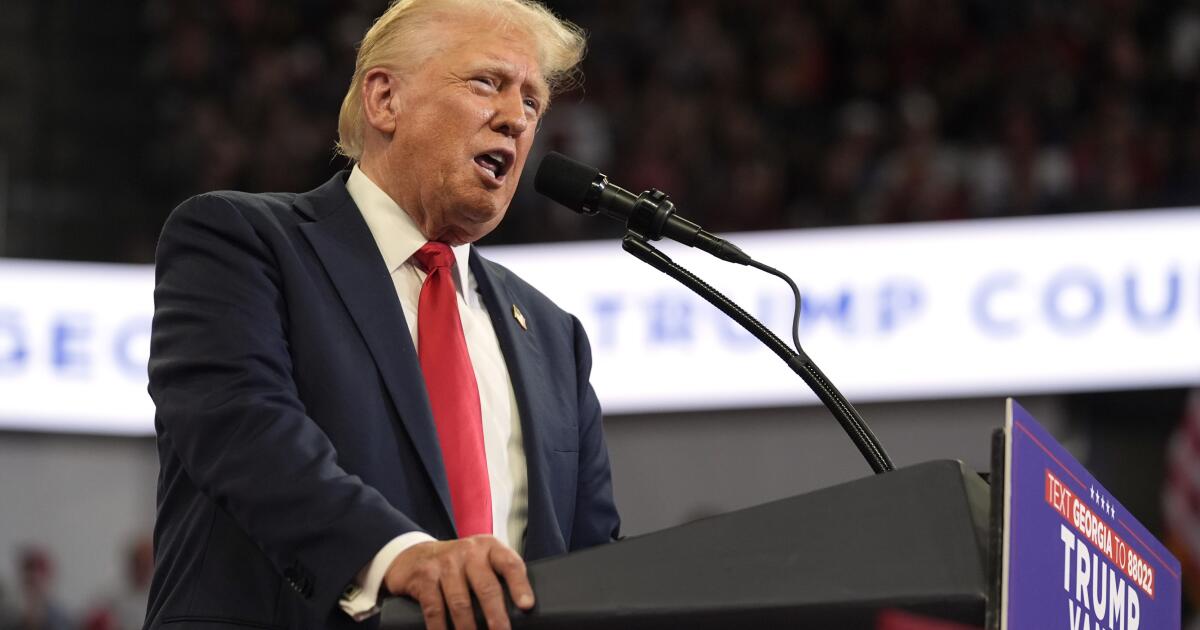
Prices have risen sharply in recent sessions, supported by rising geopolitical tensions after President Donald Trump flagged the possibility of renewed military action against Iran. The current disruption in the Strait of Hormuz continues to raise global uncertainty, triggering short-term safe-haven flows into gold.
However, under this bullish momentum, the broader macroeconomic backdrop remains restrictive. High prices are raising inflation expectations, which in turn reinforces a more cautious and hawkish stance from Jerome Powell and the Federal Reserve. Market participants have begun to reduce expectations for rate cuts, with some even pricing in the possibility of tighter policy in the future.
This creates a conflictive environment for gold. While geopolitical risk supports near-term growth, persistent inflation and expectations of higher interest rates continue to limit the potential for a sustained rebound. As a result, the current movement appears to be driven more by sentiment and positioning than by a structural change in macroeconomic conditions.
Technical analysis
From a technical point of view, the broader market structure is still tilted to the downside. Previously, the price broke out from a larger ascending channel, indicating a change in the direction of the trend. The current price action is developing within a smaller descending channel, suggesting that the recent upward move is corrective in nature.
The spike from the lower boundary of this channel reflects a reaction to external catalysts, aligning with the fundamental backdrop of increased geopolitical tension. However, attention is now focused on the Fibonacci retracement zone between 0.50 and 0.62, which represents a key area where the price may encounter resistance.
If price reacts within this zone, it would align both technically and fundamentally with the idea that the current rally is temporary and that broader bearish pressure could resume.
Conclusion
Gold is currently supported by near-term geopolitical risk, but at the same time remains constrained by a macro environment defined by rising inflation and a hawkish monetary outlook.
With both fundamental and technical outlooks pointing towards limited bullish sustainability, the current rally is likely to be corrective. The market may continue to rise in the near term, but the probability still favors a rejection of key resistance levels, followed by a continuation of the broader downtrend.