Industrial policy is failing, and not just in Washington. Across the United States, officials promise to achieve the right economic results by intervening in the market in the right way. Most people know that under Presidents Biden and Trump, the idea has exploded. Less appreciated is the enthusiasm with which governors and state legislators are adopting their own versions. They repeat the same claims: With the right combination of subsidies, protection, and political direction, one government or another can revive strategic industries and generate lasting economic strength.
The results tell a different story. Wherever it is found, industrial policy is producing wasted resources, distorted incentives, and fragile outcomes that collapse the moment political support shifts or market realities interfere. Just look at the similarities between Georgia's famous film industry tax credits and some of the federal government's pet projects.
A recent Wall Street Journal investigation Georgia's experience seems like a textbook example of how the model fails. Film tax credit plans are sold as investments in business “ecosystems” and middle-class jobs. In reality, they are either a subsidy to production companies to do what they would have done anyway, or they are bribes to highly visible and highly mobile capital that can leave as quickly as it arrives. Georgia was the last.
For years, Georgia promoted itself as the “Hollywood of the South,” attracting blockbuster franchises with generous refundable tax credits (about $5.2 billion between 2015 and 2022) that could be converted directly into cash. The result was a temporary, subsidy-driven surge in output, followed by a predictable collapse, which became visible in 2023. Labor costs rose. The boom allowed unions to win concessions. Georgia's competitiveness eroded. Other states, such as New Jersey, and countries, such as the United Kingdom, responded with richer offers or lower labor costs.
Today, Georgia is left with millions of square feet of underused sound stages and other abandoned infrastructure, relics of productions that have since moved on. The numbers are damning. Auditors estimate that the state lost 80 cents for every dollar spent. Instead of questioning the entire premise, lawmakers responded by redoubling their efforts and extending incentives to films filmed elsewhere and simply edited in the state.
Georgia is not an outlier. This same pattern has been repeated repeatedly in states and cities that have attempted to buy a film industry. This includes California, where increasing tax credits have been justified as “retention” policies rather than genuine development, at increasing fiscal cost and with weak evidence of lasting net economic gains.
If movie credits are the most obviously wasteful form of industrial policy, Intel is the most consequential. Under Biden and Trump, those who already fight The semiconductor company has been chosen as a national champion aimed at consolidating leadership in semiconductors. Billions in public support, preferential treatment and public ownership were supposed to achieve a turnaround for the company.
For a while, The narrative worked. Starting in August 2025, when the Trump administration acquired shares in the company, investor enthusiasm increased and demand skyrocketed. Shares are up 120% in five months. But industrial policy can't fix operational reality and perception can't fix performance. Intel struggled to adapt after cutting capacity in older production lines, lacked customers for key new products and was unprepared to fuel the AI data center boom. So now Intel stock is falling again.
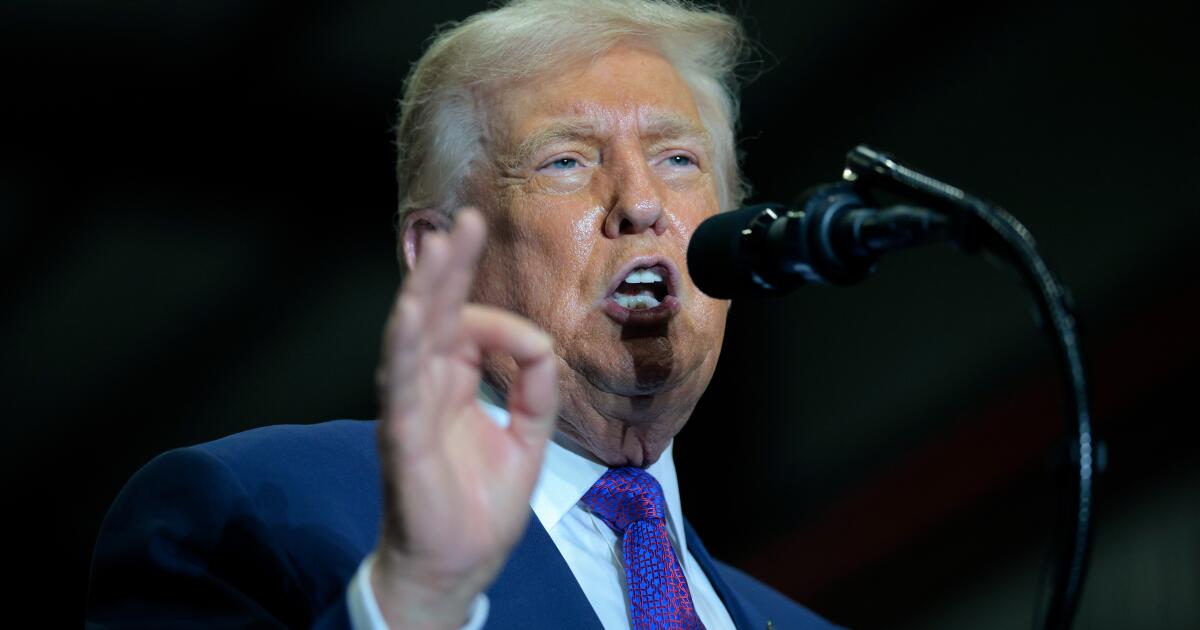
Then there are Trump's tariffs, framed as an industrial policy to reindustrialize the country, protect workers and lower prices. Instead, tariffs have quietly consumed much of the manufacturing sector's profits. This is not surprising. Most U.S. imports are inputs used to make U.S. products. Tariffs, therefore, are taxes on American manufacturing.
Empirical work from the Kiel Institute shows that foreign exporters absorb only a negligible part of the cost. About 96% of the burden falls on American buyers. American households and businesses (not foreign companies) overwhelmingly covered the roughly $200 billion in customs revenue collected in 2025. The companies we import from responded not by lowering prices, but by sending fewer goods to the U.S. As Kiel economist Julian Hinz put it, tariffs amounted to “self-targeting” that raised costs, compressed profits, and weakened the very industries they were meant to protect.
This helps explain why the promised renaissance of automobile manufacturing has not materialized. So far, automakers and suppliers have absorbed much of the tariff impact through lower profit margins, restricted prices and selective job cuts. This is not sustainable. Investment decisions are currently being reconsidered and some manufacturers, such as volkswagen, They warn that new American plants no longer make sense.
Tariffs did not restore competitiveness or pricing power. They raised costs and made U.S. production less attractive at the margin.
All of these cases differ in details but share a common logic: industrial policy attempts to design outcomes while ignoring processes. It is assumed that political favor can substitute market incentives. That innovation and customer demand will not be affected. That protecting companies from competition will make them stronger. Instead, we have fragile industries that depend on even greater political support.
Rugy Veronica He is a senior fellow at the Mercatus Center at George Mason University. This article was produced in collaboration with Creators Syndicate.