I recently watched “A Face in the Crowd” for the umpteenth time.
I had a better reason than procrastination to rewatch Elia Kazan's brilliant 1957 film exploring populism in the age of television. It was homework. I was asked to talk about it with Turner Classic Movies host Ben Mankiewicz at the just-concluded TCM Film Festival in Los Angeles. As an expert and author, I do a lot of public speaking. But I don't really speak much in public, so it was a pleasure.
That not-so-humble bragging aside, this time I realized I was depressing.
“A Face in the Crowd” tells the story of a charming drifter with a dark side named Larry “Lonesome” Rhodes, played brilliantly by Andy Griffith. Rhodes, a singer with a gift for gab, takes off on radio but quickly transitions to the new medium of television. He becomes a national sensation and political kingmaker by forming a deep connection with the masses, particularly among the rural and working class. Its primary audience is made up of people with a grievance. “Everyone who has to jump when someone else blows the whistle,” as Rhodes says.
Andy Griffith as Larry “Lonesome” Rhodes in “A Face in the Crowd,” directed by Elia Kazan.
(UCLA Film and Television Archive)
The climax of the film (spoiler alert) comes when Rhodes's manager and scorned lover, Marcia, turns on the microphone during the credits at the end of a segment of “Cracker Barrel,” his national television show. Rhodes tells his entourage what he really thinks of the “morons” in his audience. “Gee, I can take chicken fertilizer and sell it to you as caviar. I can make you eat dog food and you'll think it's steak… Good night, you stupid idiots.”
It was a canonical “hot mic” moment in American cinema. But the idea that if people could glimpse the “real person” behind the popular facade, then they would turn against it, is a very old theme in literature: think of Pierre Laclos's “Les Liaisons Dangereuses” (1782) or Richard B. Sheridan's “The School of Scandal” (1777), in which diaries and letters do the work of microphones.
Kazan and screenwriter Budd Schulberg were deeply concerned about the ability of demagogues to stoke populist fervor and manipulate the masses through the power of television, in part because everyone had already seen what was happening with radio and film, with Father Coughlin in the United States and with Hitler in Germany. But as dark as their vision was, they still clung to the idea that if the demagogue was exposed, the people would instantly turn against their leader in a “Emperor's New Clothes” moment for the media age.
And that is the source of my depressing understanding. I think they were wrong. It turns out that once that organic connection is established, even a shocking revelation of the truth won't necessarily break the spell.
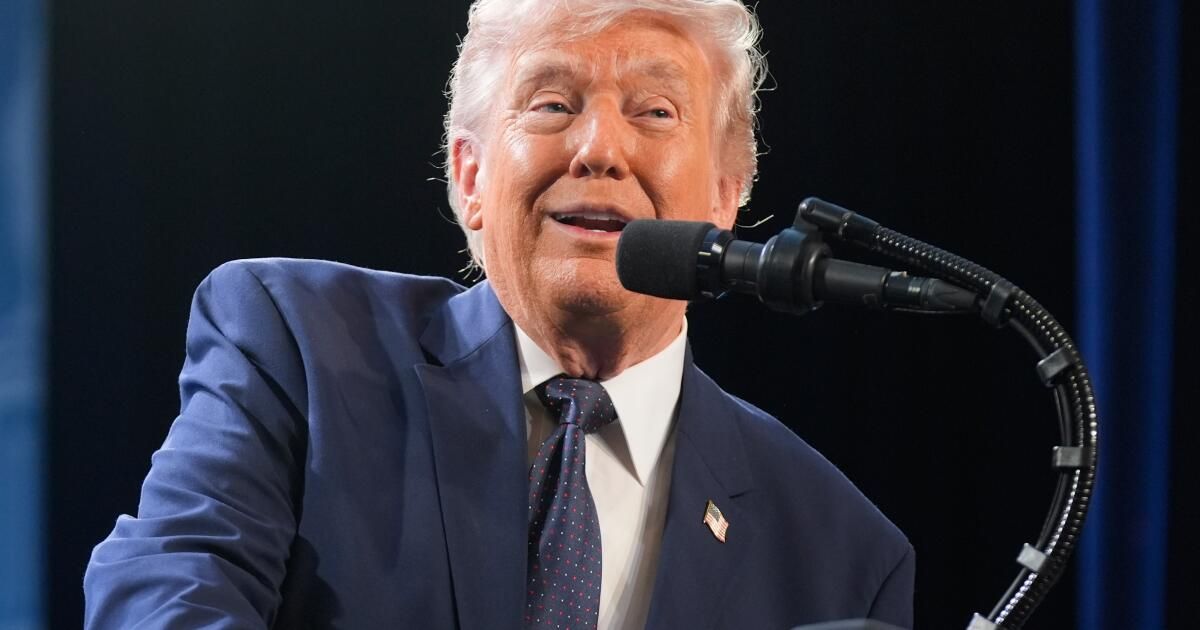
In 2016, a batch of writers revisited “A face in the crowd” to understand the Trump phenomenon. After all, here was a guy who used a TV show – “The Apprentice” – and social media to gain a huge following, bypassing the “system.” Trump’s sizzling moment at the microphone with “Access Hollywood,” in which he bragged about his sexual predations, proved insufficient to undo him. This was not the only moment like this for him. We have heard Trump intimidate the Georgia Secretary of State to “find 11,780 votes.” He told Bob Woodward that deliberately “downplayed” COVID-19. After leaving office, he was recorded telling his aides that he should not be exchange classified documents with them and then do it anyway. Etc.
Trump's famous claim that he could “shoot someone” on Fifth Avenue and not lose voters, may have been hyperbole, but it is not unreasonable to think that it would not lose as many voters as it should.
In the film, Lonesome Rhodes implodes when Americans find his character off the air. The key to Trump's success is that he presented himself as his off-air persona. Why people love that person is a complicated question. Among the many complementary explanations is that he appears as authenticand some people value authenticity more than good character, honesty, or competence.
This is not just a Republican problem. Maine Senate candidate Graham Platner has a Nazi tattoo and has said such nasty things about women as Trump's “grab them by the hands.” [the genitals]” he says, and the Democratic establishment is rallying around him because he is authentic and because Democrats want to win that race.
Many prominent MAGA loyalists are turning against Trump these days. They claim – bad in me opinion – that it has changed and that Iran's war is a betrayal of its cause. But if you look at the polls, self-described “MAGA” voters are still overwhelmingly support trump. In short, he still has Fifth Avenue voters on his side.
UNKNOWN: @JonahDispatch
Perspectives
Perspectives from the LA Times offers AI-generated analysis of Voices content to provide all points of view. Insights does not appear in any news articles.
point of view
Perspectives
The following AI-generated content is powered by Perplexity. Content is not created or edited by the Los Angeles Times editorial staff.
Ideas expressed in the piece.
- The article argues that the 1957 film “A Face in the Crowd,” which assumes that exposing the true nature of a demagogue will cause his followers to turn against him, presents a fundamentally flawed premise when applied to contemporary politics.[1].
- The column contends that Trump's multiple documented revelations, including the Access Hollywood tape, his taped pressure on Georgia's secretary of state, his statements about deliberately downplaying COVID-19, and his handling of classified documents, have failed to significantly diminish his support.[1].
- The article suggests that Trump's success is due to presenting himself as his authentic self rather than maintaining a false public persona, and that some voters prioritize authenticity over character, honesty or competence.[1].
- The article acknowledges that while some MAGA-identified figures are questioning Trump on specific policy issues, polling data indicates that voters who identify as “MAGA” still overwhelmingly support him.[2].
Different points of view on the subject.
- A contrasting perspective holds that MAGA supporters are beginning to question Trump in unprecedented ways, with influential figures openly challenging his judgment on the Iran war, his moral character regarding the Epstein files, his mental fitness and competence, and his truthfulness in manners never before seen within the movement.[2].
- This view holds that Trump's approval ratings have sunk to second-term lows driven by concerns about Iran, deportations and the economy, and some former supporters now question the veracity of major events and raise questions about Trump's credibility in ways that represent a fundamental shift in loyalty.[2].
- Another perspective suggests that there are internal ideological tensions within MAGA itself, as MAGA ideologues want to define what “America First” means independently while Trump pursues his own personal agenda, indicating structural conflicts within the movement beyond simply overwhelming support.[3].