WASHINGTON- The Supreme Court ruled Friday that President Trump's sweeping global tariffs are illegal and cannot stand without congressional approval.
The 6-3 decision gives Trump his most significant defeat at the Supreme Court.
Last year, judges issued temporary orders blocking several of his initiatives, but Friday's ruling is the first holding that the president overstepped his legal authority.
Chief Justice John G. Roberts Jr., speaking on behalf of the court, said Congress has the power to impose taxes and tariffs, and lawmakers failed to do so in an emergency law that does not mention tariffs.
“The President claims to have the extraordinary power to unilaterally impose tariffs of unlimited amount, duration, and scope. In light of the breadth, history, and constitutional context of that asserted authority, he must identify clear congressional authorization to exercise it,” he wrote.
“And so far no President has read the International Emergency Economic Powers Act to confer such power. We do not claim special jurisdiction over economic or foreign affairs. We only claim, as we must, the limited role assigned to us by Article III of the Constitution. Fulfilling that role, we hold that IEEPA does not authorize the President to impose tariffs,” Roberts wrote.
Justice Neil M. Gorsuch in a concurring opinion highlighted Congress's role.
“The Constitution deposits the legislative powers of the Nation solely in Congress,” he said.
Justices Clarence Thomas, Samuel A. Alito and Brett M. Kavanaugh dissented.
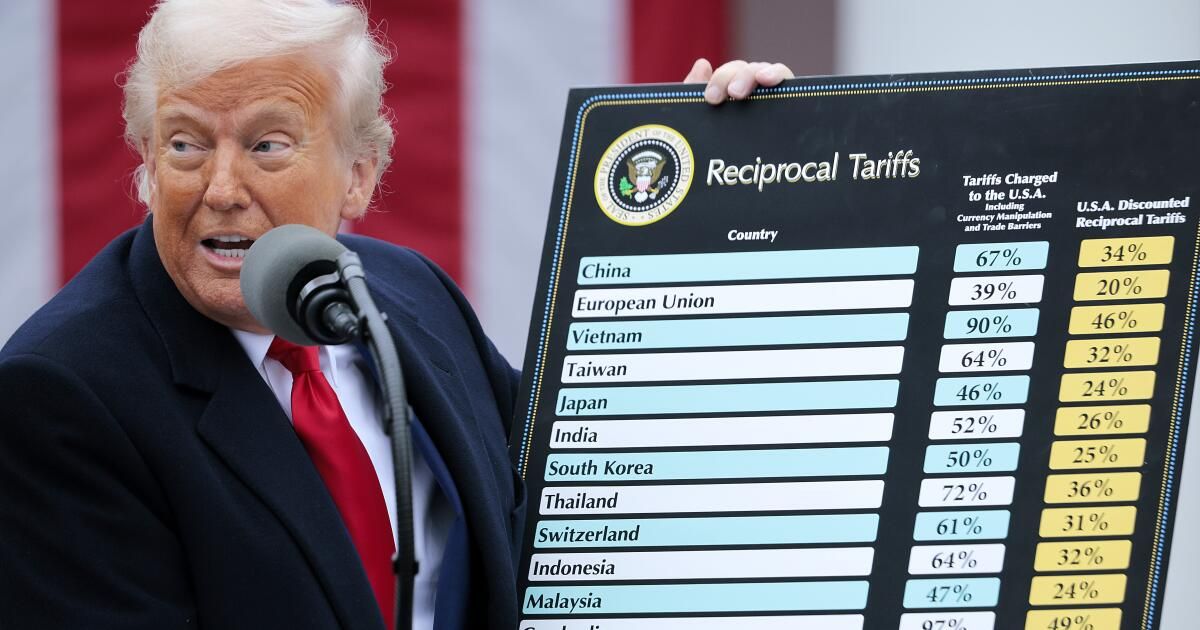
Trump claimed his new and ever-changing tariffs would generate trillions of dollars in revenue for the government and encourage more manufacturing in the United States.
But manufacturing employment has declined over the past year, in part because U.S. companies have been hurt by higher costs of imported parts.
Critics said the new taxes particularly hurt small businesses and raised prices for American consumers.
The justices focused on the president's supposed legal authority to impose tariffs in response to an international economic emergency.
Several small business owners sued last year to challenge Trump's import taxes as illegal and disruptive.
Learning Resources, an Illinois company that sells children's educational toys, said it would have to increase its prices by 70% because most of its toys were made in Asia.
A New York wine importer and Terry Precision Cycling, which sells women's cycling clothing, filed a separate lawsuit.
Both lawsuits won in lower courts. The judges said the International Emergency Economic Powers Act of 1977 cited by Trump did not mention tariffs and had not been used before to impose such taxes on imports.
The law says the president, in response to a national emergency, can address an “unusual and extraordinary threat” by freezing assets or sanctioning a foreign country or otherwise regulating commerce.
Trump said the country's long-standing trade deficit was an emergency and that tariffs were appropriate regulation.
While rejecting Trump's claims, lower courts upheld his tariffs while the administration appealed its case to the Supreme Court.