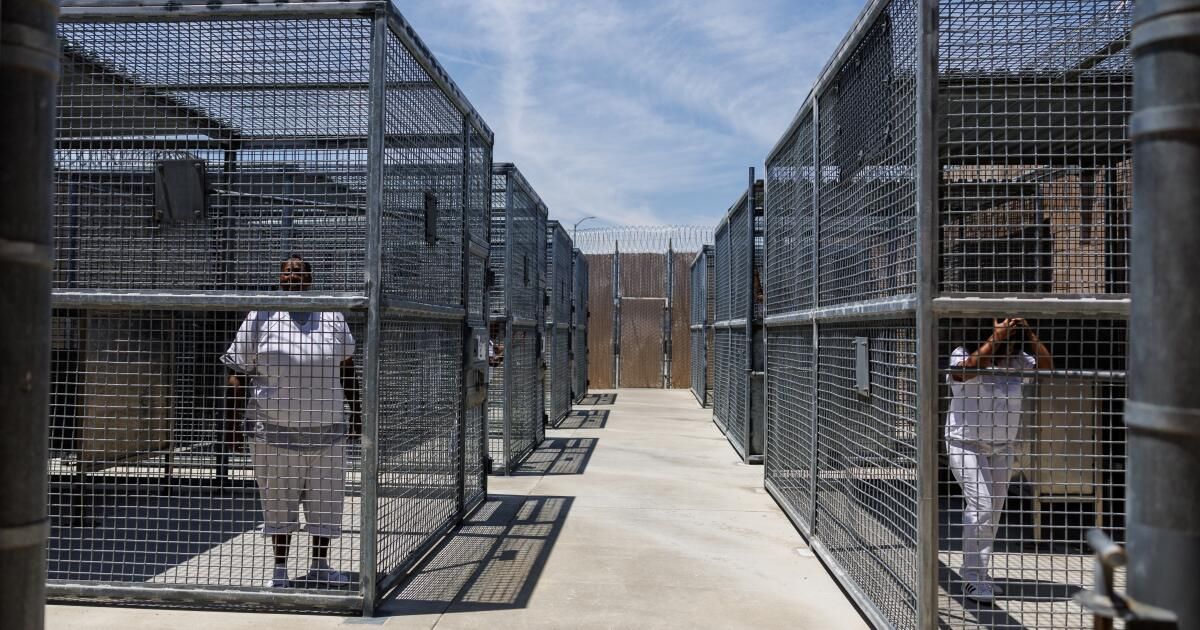
The California Department of Corrections and Rehabilitation reached a $1.9 million settlement agreement this month with 13 inmates who claim they were subjected to “war zone”-level violence during a use-of-force incident in 2024.
The women claim they suffered medical problems including traumatic brain injuries, seizures, respiratory distress and long-term vision problems following an Aug. 2, 2024, operation at the Central California Women's Facility in Chowchilla, where inmates were beaten and tear gassed, according to a complaint filed in federal court against the state's prison system and several of its employees.
The plaintiffs, ten of whom remain incarcerated, have received payments ranging from $50,000 to $200,000 depending on the severity of their injuries, according to their attorney Robert Chalfant. Attorneys have also filed a class-action lawsuit on behalf of all the women involved in the incident, which is scheduled to go to mediation in May, he said.
The CDCR said in a statement that it had reviewed the situation and made changes.
“The scope and degree of CDCR's corrective action, believed to be one of the largest issued against CDCR personnel in a single incident, demonstrates CDCR's commitment to remedying policy violations,” the department stated.
A total of 41 staff members were found to have violated the policy and faced disciplinary action including dismissals, transfers to other positions and salary reductions.
The August 2024 incident began shortly after the women woke up to start the day. Corrections officers removed more than 150 incarcerated women from their cells and confined them in a dining room while they conducted a search of their housing unit, the complaint alleges.
The plaintiffs allege in the complaint that the operation was led by the leader of the Delta Dog prison guard gang in retaliation for the number of sexual misconduct complaints that women had filed against the guards.
In 2024, the U.S. Department of Justice launched a civil rights investigation into allegations of sexual abuse by staff at the Central California Women's Facility, following years of lawsuits and complaints from incarcerated women.
The 13 plaintiffs allege they were confined to the cafeteria for hours and denied water, food and medication. The inmates became increasingly agitated and disruptive after witnessing guards throw away their personal belongings, according to the complaint.
Guards were then ordered “to use pepper spray, fire tear gas and stun grenades, fire rubber bullets, and assault and beat the women, even though all of the inmates were complying with officers' orders and posed no threat to any officer,” the complaint alleges.
Leaked recordings of the incident reviewed by the San Francisco Chronicle show inmates, including those named in the lawsuit, ducking for cover as tear gas swirls in the cafeteria.
One of the plaintiffs, Wisdom Muhammad, alleges she was told to “shut up” when she asked guards not to pepper spray her because she has asthma. She alleges that they tied her up and dragged her out of the cafeteria onto the grass, where four tear gas grenades were thrown directly at her, one of which exploded next to her face, leaving her with a permanent scar, according to the complaint.
“The repeated attacks and violent use of force caused Muhammad to lose consciousness twice, have seizures, and urinate on himself,” the complaint states. “Muhammad finally regained consciousness in an ambulance with blood everywhere, an IV in his arm and he couldn't see out of his left eye.”
Muhammad “hoped she would die to end the pain and suffering she was experiencing,” the complaint states. Other women named in the lawsuit describe similar experiences of abuse during the incident, which they say left them with lasting injuries.
CDCR did not admit any wrongdoing or policy changes as part of the settlement agreement.
Chalfant, the woman's attorney, praised her clients' bravery in taking legal action and said filing the lawsuit put them at risk of further retaliation in a prison plagued by allegations of sexual assault and abuse.
“It's one problem after another,” he said. “I hope the institute changes and they have retrained officers on when they can use force, so this type of thing doesn't happen.”