A California doctor this week became the first doctor to be sued under a new Texas law that allows private citizens to take civil legal action against anyone who provides abortion drugs in Texas.
In the lawsuit, first filed in Texas federal court in July 2025, Jerry Rodriguez alleged that San Francisco Bay Area doctor Remy Coeytaux violated Texas laws that prohibit anyone other than a licensed Texas doctor from providing abortion-inducing medications when he mailed medications to terminate the pregnancies of Rodriguez's girlfriend on two occasions: once in 2024 and in early 2025.
Rodriguez claims in the lawsuit, which alleges wrongful death, that the pills were ordered by his girlfriend's ex-husband, who then pressured her to take them to terminate the pregnancies. Attorney Jonathan Mitchell, who represents Rodriguez, filed an amended complaint seeking an injunction to bar Coeytaux from mailing pills to Texas under House Bill 7, which allows private citizens to sue anyone who “manufactures, distributes, mails, transports, delivers, prescribes or provides” abortion pills to Texans.
The law allows private citizens to sue doctors to collect damages for pills shipped after the law went into effect and seek an injunction against anyone who intends to distribute such pills in Texas.
The Texas law, known as the Women and Children Protection Act, went into effect in December and immediately drew criticism from Democratic lawmakers and activists who expressed concern that the bill would attempt to override other states' abortion laws because it would primarily target out-of-state providers.
The amended complaint represents another front in the growing battle between conservative and liberal states over abortion access in the post-Roe vs. Wade. After the Supreme Court overturned Roe v. Wade in 2022, the use of abortion pills increased dramatically, and women in red states where access to the procedure was restricted sought the pills from out-of-state providers.
“The lawsuit, and others like it, are really about trying to get this issue into the federal courts and get the federal courts to weigh in on this question of what happens with conflicting state laws related to abortion care,” said Diana Kasdan, legal and policy director at the UCLA Center for Reproductive Health, Law and Policy. “Those questions have been there for a long time.”
Although some supporters saw the overturning of Roe v. Wade as a way to resolve the abortion debate by allowing states to dictate their policies themselves, the reality is that the measure set off fights between states that will eventually have to be resolved by the courts, said Mary Ziegler, a law professor at UC Davis.
“HB 7 by itself does not eliminate these tensions nor determine whether Texas will win these conflicts. It is only intended to be more ammunition for that battle between the states,” Ziegler said.
For now, the fight continues. While states where abortion is banned seek to make access more difficult, states like California and New York have passed protective laws to protect doctors from out-of-state investigations and prosecutions, as well as from professional discipline and civil liability for prescribing pills to women seeking them across the country.
Still, some Republican-led states that ban abortion have tried to discipline doctors to discourage them from providing such drugs. Texas' HB 7 incentivizes civil lawsuits against professionals who prescribe abortion medications to women via telehealth, opponents say.
In 2025, Texas Atty. Gen. Ken Paxton sent a cease-and-desist letter to Coeytaux, threatening to prosecute the doctor if he did not stop mailing abortion medications to the state.
Earlier this month, Louisiana Atty. Gen. Liz Murrill announced an indictment against Coeytaux, allegedly for “trafficking” illegal abortion pills in violation of state law. “This is not health care; it is drug trafficking,” Murrill wrote in a news release.
California Gov. Gavin Newsom responded by denying Louisiana's request to extradite Coeytaux to the state to face criminal charges.
“My position on this has been clear since 2022: We will not allow extremist politicians from other states to come to California and try to punish doctors based on allegations that they provided reproductive health care services. Not today. Not ever,” Newsom said.
Coeytaux could not be reached for comment Tuesday.
The Texas civil lawsuit filed against Coeytaux appears to seek monetary penalties under HB 7. The lawsuit states that if Coeytaux is found to have provided abortion-inducing medications to anyone in Texas after the law went into effect, then Rodriguez will seek to recover at least $100,000 for each of the violations.
Rodriguez is also asking the court to block Coeytaux from countersuing under California's shield law, which allows people to recover damages and attorneys' fees from anyone who files a civil lawsuit against them for providing reproductive care that is legal in California.
“One of the arguments for overturning Roe was that federal courts were going to be left out of the equation because they were less representative and democratic than state legislatures. But of course, when state legislators and state courts fight each other, the people who are going to step in and resolve those conflicts are the federal judges themselves,” Ziegler said.
Nancy Northup, president and CEO of the Center for Reproductive Rights, which represents Coeytaux, said the new Texas law is “one of many aimed at cutting off access to abortion pills, which are a lifeline for women in post-Roe America.”
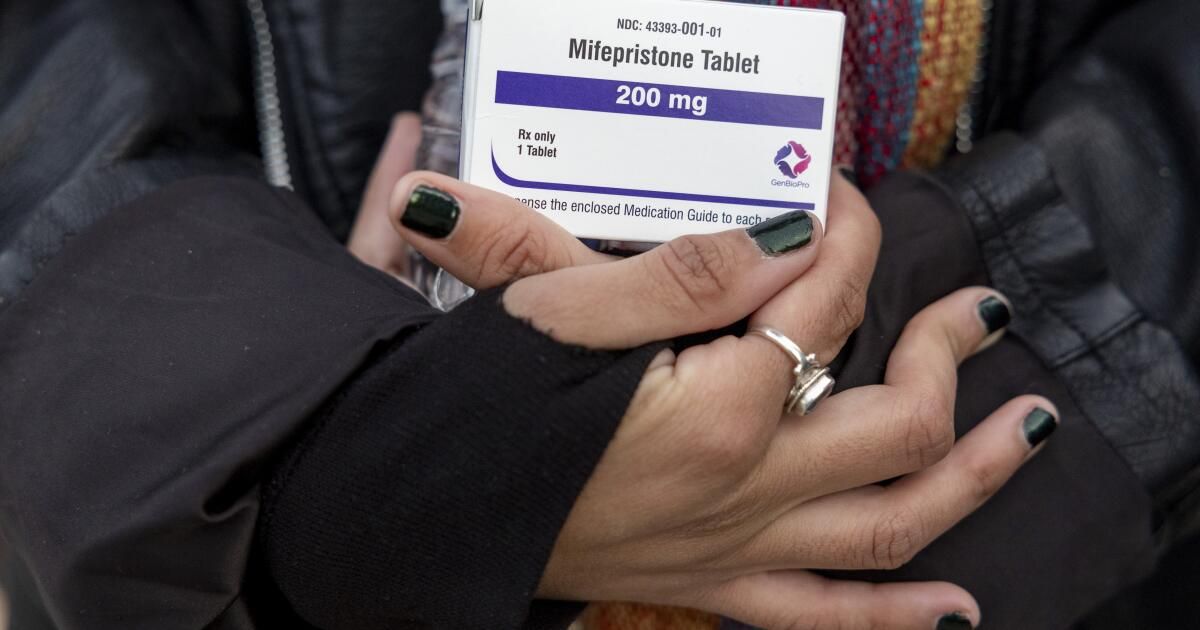
“Abortion opponents have launched a full-scale attack on abortion pills: in the courts, in legislatures, and within the FDA. People need to wake up to the fact that the anti-abortion movement is doing everything they can to get mifepristone taken off the market nationwide or make it much harder to get,” Northup said.