At the beginning of “Mile End Kicks,” a film set in the Montreal indie music scene of 2011, a music critic in her 20s, played by Barbie Ferreira, arrives at her shared apartment on Craigslist fresh from Toronto. Her Quebec DJ roommate immediately invites her to a party in a loft. “Dress well,” they tell him.
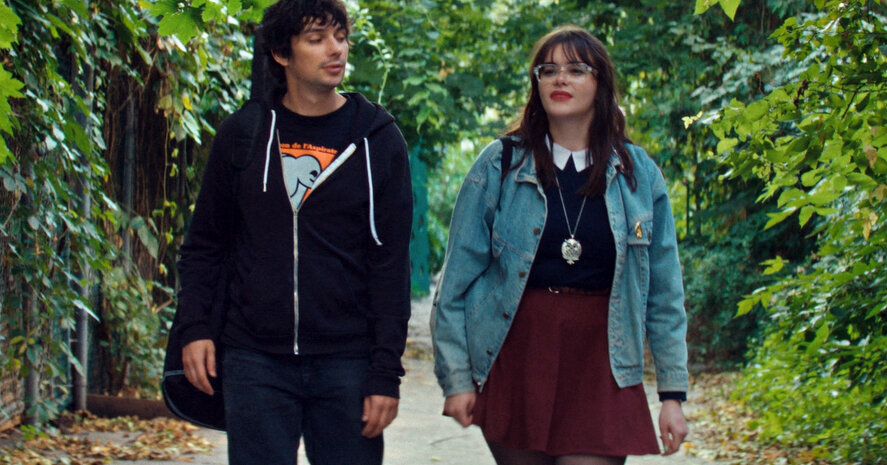
The camera scans critic Grace Pine as she walks into the night. Brown brogues with laces. Black socks over sheer black stockings. Short burgundy corduroy skirt. A navy blue sweater with the white collar peeking out. A boyfriend style denim jacket to finish the look. Hot? It depends on who you ask.
“It's the punchline to a joke in the script,” Courtney Mitchell, the film's costume designer, said in an interview. “But some audience members genuinely understand that that's what makes us feel sexy, in a nerdcore kind of way.”
Montreal as the epicenter of indie sleaze
“Mile End Kicks,” written and directed by Chandler Levack, is the semi-autobiographical story of a songwriter who moves to Montreal's Mile End neighborhood in the summer of 2011, a time when rents were cheap enough that artists could afford to live blocks from the venues where they played.
Apparently, he's there to write a book about Alanis Morissette's album, “Jagged Little Pill.” But other things on her bucket list, like “having real sex,” take priority, leading to loft parties, poetry readings, and a love triangle with members of the fictional band Bone Patrol.
The era, called “sleazy indie” in retrospect (but referred to as “hipster” by those who were there), with its messy, glamorous look, is amply captured on film. “I never felt as free as when I lived in Montreal,” Levack said in an interview.
From head to toe in American Apparel
The clothing brand most closely associated with indie sleaze is American Apparel. Think deep V-neck T-shirts, '70s-inspired separates, and ads featuring young women in suggestive poses. “I was always pulling something boring out of my butt crack,” Levack said, not without a pang of nostalgia.
To recreate the mood, Mitchell collected more than 200 pieces of clothing and accessories from the brand, including high-waisted denim shorts, sparkly disco shorts, hoodies, jumpsuits, rompers, bandeaus, oversized T-shirts, jelly shoes and belts. She insisted the items dated from 2011 or earlier to reflect that they had been in the wardrobe rotation for some years. He found them on a combination of resale sites, including Facebook Marketplace, Poshmark and Craigslist, as well as a Montreal dry cleaner that had a trove of dead American Apparel stock.
And there was a personal story, too: Mitchell had worked in American Apparel stores while in high school and college, and Ferreira modeled for the brand in 2012, when she was 16. They shared a deep familiarity with clothing. “That really sparks an emotion when you return to a beloved silhouette,” Mitchell said.
Tribute to the ironic graphic t-shirt
A tongue-in-cheek T-shirt paired with a cardigan became a totem of indie style, thanks to icons like Kurt Cobain, who served as the inspiration for Bone Patrol's lead singer Chevy (Stanley Simons). In her day job selling shoes at Mile End Kicks (a real store), she wears a plaid mohair cardigan over a pocketed T-shirt emblazoned with “Time to Be Happy” in an off-center print. “The slogan was a tongue-in-cheek nod by Chevy to its retail work,” Mitchell wrote in an email. “Like he's dressed up as a salesman while he's dying inside because he's 'a real artist.'”
Two of the T-shirts worn by Grace belonged to Levack: a Spin magazine T-shirt he got as a summer intern at the publication and a Sonic Youth baseball T-shirt from a 2007 show at McCarren Pool, then an abandoned public pool in Brooklyn's Williamsburg neighborhood. But the runaway star is merchandise from a vacuum cleaner shop, La Maison de l'Aspirateur, in Mile End: a black shirt with a logo of a vacuuming elephant worn by Archie (Devon Bostick), the lead guitarist. “It's become an iconic T-shirt from the movie,” Levack said. “I go to screenings and people in the audience wear the T-shirts.”
Hidden Gems Found in Ancient Stacks
In 2011's Mile End, vintage clothing was a reality for reasons of style and necessity, and became the core of the hipster aesthetic. “These are not characters who buy clothes; they find them on the street and rummage through the giant pile of clothes at Eva B,” Levack said, referring to a Montreal vintage institution.
One of Chevy's creepiest looks on stage is a shimmering women's silk trench coat (worn over a pair of American Apparel boxers, of course), courtesy of Renaissance, a thrift store chain in Quebec. “Everyone at those shows, whether they were on stage or not, felt like they were on stage,” Levack said. “People dressed up to get attention and outdo each other. But it was very creative because no one had money.”