This story is part of the April issue of Image. Thresholds number, a tour of the architecture of Los Angeles as it is really experienced.
You hear it before you see it.
As you round the corner of the 15th-floor hallway of the historic American Cement Building, a faint hum of electronic sounds filters through the door of Archived, a luxury vintage curator in Los Angeles. Inside, standing 43 inches tall, a silver speaker from Takahiro Miyashita's TheSoloist brand vibrates with high fidelity across the showroom.
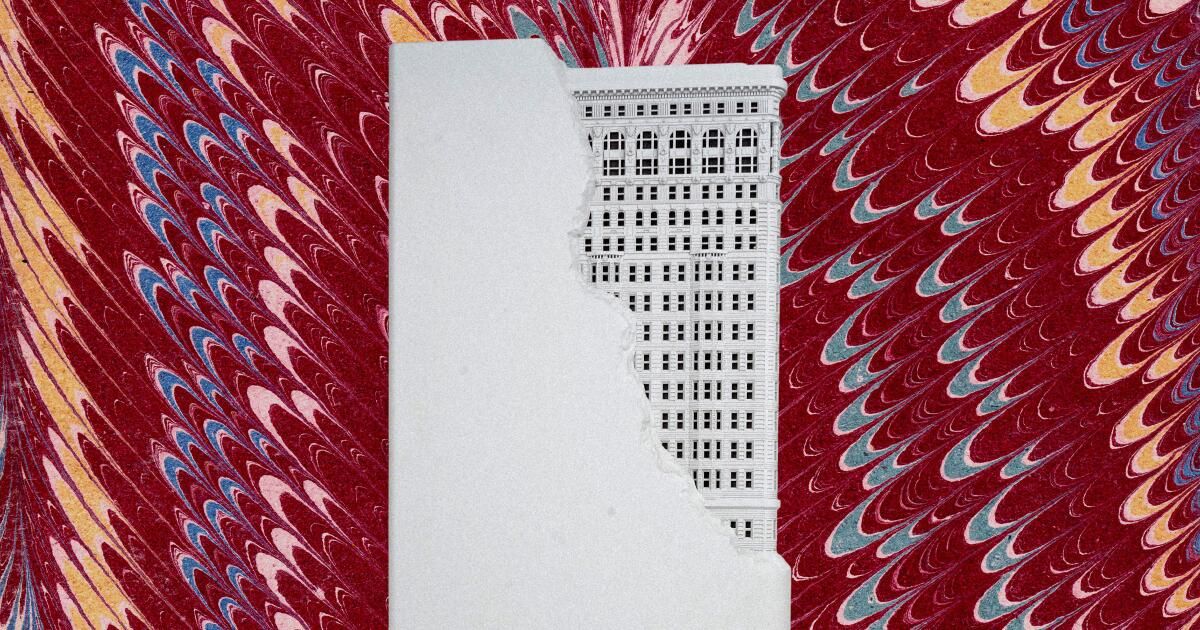
Constructed of polycarbonate resin and 3D printed aluminum, with a wide amperage frequency range of 20 Hz to 25 KHz, the object looks less like a speaker and more like a relic of time. It is an artifact embedded in concrete, chiseled to reveal a replica of the Flatiron Building in New York City. With seven audio channels and two subwoofers, its vibrations can be felt against your skin.
Dream Liu, along with his partner Marquel Williams, founded Archived in 2019 to resell rare vintage collectibles. Its designer wardrobe houses some of the industry's most sought-after pieces, like a 1990 Chrome Hearts motorcycle jacket, but the collection of home goods, including a Giovanni Tommaso Garattoni glass chair or a Saint Laurent arcade machine, is what greets you when you walk in. “That's one way we differentiate ourselves from all the other archival brands,” Liu says. “We are very involved in everything related to design, not just fashion.”
Liu first encountered TheSoloist speaker a few years ago at the house of a friend, a lighting designer who worked in music and whom he admired. The speaker, he says, lived in the back of his mind ever since. Archived finally obtained it directly through the manufacturer of TheSoloist, which now acts as an intermediary seller. Only a few hundred of the silver model on display in the showroom were produced. There are even fewer black examples, for sale on their website for $9,500.
Miyashita, the cult Japanese designer behind early 2000s punk label Number (N)ine and later TheSoloist, is known for fusing meticulous Japanese craftsmanship with distinctly American motifs. The speaker, for example, pays tribute to New York City, where he opened his original store. Without even seeing a single piece of clothing, his style is clear: avant-garde, grunge and very rock'n'roll.


(Filed)
Six months ago, Archived opened its showroom in MacArthur Park, a brightly lit loft with exposed beams, floor-to-ceiling windows, and a panoramic view of downtown. Today they are a team of about six people. Distinctive objects like TheSoloist speaker are an extension not only of the brand's footprint, but also of the architecture that houses it. “The speaker fits perfectly in this space.”
Archived, whose clientele primarily consists of celebrities and high-profile curators like Timothée Chalamet, Travis Scott, and Don Toliver, sources its pieces through consignments from sellers and endless hours searching international markets. When it comes to selecting which piece makes it to the floor, Liu looks for collectibles and anything that fits the brand's taste, which can be described as minimal avant-garde with a touch of fine craftsmanship.
“Nothing is random,” Liu says. Every item at Archived has a story, from Giseok Kim's aluminum shelf that displays a pair of unworn, reconstructed 2005 Nike Dunks to Marc Newson's shelves that hang the Rick Owens archive.
The speaker is valuable, Liu admits, because of Miyashita's reputation as one of the greats, which places him alongside designers such as Jun Takahashi and Yohji Yamamoto. “Our audience knows their designs and all their fantastic collections,” he says. “So the speaker himself says a lot.”
Originally from West Palm Beach, Florida, Liu moved to California to study fashion merchandising at FIDM in San Diego. Before that, he had dabbled in architecture. “It's always been in the back of my mind,” he says.
Liu said he recognizes that designers, after a while, get tired of for-profit conglomerates and begin to delve into other art forms. “Fashion is just another form of art and I think that eventually, when [designers] Tired of making clothes (Helmut Lang as an example, even Tom Ford) they transition to art.”
If the nature of design is to harness and leverage existing works, then creating an archive space is collecting pieces of history. “Everything is a reference point,” Liu says. “Every piece here has had an impact on the current fashion climate.”
For Liu, items like the speaker are worthy of preservation because some of them are increasingly rare to find. “Pieces like this deserve to be presented properly and be in spaces that reflect the caliber of the clothing,” she says. “You can place random objects in a beautiful space and that object becomes important.”