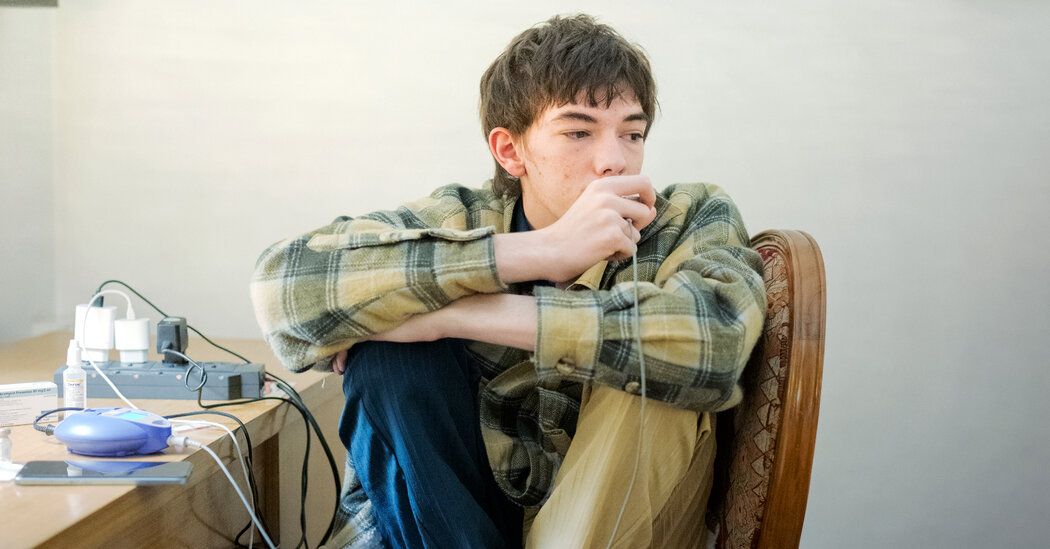
Josua Lottering walked out of the airport gates in Dhaka, the capital of Bangladesh, and doubled over with coughing spasms. Cystic fibrosis has drastically reduced his lung capacity and the humid, polluted air hits him hard.
However, even as the cough shook his body, he was delighted. Josua, 18, had made the long trip from the Western Cape in South Africa to Dhaka with his mother to buy a year's supply of a new generic version of a drug that has transformed the lives of cystic fibrosis patients in North America and Europe, but which he and his family cannot afford at home.
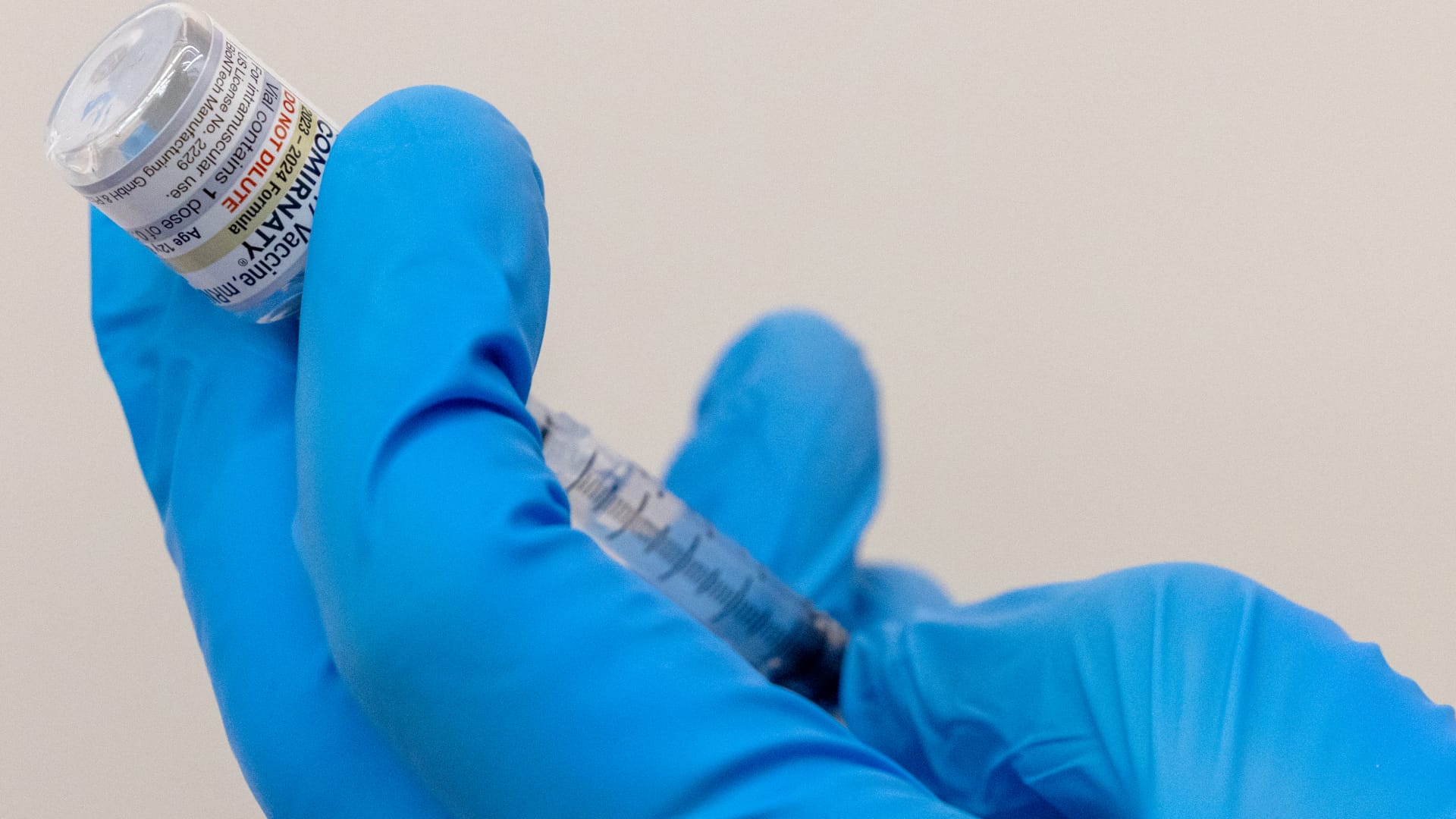
That drug, Trikafta, produced by Boston-based Vertex Pharmaceuticals, has made it possible for people with cystic fibrosis to breathe easier and live longer. Vertex sells a year's supply for about $346,000 in the United States.
The company has a monopoly on transformative cystic fibrosis drugs; Trikafta has brought it $49 billion in revenue since its launch in 2019. However, Vertex has not registered the drug for sale in many low-income countries and has blocked moves to produce lower-cost generic versions, a tactic not uncommon among pharmaceutical companies seeking to protect their ability to charge higher prices in wealthy markets.
Now a Bangladeshi company has reverse engineered Trikafta and is taking advantage of a loophole in global patent law to sell its version, called Triko, for a fraction of the price of Vertex.
Last week, the Lotterings joined a small group of other cystic fibrosis patients and their families who traveled to Dhaka to purchase the first boxes of Triko to roll off the Beximco Pharmaceuticals production line.
Vertex spokesperson Heather Nichols said Trikafta is available in 75 countries (through sales or donations) and the company offers it for free in 15 countries; More than 7,000 people have received it at no cost.
But there are thousands more patients not covered by those programs, who have tried a variety of strategies to obtain the drug, including taking Vertex to court and asking their governments to allow a generic version of the drug to be imported or manufactured locally, under a process known as compulsory licensing.
The Bangladeshi version offers such patients another option. Triko costs $6,350 a year for children, double that for an adult dose. That's still too expensive for some people, but low enough to change the lives of others.
Because Bangladesh is classified as a least developed country, it is exempt from the World Trade Organization's patent infringement laws. The country is home to a thriving pharmaceutical industry that takes advantage of this exemption by reverse engineering patented drugs and exporting generics to countries where the drugs are off-patent.
Most countries also have an exemption that allows a person to bring a generic version of a drug into a country where it is patented or, in some cases, to import a generic by mail order, if it is for personal use. That's what brought Josua and his mother from their home near Cape Town to Dhaka.
Triko has been approved by Bangladesh's national drug regulator, but not by regulators in any other country. Beximco produces other drugs that have regulatory approval from the U.S. Food and Drug Administration and the World Health Organization.
After Gilead Sciences began marketing a cure for hepatitis C in 2013, priced at $84,000, Beximco produced a generic for a tenth of that price.
During the Covid-19 pandemic, Beximco manufactured cheap versions of the antivirals remdesivir, Paxlovid and molnupiravir and exported them around the world. That caught the attention of cystic fibrosis patients and their families, who approached the company about making Trikafta.
Rabbur Reza, Beximco's chief operating officer, said he was moved by stories from parents who had heard cystic fibrosis patients in the United States and England describe how their lives had been transformed by Trikafta, knowing they couldn't get the drug.
“I said, 'If we're able to make this, I'm committed to doing it for you,'” Reza said.
Reza describes his company's business model (reverse engineering innovative medicines by challenging intellectual property patents) as an equalizer for the huge disparities in access to treatments between high- and low-income countries.
Nichols, the Vertex spokeswoman, did not answer questions specifically about the Bangladeshi product. “The safety and effectiveness of Trikafta have been proven for more than a decade in more than 200 clinical trials in 24 countries, a level of investment that generic manufacturers have not made,” he said. Generic drug makers typically do not conduct late-stage clinical trials because they are replicating a product that has already been approved.
Beximco has done initial production of a two-year supply of Triko, for a few dozen patients, Reza said, and will see what market emerges. A cystic fibrosis buyers club, which started with parents in Britain before Trikafta was available in that country, has partnered with an Indian company with experience shipping small quantities of drugs internationally.
It's a model that may have increasing relevance as patients in lower-income countries seek therapies they know are changing lives in higher-income countries.
Aayyush Goyal, founder of a pharmaceutical supply company, Eudaico Health, in Delhi, said his company has received half a dozen calls a day from patients asking when they will ship Triko, since listing it on their platform, Medspartner, a few months ago.
“Parents are very impatient, which I can understand because it's about treatment for their children,” she said. The company charges a 10 percent markup and a $50 shipping fee to handle import procedures, which vary by country.
Vertex has patented Trikafta in India, but has not registered it for commercial sale. While the company donates the drug to a small number of Indian patients, it has been fighting in court for years to stop the government from allowing low-cost generic production.
The genetic variant that causes cystic fibrosis is more common in people of northern European ancestry. But there are many patients with cystic fibrosis in developing countries, including a significant population that is undiagnosed; one analysis found that India alone probably has tens of thousands.
In Dhaka, Aadil Rahman's parents noticed something was wrong when he was a newborn, but it took them two years of visiting a succession of doctors before they discovered he had cystic fibrosis, a disease they had never heard of. Their initial panic subsided when they learned about Trikafta, but they soon discovered that Vertex had not registered the drug in Bangladesh and saw what it cost in the United States.
“No one in Bangladesh can afford that,” said his father, Mustafizur Rahman Munshi. Frantically, they tried to get Aadil, now 6, into clinical trials in India, but he was ineligible as a foreigner. Munshi cold-called Vertex executives to plead his case.
Aadil got worse: he spent weeks in intensive care last year. When he was at home, he would lie on the chest of his mother, Ayesha Moshumi, and watch from the window as other children walked to school. “He asked me why his life couldn't be like theirs,” Moshumi said.
On Monday, Aadil's parents took him to pick up his first month's supply of Triko.
Within hours of taking a first dose, Aadil began passing out large amounts of mucus that cystic fibrosis causes his body to overproduce.
“I was asking God, you gave me this child and you gave him this disease, and I prayed: You have to give me a miracle, a way to save him,” Mr. Munshi said.
Buying Triko will still be a huge financial burden, he said, but with the help of his family, they hope Aadil can have it his entire life.
At the factory in Bangladesh, Aadil and his family were with a father and son who came from the other side of the world. Šimon Ševčík, 26, traveled from his home in Slovakia, where the national insurer agreed to pay Trikafta to some cystic fibrosis patients, but not to those who have its particular genetic mutations.
“When I found out that this drug was available and I couldn't get it from the government and the price was extremely high, it was terrible,” he said.
Ševčík hopes to recover enough to be able to work, move out of her parents' house, and lobby the Slovak government to cover Trikafta for all cystic fibrosis patients. If the lobby doesn't work, he said, he will move closer to Bangladesh, so it will be easier to buy Triko regularly.
In South Africa, Vertex patented Trikafta but did not register it for sale for years. When patients took the company to court in 2023 seeking a mandatory license, Vertex settled the case in a sealed settlement in which some health insurance plans paid for the drug. This covered, at most, half of the patients diagnosed with cystic fibrosis in the country, but left out low-income families, including patients who rely on the public health system.
Josua Lottering's mother, Wilna, had health insurance, but it did not cover the medication. A doctor told him it would cost them 2.4 million South African rand, or about $150,000, a year to buy it.
“I could sell my entire house and it would only allow him to buy half a year,” he said.
South African babies are not routinely screened for the disease, and children may have difficulties during adolescence before being diagnosed. Josua was underweight and prone to coughing spells that left him bent over. Mrs Lottering asked about cystic fibrosis, she said, but doctors didn't diagnose her until last year. Googling about the disease, he read about Trikafta and felt great relief. Then, moments later, the family learned how much it would cost them.
“We would have done anything to get Jos the medicine as soon as possible,” Lottering said, adding: “You're mourning someone who's still alive, you're watching them deteriorate – it leaves you completely helpless.”
In online talks for families with cystic fibrosis, she learned about the new drug from Bangladesh. The adult dose costs $12,000 a year and is still a huge financial burden, but she said it allowed her to think it might be possible to keep her son alive while she thinks about the future. He has considered emigrating to a country where the national insurance company would pay for the medications.
The Lotterings flew home Thursday, worried about having to explain drug importation laws to a suspicious customs official. But they faced no questions. Josua started taking Triko the next day and at night he told his mother that he was hungry, words she said she had never heard from him. He didn't cough all day and could smell and taste things he hadn't felt since childhood.
“It's a day of a dozen miracles,” Lottering said.