When Sundance begins in just under two months, it will face a unique challenge. Taking place for the last time in its former home of Park City, Utah, the festival must somehow pay homage to the legacy and history of an event that has become closely tied to the snow-covered romanticism of that specific location.
At the same time, there should be an air of excitement and anticipation about the move to the festival's new home in Boulder, Colorado, beginning with the 2027 edition.
“We can have both in our hearts at the same time,” says John Nein, senior programmer and director of strategic initiatives, in a video interview this week from Los Angeles, with a warm smile.
On Wednesday, Sundance released its upcoming slate of 90 feature films and seven episodic projects, at least some of which will likely set the pace for the rest of the year.
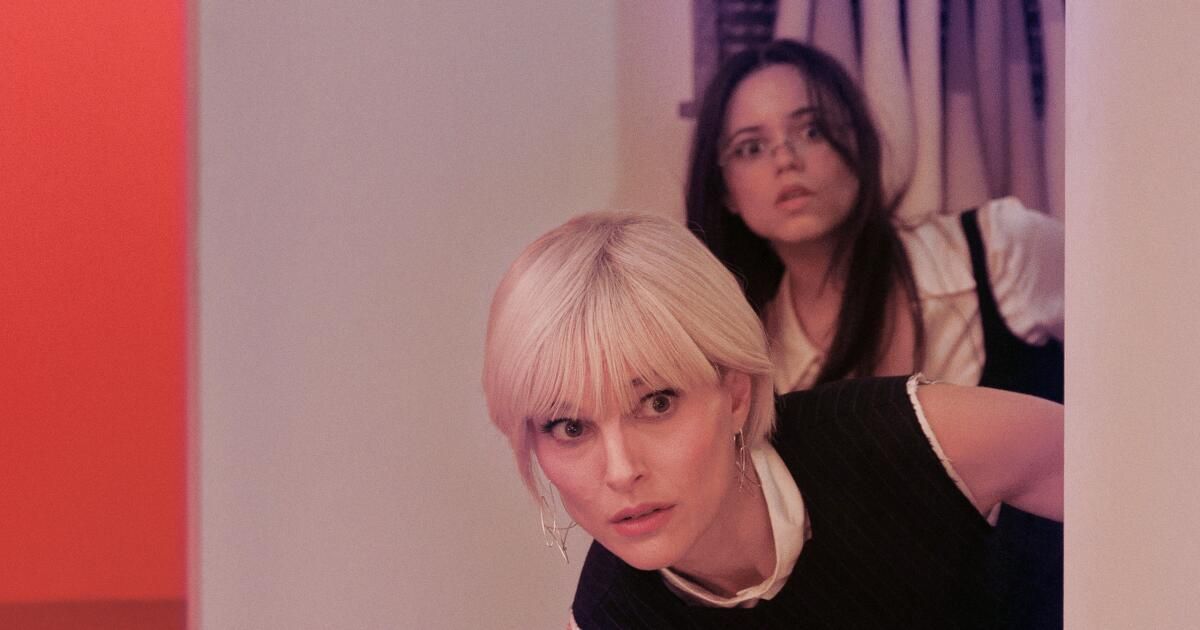
Highlights in this year's upcoming lineup include writer-director Cathy Yan's art world satire “The Gallerist,” starring Natalie Portman and Jenna Ortega; David Wain's comedy “Gail Daughtry and the Celebrity Sex Pass,” starring Zoey Deutch and Jon Hamm; and the world premiere of “The Moment,” starring Charli XCX in a fictional story as a pop star.
Olivia Wilde directs “The Invite,” starring alongside Seth Rogen, Penelope Cruz and Edward Norton as neighbors at a dinner party gone wrong. Ethan Hawke and Russell Crowe co-star in Padraic McKinley's “The Weight,” a survival drama set in 1930s Oregon.
And among a strong selection of documentaries will be a series of portraits of notable figures, including musician Courtney Love (“Antiheroine”), Brittney Griner, the basketball star who was imprisoned in Russia (“The Brittney Griner Story”), tennis champion Billie Jean King (“Give Me the Ball”) and Nelson Mandela (“Troublemaker”).
Brittney Griner appears in the documentary “The Brittney Griner Story.”
(Sundance Institute)
Creating a sense of continuity with Sundance's past, the program includes new projects from several former directors, such as Gregg Araki's provocative “I Want Your Sex,” starring Wilde and Cooper Hoffman; Alex Gibney's documentary “Knife: The Attempted Murder of Salman Rushdie,” based on the author's memoirs; and Nicole Holofcener's pilot for the new show “Worried.”
Nein, speaking alongside festival director Eugene Hernandez and programming director Kim Yutani, says festival alumni are reaching out unsolicited looking for ways to participate, or simply attend, wanting to be in Park City one last time.
“And that's the energy and vitality of our community,” Nein says. “It's one that is eager and excited for the Sundance Film Festival to continue and continue to serve artists. And we're hearing that as well in terms of the enthusiasm for Boulder.
“For me, they play hand in hand,” he adds. “The approach we have to honoring our history is the same approach we are bringing to continuous that history and making sure these artists continue to have opportunities to thrive.”
Adding to the excitement surrounding the next edition of Sundance is the death in September of Robert Redford, founder of the Sundance Institute and a longtime figurehead of the festival. Tributes to Redford's legacy were already in the works at Sundance as part of recognizing the festival's relationship with Utah and Park City.

Robert Redford in “Downhill Racer” from 1969, directed by Michael Ritchie.
(Sundance Institute / Paramount Pictures)
Among the planned events will be a screening of Michael Ritchie's 1969 film “Downhill Racer,” starring Redford as a tenacious ski champion, a film he often referenced in connection with his own relationship with artistic independence.
Organizing this year's festival would already be a daunting task, aside from the pressures of saying goodbye to Park City and Redford, as well as the recent death of Sundance communications chief Tammie Rosen.
For Yutani, each year brings its own difficulties, remembering very well the twists and turns taken during the pandemic, when in-person events for 2021 and 2022 were cancelled.
“The last five years have been a lot for us,” Yutani says. “I think what I've tried to do this year is just stay in the moment: look at what's coming to us from these filmmakers who have such strong visions and are just doing things creatively and innovatively. And just being open to what we're seeing and not getting too bogged down in what's in our past or worrying too much about the future.”
As Hernández points out, every year a new generation of filmmakers arrives who experience the festival for the first time, so they don't arrive with the baggage of expectations.
“As much as we can talk about legacy, history and veterans, which I think will add an incredible aspect to the festival this year, we are creating a festival that is also focused on celebrating new voices,” Hernandez says. “For a lot of people, it will be something completely new, no matter what.”

They are Sukku, left, and Moon Choi in Stephanie Ahn's film “Bedford Park.”
(Sundance Institute / Jeong Park)
This year's program does not shy away from addressing the difficulties of the world outside the festival. Several titles in the US Dramatic Competition (in many ways the festival's flagship section, encompassing national discoveries) make multiple references to stories that touch on international and immigrant histories, at a time when those themes feel particularly present, culturally and politically.
Yutani points to Stephanie Ahn's “Bedford Park,” about a Korean-American woman struggling with her abusive past, and Hossein Keshavarz and Maryam Ataei's “The Friend's House Is Here,” about two women navigating the underground art scene in Tehran, as examples of the types of stories that were attracting the programming team's attention.
“There are so many things we see that resonate with us,” Yutani says. “And I think these films in particular are the ones that really caught our attention and come from such strong points of view. We haven't necessarily seen them told this way.”
Other notable titles in the US Dramatic Competition include NB Mager's “Run Amok,” about an incendiary high school musical; “The Musical” by Giselle Bonilla, about a romantic rivalry between a teacher and a principal, with Rob Lowe; and “Ha-Chan, Shake Your Booty!” by Josef Kubota Wladyka. about a Japanese ballroom dance scene.
The Midnight and Next sections will also feature plenty of potential titles, including Tamra Davis' '90s music documentary “The Best Summer,” featuring members of Beastie Boys, Amps and Sonic Youth; “The Backstory” of Ian Tuason’s Horror Movie Podcast; “Mum, I'm Alien Pregnant,” by the New Zealand directing team known as THUNDERLIPS and Kogonada's “zi,” with Haley Lu Richardson of “White Lotus” and “Columbus.”
Meanwhile, in the premiere section with more stars will be “Chasing Summer,” written by and starring comedian Iliza Shlesinger; “See You When I See You” by Jay Duplass, starring Cooper Raiff and David Duchovny; and Macon Blair's “The S—heads,” starring Dave Franco and O'Shea Jackson Jr.

Bassists Kim Gordon, left, and Kim Deal in the documentary “The Best Summer.”
(Tamra Davis/Sundance Institute)
At the Academy Awards earlier this year, Kieran Culkin won a supporting actor Oscar for his role in “A Real Pain,” which premiered more than 13 months earlier at Sundance in 2024. Celebrated filmmakers in this year's awards race, including “Sinners” director Ryan Coogler and “Hamnet” filmmaker Chloé Zhao, made their debut appearances at the festival. And several of last year's Sundance standouts, including “Train Dreams,” “If I Had Legs I'd Kick You,” “Sorry, Baby” and “The Perfect Neighbor,” remain in the awards conversation.
“I'd like to say it doesn't make sense, but it really does,” Yutani says, laughing. “Every year we see all these films that we have programmed at the festival and they all succeed on their own terms in different ways. Once we launch this programme, it is no longer ours. And we always find it fascinating how the public or the industry reacts to them.”
Yutani remembers hosting the world premiere of “Sorry, Baby” (whose writer, director and star Eva Victor was just nominated for a Golden Globe on Monday) and staying to see the film in front of an audience for the first time.
“It was an incredible screening,” Yutani recalls. “You know when a filmmaker's life is going to change and I think there's something so special about that, something so rewarding for us as people who recognize a film for the first time.”
And that seems to be what those behind Sundance most want to defend and carry forward: the commitment to shining a spotlight on new voices.
“What these artists bring to us are, first and foremost, really bold and unique perspectives and narratives,” says Hernández.
At a time when the kind of inclusivity that is at the core of Sundance's mission is under continued attack, one could read this year's program as a rebuke.
Hernandez remembers his reaction to first seeing “Bedford Park” while it was being considered for this year's show, feeling moved and touched and knowing that there is something very specific that everyone can do as a programmer.
“As Mr. Redford said in 2017, administrations will come and go and Sundance will always remain focused on independent artists and storytelling,” Hernandez says. “And that is something that we are privileged to be able to continue to do and maintain.
“And we will take it with us to Boulder in 2027 and beyond,” Hernandez says.