“Game over” actually means “again and again”, since we always want to play again. The movie versions of video games lack that interactivity, hoping that your fondness for the characters and settings will be enough. It could also simply be a mercy.
But director Genki Kawamura's Japanese film “Exit 8,” based on the looping puzzle game that became a sensation a few years ago, has in mind a cinematic experience that's truly like gaming. He wants you to feel that nightmare of being stuck, but he also wants to be meditative. He doesn't always manage to fuse those experiences (as an experimentation it falls short and the horror label is also exaggerated), but ultimately he gains a liminal fascination by fusing his perspective with that of the protagonist.
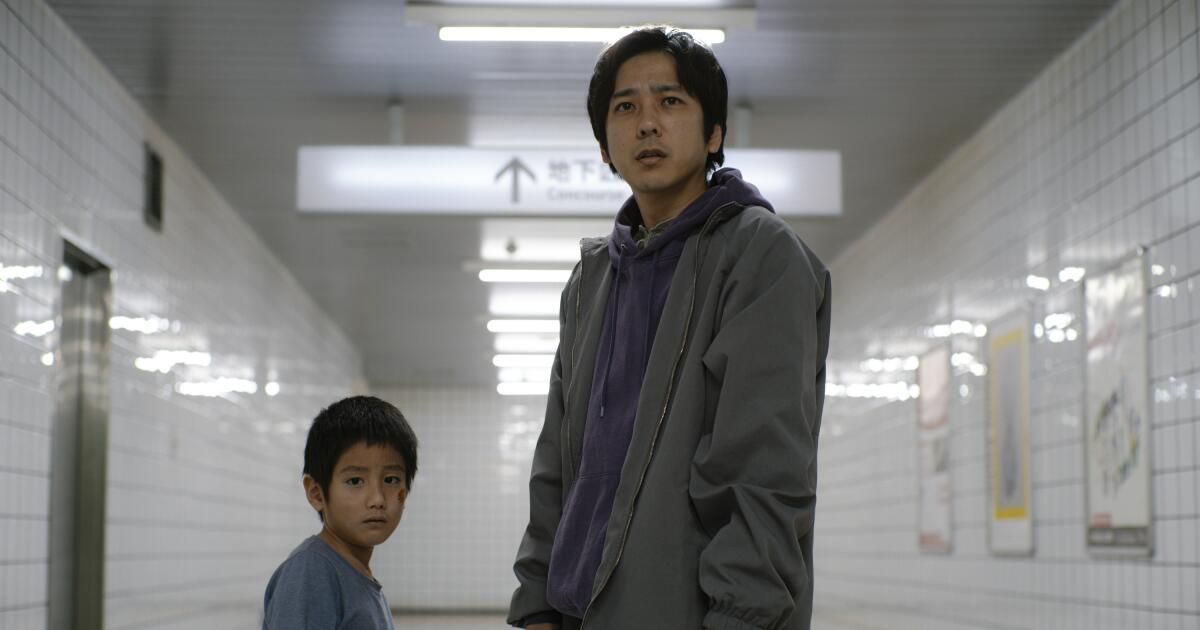
The game, designed by Japanese artist Kotake Create, takes you to an underground corridor of white tiles that you will find again and again until you deduce the keys to unlock the title's escape. Before the film reaches that space, however, it uses a long POV shot to introduce us to an anonymous passenger with headphones (Kazunari Ninomiya), one of many travelers transfixed by his phone to distract himself from the daily monotony. (His favorite music? Foreshadowing alert: Ravel's insistent and growing “Boléro.”)
Then he reluctantly answers a phone call from his ex-girlfriend as he leaves the underground and she tells him she's pregnant. His hesitation indicates a further desire to avoid reality, but as he begins to understand he is repeating the same stretch of hallway: the same posters (one blatantly displaying artist MC Escher's Mobius strip), the same emotionless businessman walking. He realizes that he is in a new, strange reality just for him, and that it won't see the light of day until he can detect the anomalies in each round.
The film calls him the Lost Man, a bid for everyone's philosophical relevance, and Ninomiya is indeed a sympathetic avatar. Kawamura, who wrote the script with Kentaro Hirase, also provides some background on that traveling businessman, as well as introducing the Boy (a convincingly enigmatic but still cute Naru Asanuma), whose importance is another attempt to add emotional contour to how the Lost Man understands his situation.
But mostly, as each “level” is or isn't reached, you'll want to play along and record the differences (many obvious, some not), even if the pacing occasionally works against the suspense. One can understand why Kawamura would preserve the game's walking simulator vibe with patient Steadicam shots that follow, guide and surround players, as if real time were an essential element to the atmosphere.
But overusing cuts at key moments can be a pain – when your brain is working faster than the movie, that's a problem. As far as attempts at horror go, it's better when the aura is creepy rather than overt. On the other hand, there aren't many ways to alter the mood in a fluorescent-lit hallway, especially when the goal is to keep moving.
With its custom-made bed, “Exit 8” has a refreshing ambition: it wants to be both a purgatory and an advancement in form. When it moves smoothly between the two, it feels like a singular commentary on the deceptive banalities of life. But it also means you'll be relieved to know that when it's over, it's really over.
'Exit 8'
In Japanese, with subtitles.
Classified: PG-13, for bloody and terrifying images
Execution time: 1 hour, 35 minutes
Playing: It premieres on Friday, April 10 in limited release.