What to know about the report.
June jobs numbers showed the U.S. economy continues to overcome obstacles, including inflationary pressures from the war with Iran.
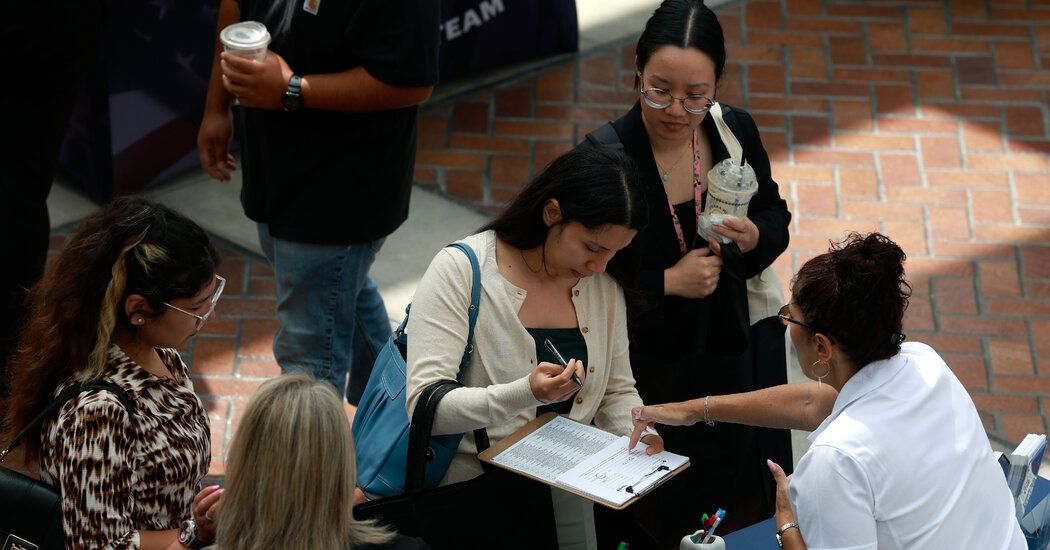
Employers added 57,000 jobs last month and the unemployment rate fell to 4.2 percent from 4.3 percent the previous month. In recent years, economists have noted with surprise the resilience of the American economy. By mid-2026, with volatility caused by President Trump's tariff increases almost settled and the war with Iran potentially coming to an end, economic durability may be the emerging norm.
Average growth in workers' hourly earnings registered 3.5 percent annually, a marked slowdown from the peak a few years ago. And wage increases are not keeping pace with prices, one of the main reasons consumer confidence remains so low. Inflation now hovers around 4 percent after falling to close to 2 percent in 2024.
In positive news, employment in professional and business services, which fell overall from 2024 to 2025, has trended up since early 2026, with the sector adding 36,000 jobs in June. Jobs in social assistance and healthcare have continued to increase steadily. Despite the increase in activity after the World Cup, employment in the leisure and hospitality sector decreased by 61,000 people in June. Labor economists have mentioned, however, that this summer's numbers may be a noisy reflection of seasonal adjustments in the data.
This was the fourth consecutive monthly increase in jobs, a stunning turnaround from the employment slowdown that occurred throughout 2025. The Bureau of Labor Statistics found that U.S. employers added just 181,000 jobs last year, far fewer than the 1.5 million jobs that were added in 2024.
Jason Draho, economist and head of asset allocation for the Americas at UBS, called the report “not bad.”
He noted that the addition of 57,000 jobs “is close to what most economists assume is the trend level of job growth.”
Gregory Daco, chief economist at EY, a consulting firm, said he anticipates job growth will plateau at about 70,000 a month for the rest of the year, and that the unemployment rate may rise, but only slightly.
The unemployment rate has been at 4.5 percent or lower since October 2021, the longest streak of low unemployment since the long expansion of the late 1960s. Still, an unusually low number of people are quitting their jobs; Surveys show that workers stay because they don't have the confidence to find better opportunities.