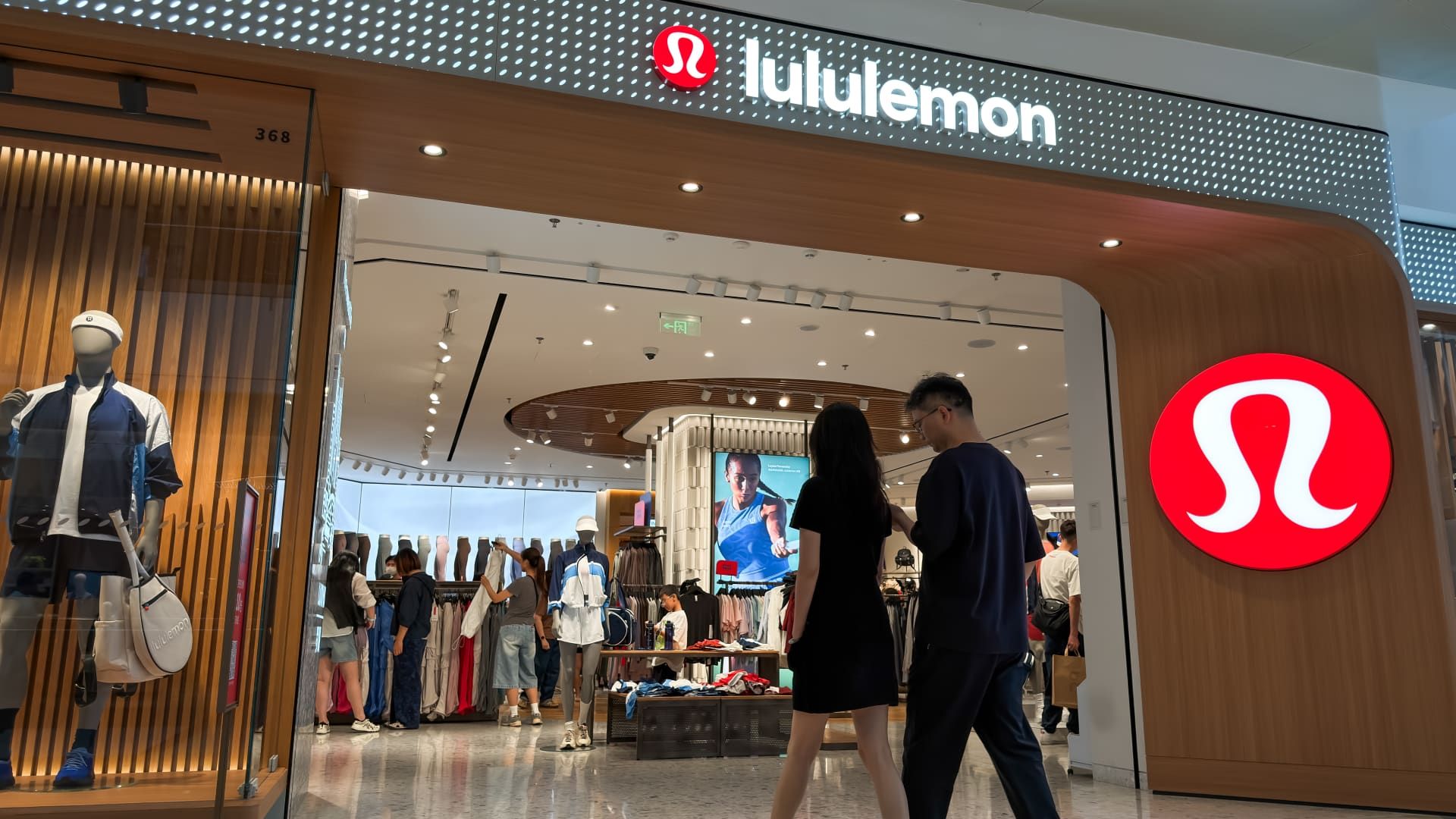
lululemonThe problems are far from over.
The sportswear retailer lowered its full-year guidance and issued a weak outlook for the current quarter on Thursday, as interim CEO Meghan Frank blamed “negative media commentary” and recent product launches that failed to wow shoppers.
“We experienced spikes in negative commentary in the media and on social channels regarding our brand, which had an impact on traffic and overall revenue performance,” Frank told analysts during the company's earnings call while explaining why the company's performance declined at the end of its fiscal first quarter. “And second, not all of our product launches have met our expectations. While we have had several successful launches so far this year, we have seen others entering the second quarter that did not generate the anticipated guest response.”
When asked what specific negative comments led to a decline in sales, Frank pointed to Lululemon's proxy contest with founder Chip Wilson, who was outspoken in his criticism of the brand, as well as “questions about the composition” of some of its products.
“These stories have calmed down and subsided,” Frank said. “But we have not yet seen a return to our pre-disruption trends…”
He said the company is “not standing still” and is “moving urgently to make the necessary adjustments to revive momentum, particularly in North America.”
The company's shares fell 11% in extended trading following the report. Lululemon shares have plunged about 40% this year through Thursday's close.
Lululemon now expects fiscal 2026 sales to be between $11 billion and $11.15 billion, down from the previous range of between $11.35 billion and $11.50 billion. Analysts had expected annual sales of $11.48 billion, according to LSEG.
Lululemon also cut its earnings forecast by more than $1 per share. It now expects earnings per share to be between $10.95 and $11.15 for the year, down from the previous range of $12.10 to $12.30. Analysts were expecting $12.30 per share, according to LSEG.
The current quarter is not looking much better. Lululemon expects sales to be between $2.45 billion and $2.48 billion, below expectations of $2.6 billion, according to LSEG. Earnings per share are expected to be between $1.76 and $1.81, well below expectations of $2.68, according to LSEG.
While Lululemon's guidance fell short of forecasts, it did beat expectations in its fiscal first-quarter results, albeit with expectations that have dropped significantly since the retailer last reported earnings. Here's how the company performed compared to what Wall Street expected, according to a survey of analysts by LSEG:
- Earnings per share: $1.69 vs. $1.68 expected
- Revenue: $2.47 billion vs. $2.43 billion expected
The company's reported net income for the three months ended May 3 was $195 million, or $1.69 per share, compared with $314.6 million, or $2.60 per share, a year earlier.
Sales rose to $2.47 billion, up about 4% from $2.37 billion a year earlier. Comparable sales grew 1%, better than expectations of 0.4%, according to LSEG.
Lululemon's problems have centered on the Americas, its largest and most important region. During the quarter, comparable sales fell 5% in the market, marking the fifth consecutive quarter of declines. Lululemon's overall business continues to grow, but it has seen that expansion primarily in China and other international regions, which account for a fraction of total revenue.
During the quarter, international sales grew 22% while comparable international sales grew 13%.
Lululemon said it expects its declines to continue in North America. It anticipates sales to fall by a low double-digit percentage in the current quarter and a high single-digit percentage for the full year. Meanwhile, it expects sales in China to increase by a mid-to-high percentage during the current quarter and around 20% for the full year.
Sales have been a sore spot for Lululemon, but profitability has been an even bigger challenge. During the quarter, gross margin decreased a whopping 4.1 percentage points to 54.2%, worse than expectations of 54.6%, according to StreetAccount. The company was a big beneficiary of the defunct de minimis exemption, which allowed it to ship duty-free packages across the Canadian border into the United States, and has also been hit hard by tariffs.
With fewer people visiting its stores and website to buy sportswear, the company has also leaned more toward discounts to boost sales, which has hurt its bottom line and its reputation as a premium brand.
It also spent the past six months in a dramatic proxy contest with its founder, which was costly and diverted management's attention from its turnaround.
On top of all those struggles, Lululemon, like everyone else, has also had to deal with a new conflict in the Middle East and rising gas prices, which are also driving up costs.
The company said the decline in its gross margin during the quarter was primarily due to tariffs, which impacted margins by 2.8 percentage points, and discounts, which grew 0.4 percentage points. The company expects gross margin to fall another 4.1 percentage points during the current quarter, driven by higher fees and store investments. He anticipates that the discounts will be 0.5 percentage points higher.
“Though we continue to expect markdowns to improve modestly year-over-year in the second half,” Frank said. “Expected slower revenue trends in the second quarter will require additional seasonal clearance.”
Lululemon expects its profitability challenges to moderate in the second half of the year. For the full year, the company anticipates gross margin will fall 0.9 percentage points, with reductions stable or slightly higher. For the full year, Lululemon expects to offset almost all of the tariff impact, Frank said.
In the three months since Lululemon last reported earnings, it has made some progress in addressing some of its challenges. It hired Nike veteran Heidi O'Neill to be its next CEO and resolved its proxy battle with its founder. Investors are likely relieved that Lululemon's management team no longer has to devote their attention and money to the proxy contest, but some still feel bitter about O'Neill's appointment, particularly since he won't be able to start until September.
Under the direction of two interim CEOs, Chief Financial Officer Frank and Chief Commercial Officer André Maestrini, Lululemon has been working to rebuild its product assortment and address its domestic growth challenge. But the real strategy changes won't come until O'Neill starts.
Given the time it takes for Lululemon to go from product idea to market, there are concerns that it will take even longer than expected to address the challenges that have been weighing on its business.
Still, Lululemon has maintained that O'Neill is the right person for the job. While at Nike, O'Neill established and built Nike's women's business and turned it into a multi-million dollar franchise. She also worked to reduce product delivery times, an experience that will serve her well as CEO of Lululemon. The company has already made progress in reducing lead times from 18 to 24 months to 15 to 16 months and is working to reduce them further to 12 to 14 months, Frank said.