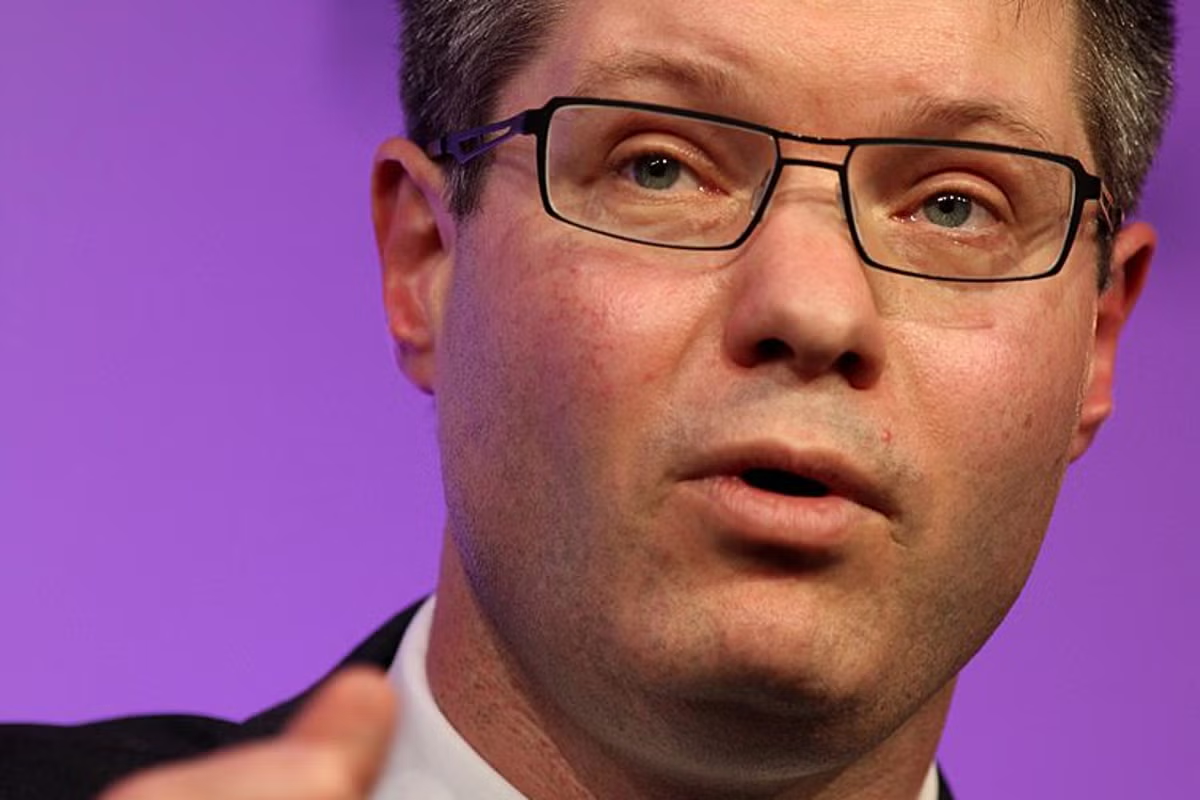
There is a youth unemployment crisis and the government should reverse minimum wage increases so more people can work, the Next boss has warned.
Simon Wolfson, the Conservative peer who has led Next since 2001, said policies aimed at improving low-paid work have made it harder to hire people.
In particular, increases in employers' national insurance contributions and the minimum wage have hurt the labor market, he said.
Lord Wolfson said that two years ago, Next, considered a successful retailer in the UK, was receiving around 10 applications for every job in its stores; now he receives 19.
“That doubling of applicants for workshop jobs is indicative of how big the youth unemployment crisis is right now,” he told the BBC.
The problem in entry-level jobs like these is echoed in the graduate job market, where employers are concerned about the increasing use of artificial intelligence (AI). In April, the Institute for Labor Studies said graduate jobs were down 33 percent in 2025.
It said: “Nearly one million young people (957,000) are not in education, employment or training – an increase of 259,000 between 2021 and 2024 alone. What is emerging is a worrying picture of declining opportunities, structural change and a generation at risk.”
Lord Wolfson added: “Youth unemployment is actually a symptom of wider problems with employment in the economy and, of course, if you have fewer jobs, the people who suffer most are the ones with the least experience, and those are the youngest.”
The Treasury dismissed Lord Wolfson's argument, saying raising the minimum wage had increased the pay of around 200,000 workers.
The minimum wage increased in April from £8.60 to £10 for those aged 18 to 20, and from £11.44 to £12.21 for those aged 21 and over.
Also in April, national insurance contributions increased from 13.8 percent to 15 percent. Business owners say this will cost them an extra £28bn a year.
A Treasury spokesman said: “Cutting the wages of the lowest paid during a time of global uncertainty is not the answer.”
They added that a £2.5bn youth employment support package would “deliver a million opportunities across the country”.
Chancellor Rachel Reeves also said last week: “The idea that the response to a conflict in the Middle East is to reduce the wages of the lowest paid, those on the national living wage and the national minimum wage, is not an answer to a crisis like this, because it is the people on the lowest incomes who struggle the most when the cost of fuel, when the cost of energy and the cost of food rise.”
Meanwhile, Lord Wolfson also criticized plans to ban zero-hours contracts.
“You can't afford to… have the same number of people in your store in February as you do during and around Christmas,” the Conservative peer said. “It will be bad news for our colleagues who want extra hours, especially students, who during the holidays need extra hours, and, of course, bad news for customers, because the service will not be as good.”
Thomas Pugh, RSM's UK chief economist, said: “It is difficult to see how the labor market does not deteriorate from here, given the new employment rights that are coming and the impact of the costs of the Iran war.”
Lord Wolfson suggested the government should focus on growing the economy by relaxing planning laws and energy policy, and reforming the transport network.