Retailers, braced for the effects of the Middle East conflict, have urged the Government to reduce domestic costs to help them keep prices low for consumers.
The British Retail Consortium (BRC) said four in five people (80%) feared the conflict in the Middle East would drive up food prices, and called on the Government to help by easing pressure on businesses from increased national insurance, taxes on packaging, new regulations and energy tariffs for businesses.
The BRC said retailers were already absorbing “significant” additional costs from the conflict, including increased energy and shipping costs, with knock-on effects for fertiliser, manufacturing and logistics.
He warned that those costs would inevitably trickle down to the till in the coming months.
But he said the Middle East was only part of the picture, and that retailers had absorbed £6.5bn in extra labor costs from increased national insurance and national living wage contributions, along with a new packaging tax costing £1.6bn.
Meanwhile, more regulatory “burdens” were imminent, including guaranteed hours provisions under the Labor Rights Act and the proposed reformulation of thousands of food lines under the new nutrient profiling model.
A survey for the BRC found that 73% of people expect the Middle East conflict to increase the price of non-food products, while 81% are worried about rising energy bills, 76% about gasoline and diesel, and 68% about tax increases.
Food retailers met Chancellor Rachel Reeves in early April and called for the removal of energy policy levies, network charges and system fees that now account for between 57% and 65% of a typical business's electricity bill.
They also called for the introduction of the updated nutrient profiles model for food and drink to be delayed, and for a review of the triple levy on packaging, which is expected to cost retailers more than £2bn a year.
BRC chief executive Helen Dickinson said: “The Middle East conflict is driving up costs across the supply chain and families are right to be concerned.
“But not all the pressures on retailers are coming from the Gulf. National insurance increases, packaging taxes, new regulations and energy charges on businesses are all domestic policy decisions, made in Westminster, and can be addressed there.
“This action by the government would help retailers keep prices affordable for households.
“Other governments are already acting. Germany has reduced electricity costs for businesses by removing taxes from bills and EU leaders are actively discussing similar responses to this crisis.
“The UK should move in the same direction, not treat global instability as a cover for inaction on the costs it has generated.
“Retailers are working hard to keep prices low, but they can't do it alone.
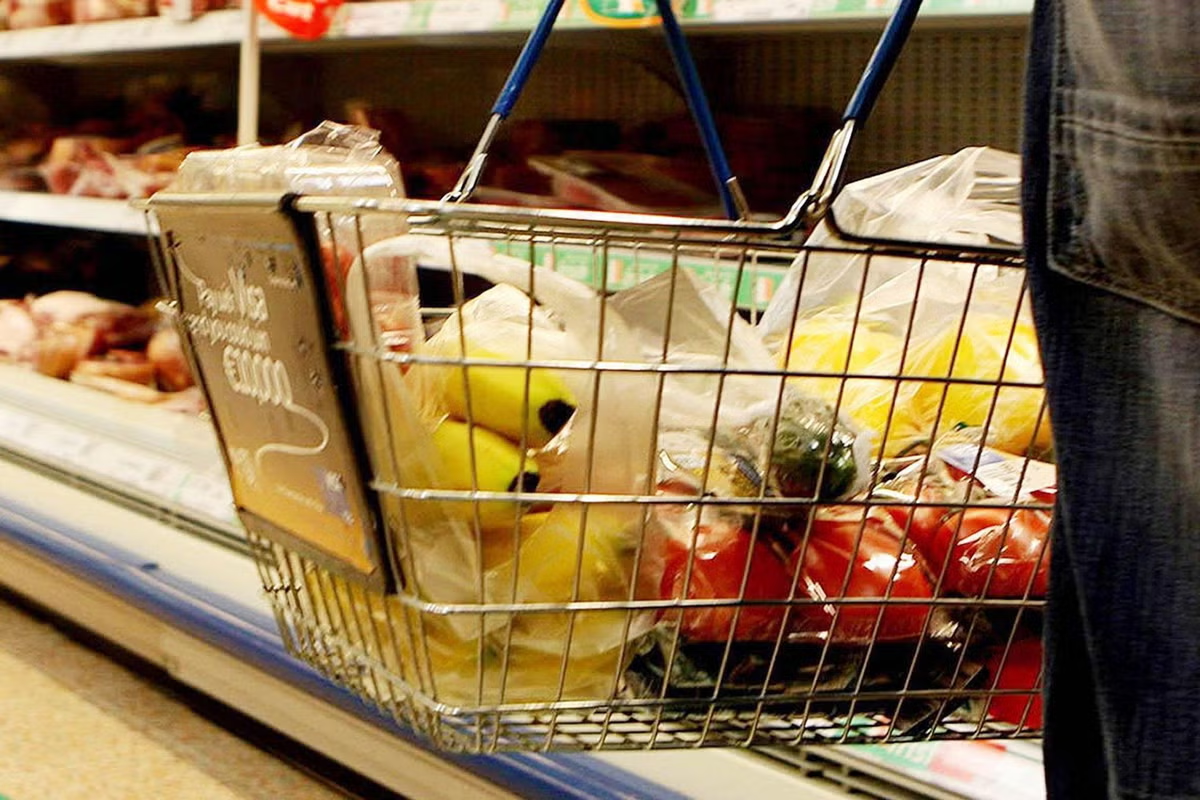
“Every cost the government decides not to address is a cost that will end up in someone's shopping basket. This is a political choice, and ministers still have time to change it, but the window to act is closing.”