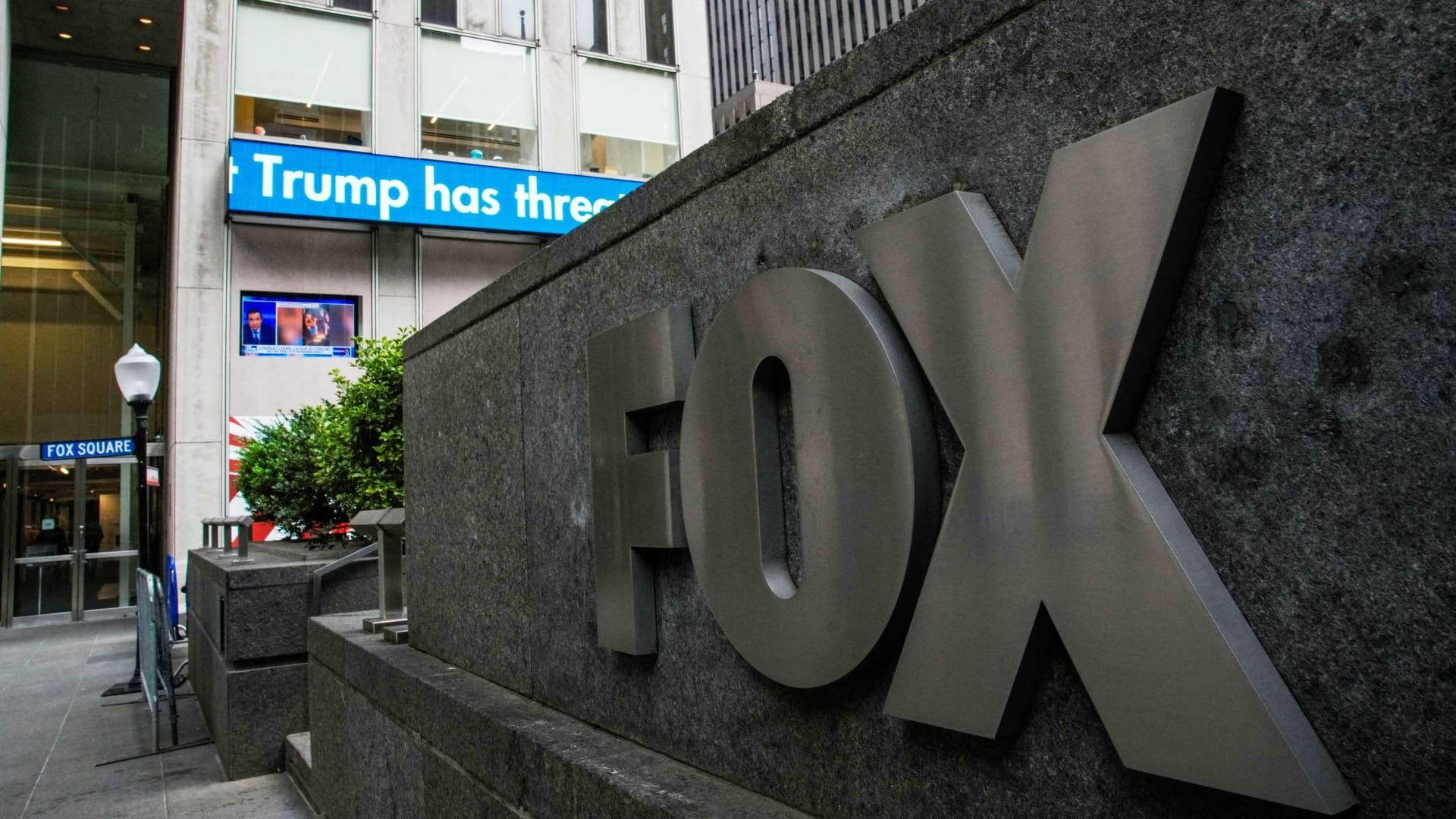
The Fox News electronic news ticker reads headlines at the News Corp. building in the Midtown Manhattan area of New York City, U.S., July 20, 2025.
Eduardo Muñoz | Reuters
Fox Corp. has reached an agreement to acquire roku for approximately $22 billion, marking another chapter in media consolidation as the industry faces changing dynamics and growing challenges.
On Monday, Fox announced it would acquire Roku for $160 per share in a cash-and-stock transaction. Fox plans to finance the cash portion of the deal with a combination of cash on hand and new debt. The company said it obtained a $12 billion loan for the transaction.
Fox shares fell 17% in morning trading Monday. Roku fell 2%, although those shares gained 20% on Friday around initial reports of a possible sale.
The combination will unite Fox's news and sports channels, as well as its free, ad-supported streamer, Tubi, with Roku, the maker of streaming devices and also the home of The Roku Channel, a service similar to Tubi.
On Monday, Fox CEO Lachlan Murdoch called it a “defining moment” for the company.
The proposed acquisition comes about seven years after Fox's last major deal, when it divested its entertainment assets in a $71 billion deal with disney. Since then, Fox's portfolio consists mainly of its television channels, specifically the Fox television network, which has broadcast the FIFA World Cup since last week, and the Fox News cable channel.
In 2020, Fox acquired Tubi for $440 million. That service had long been its answer to the streaming wars, before the announcement of Fox One, its direct-to-consumer option that launched last year.
In a call with investors on Monday, Murdoch noted that Fox was “an early investor in Roku and a long-time business partner.”
He added that since 2019 Fox has “refocused” the company, focusing it on live news and sports, and emphasized the focus on driving advertising revenue.
Advertising has taken on renewed importance for media companies, which are looking to build streaming platforms and lean into sports and live events, which are capturing the largest audiences.
Murdoch said on Monday's call with investors that the companies intend to keep Tubi and The Roku Channel separate after the deal closes. He called them “incredibly complementary services” in which about a third of their audiences overlap.
Tubi sees the majority of its audience as on-demand content, in contrast to free channels that mimic the traditional pay-TV package.
A video billboard displays the logo of Roku, a video streaming company, in Times Square after the company's initial public offering on the Nasdaq market in New York on September 28, 2017.
Brendan McDermid | Reuters
“Roku has a very large platform business consisting of advertising and subscriptions,” Roku CEO Anthony Wood said on Monday's call.
Wood called Roku's platform the market leader in the U.S. and said it reaches more than 100 million homes worldwide, accounting for 145 billion hours of engagement annually.
Both Wood and Murdoch said their companies were entering the deal “from a position of strength.”
Murdoch added that the addition of Roku allows Fox to go into “new markets to expand, obviously digitally in streaming and subscriptions, and push the business aggressively into the 21st century.”
Fox said Monday that it expects to see approximately $400 million in run-rate cost synergies from the deal with additional revenue upside. Once the acquisition closes, existing Fox shareholders would own about 73% of the combined company and Roku shareholders would own about 27%.
The agreement, which has already been approved by the boards of directors of both companies, is expected to close in the first half of 2027.