For the past week, one conversation has dominated Hollywood executive lunches and studio staff meetings: What's the next “Backrooms”?
The industry is scrambling to figure out how to replicate the phenomenon of “Obsession” and “Backrooms,” low-budget psychological horror films directed by YouTube creators that have dominated the box office for the past two weeks.
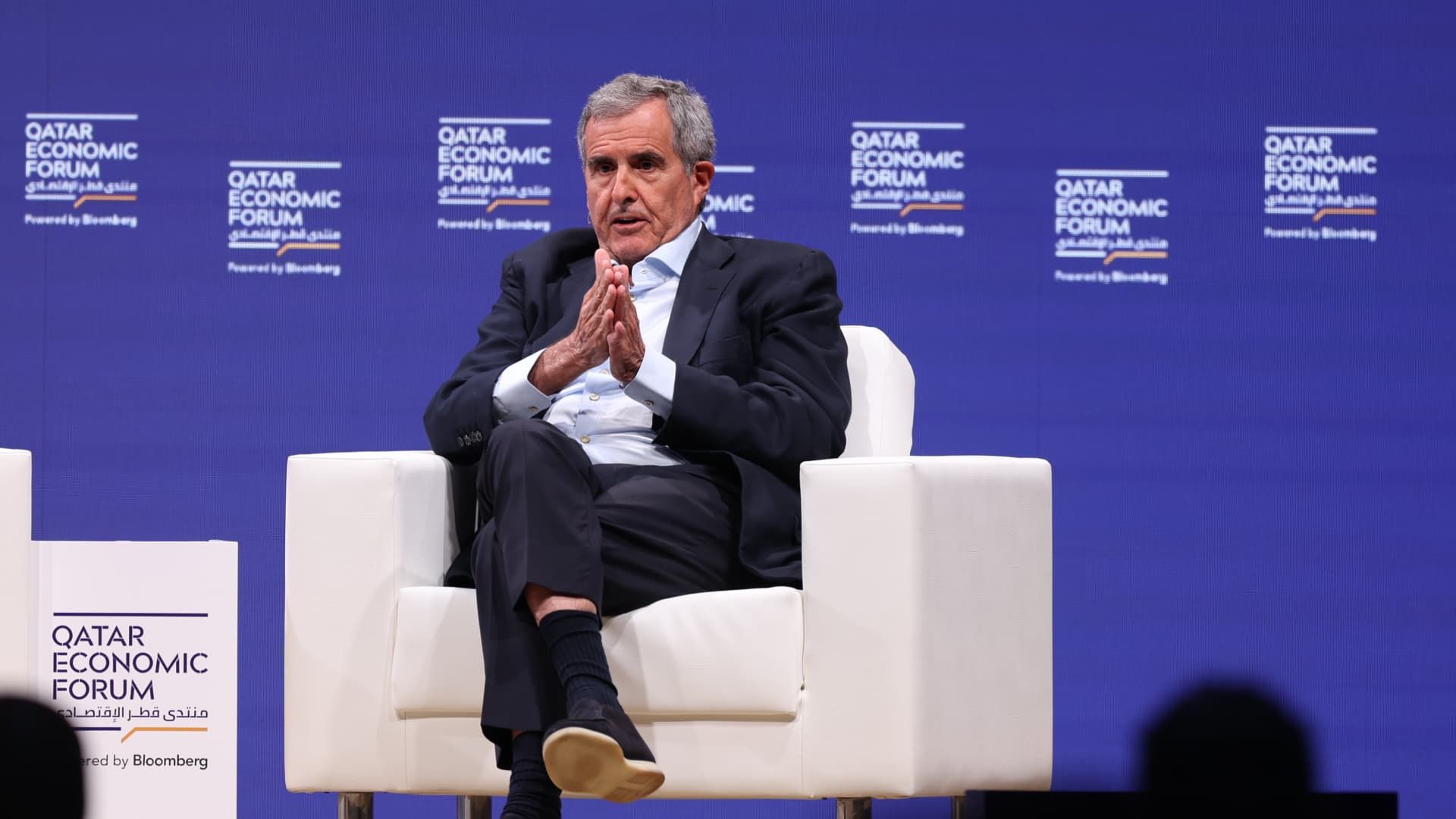
But “Backrooms” producer Peter Chernin, whose production company co-financed the film, said he believes the rush to sign deals with YouTube creators is a “big mistake.”
“It's no different than making sequels. It's jumping on an existing train,” Chernin said in an interview. “I guarantee you that 80% will be failures. It does not imply originality, it does not imply innovation. Your job is to innovate and your job is to find new intellectual property. [intellectual property] and fresh voices. “It's not just about jumping on the bandwagon.”
Chernin has a unique background spanning traditional Hollywood and the YouTube creator space. the run of the fox film and television divisions from 1996 to 2009, overseeing box office giants like “Titanic” and “Avatar.”
Chernin founded a private equity firm, The Chernin Group, in 2010, which backed several companies in the creator economy space, including Fullscreen and Tumblr. In 2022 he co-founded North Road, a global content studio. Its Chernin Entertainment division co-produced and co-financed “Backrooms” with independent film studio A24.
“We're constantly looking for what's new, what's interesting, and where the world is going,” Chernin said. “I think the YouTube experience gave us a unique vision for making this film.”
“Backrooms,” with a budget of just $10 million, has been particularly successful with younger audiences who were familiar with director Kane Parson's YouTube series, which inspired the film. In the film's first weekend in theaters, 86% of ticket buyers were under 35 years old, according to an audience survey conducted by Comscore Movies and Screen Engine PostTrak.
“Backrooms” surpassed $100 million at the domestic box office in just six days, becoming the highest-grossing domestic film in A24 history.
Basing a film on an established intellectual property is a familiar strategy in Hollywood, where superheroes, popular book series or even toys like Barbie have proven to be a reliable way to attract audiences. Since 2010, most of the top-performing domestic releases have been based on established IPs, but box office experts warn that audiences are growing tired of franchises and that some high-profile sequels have flopped.
While “Backrooms” and Parsons had an established fan base, creating a film with YouTube content is unusual. Chernin said the concept feels authentic and fresh on the big screen, setting it apart from decades-old franchises.
“Hollywood has been guilty of being a little cynical and essentially creating a sort of brand management manufacturing process, constantly feeding audiences a diet of sequels,” Chernin said. “One of the things that really resonated is that it feels like a film with intellectual property from young people. What it says more than anything is that audiences are looking for freshness. They're looking for something that feels unique and original.”
While the box office is still below pre-pandemic levels, the phenomenon of “Backrooms” and “Obsession,” which was filmed on a $750,000 budget and has also grossed more than $100 million domestically, has Hollywood insiders and analysts wondering how studios should change strategy.
Eric Handler, media and entertainment analyst at Roth, agrees that younger generations are increasingly tired of franchise films and their sequels, as evidenced by the disappointing premiere of disney The latest Star Wars offshoot, “The Mandalorian and Grogu.”
“Younger people still want to go to the movies. They like that community experience, but they're looking for something a little different,” Handler said. “They say you don't have to make a $250 million movie to interest me. Come up with an interesting concept that resonates with me and that's it.”
Handler said she now hopes studios will cast a wider net for content. “There's clearly an opportunity here, especially if you can make these movies on a very low budget,” he said.
Chernin said the success of “Backrooms” is a sign that movie studios should take more risks.
“Risk is ultimately the lifeblood of success. Hollywood has gotten into a mindset over the last 10 years where risk is considered reckless,” Chernin said. “You have to try to find a way to do it with the right budget, but risk is important and risk is the greatest advantage in the world.”