- Trump indicates that Iran could be willing to reach an agreement.
- The United States and Iran hold indirect nuclear talks in Geneva.
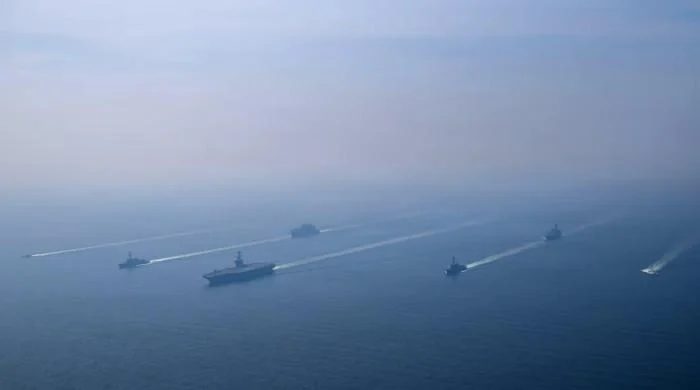
- The US military is preparing for possible operations against Iran.
GENEVA: The United States and Iran hold indirect talks in Geneva on Tuesday aimed at resolving their long-running nuclear dispute, with few clear signs of compromise as Washington builds a battle force in the region.
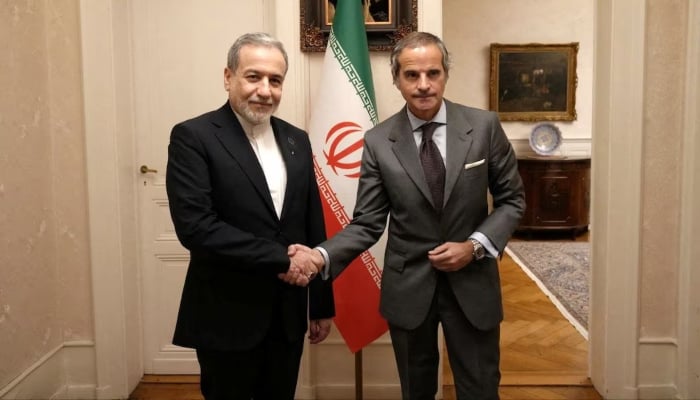
US envoys Steve Witkoff and Jared Kushner will participate in the negotiations, which are mediated by Oman, according to a source familiar with the matter. Reuterstogether with the Iranian Foreign Minister, Abbas Araqchi.
US President Donald Trump said he would participate “indirectly” in the Geneva talks and believed Tehran wanted to reach a deal.
“I don't think they want the consequences of not making a deal,” Trump told reporters aboard Air Force One on Monday. “We could have reached a deal instead of sending the B-2s to eliminate their nuclear potential. And we had to send the B-2s.”
Tehran knows that a previous attempt to reactivate talks was already underway in June last year, when Washington's ally Israel launched a bombing campaign against Iran, later joined by US B-2 bombers that attacked nuclear targets. Tehran has since said it has stopped uranium enrichment activity.
The US military is preparing for the possibility of weeks of operations against Iran if Trump orders a strike, two US officials said. Reuters.
Iran itself began a military exercise on Monday in the Strait of Hormuz, a vital international waterway and oil export route for Gulf Arab states, which have been appealing to diplomacy to end the dispute.
Nuclear talks between Iran and the United States under the shadow of protests and war
Tehran and Washington renewed talks on February 6 over their decades-old dispute.
Washington and its close ally Israel believe that Iran aims to build a nuclear weapon that could threaten Israel's existence. Iran says its nuclear program is purely peaceful, even though it has enriched uranium far beyond the purity needed for power generation and close to what is required for a bomb.
Since the June attacks, Iran's rulers have been weakened by street protests, quelled at the cost of thousands of lives, against a cost-of-living crisis driven in part by international sanctions that have strangled Iran's oil revenues.
Unlike last time, the United States has now placed what Trump calls a huge naval armada in the region.
Washington has sought to expand the scope of talks to non-nuclear issues such as Iran's missile arsenal. Tehran says it is only willing to discuss restrictions on its nuclear program – in exchange for sanctions relief – and will not completely abandon uranium enrichment or discuss its missile program.
On Monday, US Secretary of State Marco Rubio said at a news conference in Budapest that it was difficult to reach a deal with Iran, but that the United States was willing to try.
Iran's Araqchi met in Geneva on Monday with Rafael Grossi, head of the International Atomic Energy Agency, to discuss cooperation with the IAEA and the technical aspects of the impending talks with the United States.
On Tuesday afternoon, Witkoff and Kushner will participate in three-way talks with Russia and Ukraine as Washington tries to convince Ukraine and Russia of a deal to end Moscow's four-year invasion of Ukraine, the source said.