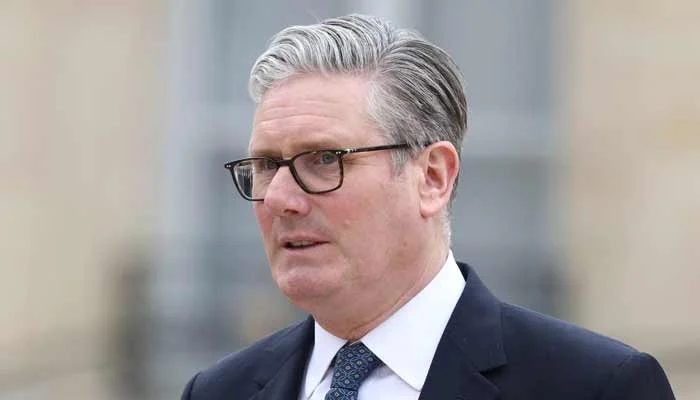
Embattled Prime Minister Keir Starmer said on Monday he had made a mistake in appointing Labor politician Peter Mandelson as the UK's envoy to Washington, seeking to quell anger over a scandal surrounding Jeffrey Epstein's former associate.
Starmer, already hugely unpopular with the public and many Labor MPs, is struggling to manage a controversy that has threatened to topple his leadership.
Addressing Parliament about the deepening political row, Starmer said: “At the heart of this, there is also a judgment I made that was wrong. I should not have appointed Peter Mandelson.”
Last week he faced fresh calls for him to resign after it was revealed that Mandelson, whose friendship with the late convicted American sex offender was long known, had become Britain's envoy to Washington last year despite failing security checks.
Starmer has insisted that he and other ministers were not informed until last week that Mandelson had failed the independent investigation process.
“It is incredible that throughout the entire chronology of events, Foreign Office officials have seen fit to withhold this information from the most senior ministers in our system, in government,” he told MPs.
“If I had known before I took office that (the) recommendation was that background investigation authorization should be denied, I would not have gone forward with the appointment.”
'Unconventional'
Last Thursday, Starmer sacked the Foreign Office's top official, Olly Robins, and told MPs he had launched a review of the security vetting process.
But former officials have accused Starmer of scapegoating Robbins, who will give his own account to a parliamentary oversight committee on Tuesday.
Opposition leaders have called for the centre-left Labor leader to resign, with accusations ranging from incompetence to deliberately misleading MPs and the public.
Starmer told parliament in February that “due process” was followed when Mandelson was vetted and cleared for the key role.
His Downing Street office has insisted that remains true because government rules meant the Foreign Office had the power to overrule investigative concerns, without the knowledge of Starmer and his senior team.
On Friday, Downing Street took the unusual step of publishing a memo insisting it had learned of the vetting failure last Tuesday.
So far, senior ministers have rallied behind Starmer.
“It was concluded that the Trump administration was an unconventional administration and an unconventional ambassador could do a job for the United Kingdom,” Scotland Secretary Douglas Alexander said on Monday.
“That judgment was wrong and the Prime Minister accepts it.”
'He has to go'
Other ministers have argued that Starmer should remain in power amid the global tumult caused by the war in the Middle East and other issues, including forging closer relations with the European Union.
But polls suggest Starmer is one of Britain's most unpopular prime ministers.
If Starmer had known about the botched investigation “then he would have to go, he would have to resign,” said retired dentist Andrews Connell, 59. AFP.
“If I knew, that would be really bad. If I didn't know, I should have known.”
Pensioner Lyndia Shaw, 73, agreed, saying Starmer is “absolutely desperate, desperate, and I think yes, Mandelson should face the full force of the law, without a doubt.”
But retiree Duncan Moss, 67, said he would be “very worried if Starmer left and didn't govern the country. I think he's doing a very good job. I think he's a very mature and experienced leader.”
Starmer fired Mandelson in September 2025, seven months after he took office, after new details emerged about the depth of the former envoy's ties to Epstein, who died in a US prison in 2019 while facing sex trafficking charges.
Police in the United Kingdom are investigating allegations of misconduct in office by Mandelson, 72, when he was Labor Minister more than 15 years ago. He was arrested and released in February.
Mandelson has not been charged and denies any wrongdoing.
Starmer and his Labor Party are also preparing for a tough series of local elections next month, including in the devolved parliaments of Scotland and Wales.